
Can an AI Face Scan Measure Your Blood Pressure and Glucose? What 'Digital Twin' Health Apps Actually Do in 2026
A new wave of AI face scan health apps promise blood pressure, glucose, and 40+ vitals from a 15-second selfie. We read the rPPG research, prototyped the integration, and chose continuous wearables instead. Here's why.
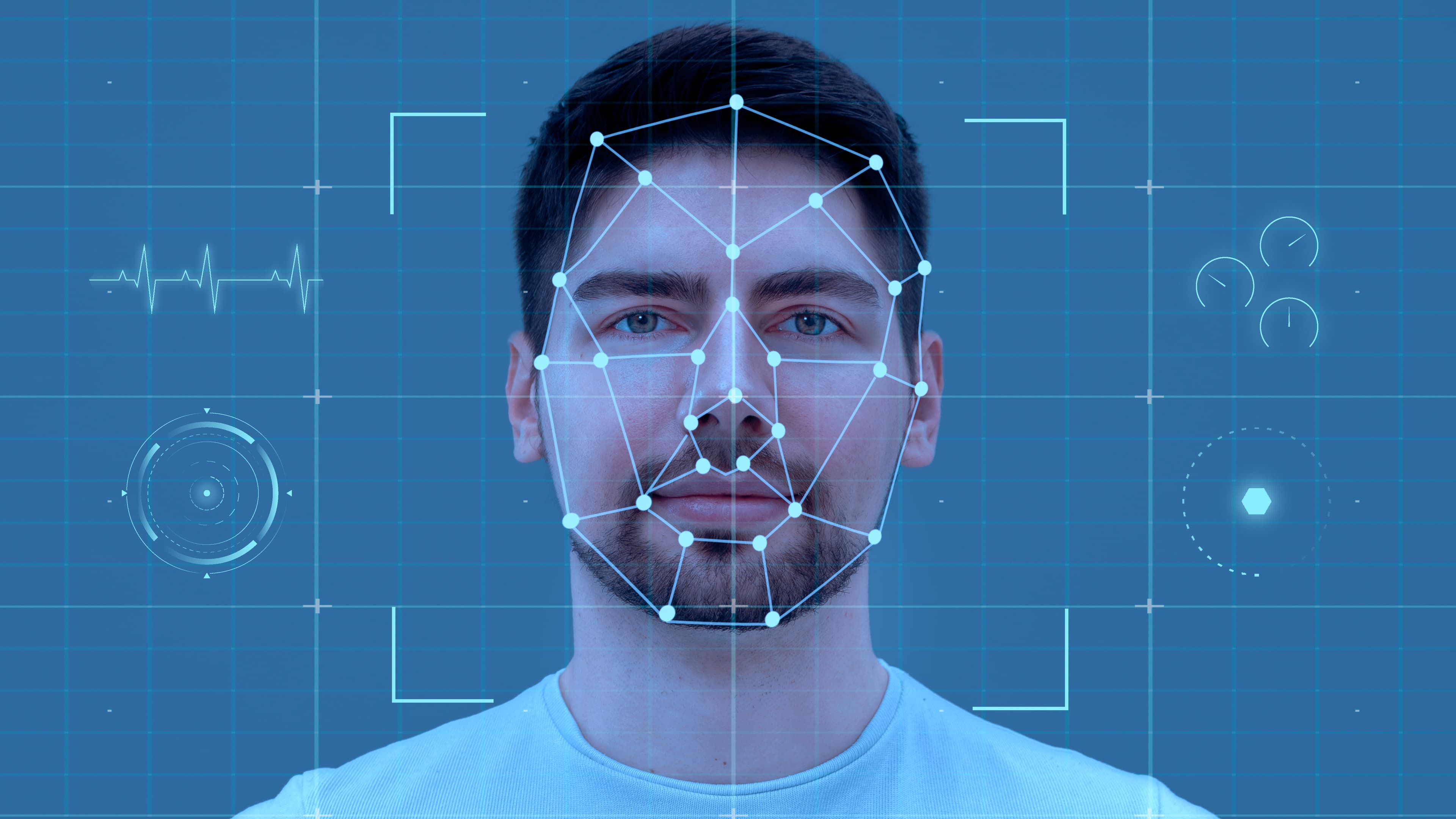
There is a particular subgenre of health app that has exploded in the last twelve months. The pitch is always some version of: open the camera, point the phone at your face for fifteen seconds, and walk away with a full read on your blood pressure, heart rate variability, respiratory rate, oxygen saturation, blood glucose, stress level, and — increasingly — a number labeled "biological age" or "cardiovascular risk score." The flashier ones offer to build you a "digital twin" of your physiology from a selfie.
The technology underneath these apps is real. The marketing has gotten so far ahead of the science that we've spent the last six months reading the underlying research, prototyping the integration, and asking ourselves whether to add face-scan vitals to Mother Nature AI. The answer, for now, is no. This article is the long version of why.
What's actually happening when an app scans your face for vitals
The tech is called remote photoplethysmography, or rPPG. Verkruysse, Svaasand, and Nelson published the foundational paper in Optics Express in 2008. The basic physics: every time your heart beats, a fresh wave of oxygenated blood pushes into the capillaries near the surface of your skin. Oxygenated and deoxygenated hemoglobin absorb green light differently. A camera that watches a patch of skin closely enough can detect that pulsing color shift — invisible to the human eye, but clear in pixel data — and reconstruct the timing of your heartbeat from it.
Your Apple Watch and your Oura Ring use the same basic optical physics. The difference is that they shine a controlled green LED against your wrist or finger and read the reflection through a contact sensor pressed to your skin. The face-scan version uses ambient light and a smartphone camera held a foot or two away, with whatever's happening in your environment interfering with the signal. Your living room lamp. The angle of your head. Your skin tone. Whether your hand is shaking. Whether the camera focused.
From that single optical signal, modern rPPG systems extract heart rate, HRV, respiratory rate, the shape of your pulse waveform, and inferred metrics like SpO₂. The bolder systems then run those features through proprietary models to estimate blood pressure, blood glucose, hydration, "stress," "biological age," and cardiovascular risk.
The first set of metrics is real science with reasonable validation. The second set is the part where things get complicated.
What face scans get right
Heart rate from rPPG is genuinely good in good conditions. A 2023 systematic review and meta-analysis in the Journal of Clinical and Translational Science by Bautista and colleagues at the University of Leeds pooled the clinical literature on contactless PPG and found heart rate accuracy generally above 90% versus reference monitors. Several FDA-cleared rPPG products report mean absolute errors of 2–5 bpm against ECG. If you sit still under decent lighting and let the camera do its job for fifteen seconds, the heart rate number is probably trustworthy.
Atrial fibrillation screening is the strongest clinical claim in the category. Gill and colleagues at the University of Birmingham published a 2022 meta-analysis in Heart covering smartphone PPG for AF detection across multiple cohorts. Pooled sensitivity was above 94%, specificity above 96%. At least one company has now received regulatory clearance for a phone-based AF assessment. AF is widely under-diagnosed — silent until it causes a stroke — so a passive screening tool you can use in seconds has real clinical value, even if it isn't a 12-lead ECG.
Skin condition analysis is also strong, because the camera is doing what cameras do best: looking at things. Automated skin classifiers reach up to 97% accuracy on the most common conditions in published studies. Face2Gene, the dermatological screening tool from FDNA, identifies over 200 genetic syndromes from facial morphology with about 91% accuracy in published validation work.
This is the part of "scan your face for vitals" that is closest to being a solved problem.
What they don't (yet)
Then there's blood pressure.
This is the single most-advertised claim in the category, and the one with the largest gap between marketing and evidence. No smartphone-only system has yet been validated to ISO 81060-2, the international standard a medical-grade cuff has to pass. ISO 81060-2 requires mean error under 5 mmHg with a standard deviation under 8 mmHg in a representative population. Industry-funded validation papers report tighter numbers, but those studies are mostly performed in clinical labs against carefully selected reference populations under conditions an average user won't replicate at home with a phone propped against a coffee mug.
Hypertension Canada and the American Heart Association have both issued cautious positions on cuffless blood pressure technologies — promising, watch this space, not yet a substitute for a properly fitted home cuff. Until that changes, an app that tells you your BP is 142/91 from a face scan can do real harm: an unnecessary ER visit, a panicked medication conversation, or, worse, the dismissal of a real high reading later because the app said you were fine.
Glucose is the most overreaching claim in the entire category. The most-cited piece of supporting research is Avram and colleagues in Nature Medicine (2020), which used smartphone-based vascular signals to detect a population-level diabetes signature with about 81% sensitivity. That means it can identify, at the cohort level, people who probably have diabetes. It does not mean it can tell you that your glucose is 142 mg/dL right now. Independent reviews of facial-scan glucose estimates report accuracy around 66%. The FDA requires CGM systems to demonstrate a mean absolute relative difference under 10% — roughly 90% accuracy — to be considered clinically actionable. A 66%-accurate glucose number is worse than no number at all, because people will act on it.
Hydration estimates from face scans sit around 76% accuracy in the limited literature. Stress scores and "biological age" numbers are usually HRV inputs run through a proprietary scoring model. The HRV input is fine. The scoring layer is mostly marketing.
The accuracy table the marketing pages won't show you
Here's the honest comparison, drawn from the peer-reviewed sources cited above.
| Measurement | Face-scan accuracy (best published) | Real-world conditions | Gold standard |
|---|---|---|---|
| Heart rate | 95–98% | Sensitive to lighting, motion | Wearables and ECG remain superior for continuous data |
| HRV | 85–95% | Good in lab, degrades in real use | Wearables (chest strap, Oura, Whoop) more reliable |
| Respiratory rate | ~90% | Good when still | Comparable to wearable estimates |
| Atrial fibrillation screening | Sensitivity >94% | Validated for screening | Real clinical utility, but not a 12-lead ECG |
| SpO₂ | 85–90% (claimed) | Highly lighting-dependent | Pulse oximeter remains the standard |
| Blood pressure | 90–96% (industry-reported, lab) | Not yet ISO 81060-2 validated | Cuff is still the standard of care |
| Blood glucose | ~66% (independent reviews) | No FDA clearance for measurement | CGM or fingerstick |
| Hydration | ~76% | Limited research | Symptom-based and lab assessment |
| Skin condition analysis | Up to 97% | Strong in good lighting | Dermatologist evaluation for treatment |
| Genetic syndrome screening | ~91% | Validated tool (Face2Gene) | Adjunct to genetic testing, not a replacement |
The bias problem nobody puts on the homepage
There's a deeper issue with face-scan health technology that the glossy marketing decks rarely mention.
Validation data for facial-scan vitals has been overwhelmingly drawn from healthy, lighter-skinned, predominantly white participants. A 2023 Cureus paper by Talukdar and colleagues specifically evaluated rPPG performance across skin tones and found that with appropriately diverse training data, accuracy could be maintained — meaning the technology can work across skin tones, but only when the developers do the work to make it so. Whether any given commercial app has done that work is rarely disclosed.
The track record of facial-analysis technology in adjacent industries is sobering. Rite Aid was banned by the FTC for several years from using facial recognition after the system disproportionately misidentified Black, Latino, and Asian customers as shoplifters. Clearview AI was fined €30.5M by the Dutch DPA in 2024 for biometric data violations. Buolamwini and Gebru's 2018 "Gender Shades" study found commercial facial-analysis systems had error rates of less than 1% on lighter-skinned men and up to 35% on darker-skinned women.
Xing and colleagues' 2023 paper in Computers in Biology and Medicine on face-video blood pressure prediction also flagged that BMI is rarely controlled for in face-scan validation studies. When it is controlled for, accuracy collapses meaningfully. One representative finding: an algorithm reporting 91.7% accuracy for Cushing's syndrome detection dropped to 61.1% when BMI was added as a confounder.
This matters because the people who most need affordable, accessible health screening — non-white populations, people with higher BMI, people with chronic conditions, older adults — are the populations most likely to receive inaccurate readings from current face-scan systems. A health AI that is most accurate for the demographic that already has the best access to care is not solving the problem it claims to solve.
The thing a face scan structurally can't do
Set the accuracy debate aside for a moment, because there's a deeper problem with face scanning that no amount of better algorithms will fix.
A face scan is a snapshot. Health is a continuous signal.
The most useful thing a wearable does isn't measure your vitals more accurately than a phone camera could in a single moment. It's measure them again, and again, and again, all day, all night, every night, against your own personal baseline. That is where the value compounds.
When the UCSF TemPredict study followed Oura Ring users through the first wave of COVID in 2020, they found the ring detected fever and elevated resting heart rate roughly three days before participants felt symptomatic. Mishra and colleagues at Stanford did similar work with Fitbit Charge HR data and detected elevated resting heart rates one to three days before clinical illness onset in the majority of cases. The Apple Heart Study, published in the New England Journal of Medicine in 2019, used Apple Watch data from 419,297 participants to identify previously undiagnosed atrial fibrillation in 0.5% of participants — most of whom had no idea anything was wrong.
A face scan caught none of those events. By the time you'd think to take a face-scan reading, you already know something is off. The whole point of continuous monitoring is to catch the trend before you would have noticed the symptom.
This is also why a face scan won't catch a cardiac event the way a wearable can. There's a reason Apple has FDA clearance for the Watch's irregular rhythm notifications, ECG app, and high/low heart rate alerts: the device is collecting a 24-hour signal, comparing it to your baseline, and flagging deviations the moment they occur. A face-scan app, by definition, can only tell you about the second you decided to take a reading. If something goes wrong at 3am while you're asleep, the wearable knows. The face scan never sees it.
A facial scan is not going to detect a heart attack three hours before it happens. A continuous wrist sensor sometimes does — and over the last few years there have been enough documented cases of Apple Watch and Oura Ring catching arrhythmias, sudden HR/HRV deviations, and pre-illness signals that this is no longer a hypothetical.
What we built around continuous data, and the integrations behind it
This is the design rationale behind VitalIQ, our screenless contact-based wearable, and the integration layer behind the rest of the Mother Nature AI platform.
The VitalIQ device is built around continuous, passive collection of vital signals — heart rate, HRV, SpO₂, skin temperature, sleep, activity, environmental context. No screen, no notifications, no need for the wearer to remember to do anything. It was designed for nursing homes, assisted living, memory care, and family caregivers monitoring older parents who shouldn't have to wear a smartwatch that demands attention all day. The same data feeds the iOS app, where families can see overnight HRV trends, weekly activity, and AI-generated trend summaries from across the household.
For users who already wear a smartwatch or ring, our platform connects to what they already have. Mother Nature AI integrates directly with:
- Apple Health — anything synced from an Apple Watch or iPhone, including ECG, AFib history, sleep stages, blood oxygen, walking steadiness, fall detection events, and activity. Roughly 250 million Americans have an Apple Health profile already populated by their phone.
- Oura Ring — sleep architecture, readiness score, body temperature deviation, HRV trends.
- Whoop — strain, recovery, sleep performance, journaled lifestyle inputs.
- Garmin — cardiovascular metrics, training load, advanced sleep analysis.
- Fitbit — activity, heart rate, sleep, SpO₂ spot-checks.
On the clinical side, the platform connects to MyChart and other FHIR-compatible electronic health records. If your primary care system runs on Epic — and a large fraction of US health systems do — your bloodwork, imaging reports, medication list, immunizations, and visit summaries can flow into the same health profile your wearable data is feeding into.
The point of all of this is that the AI then has the full picture. Your continuous baseline vitals from the wearable. Your day-to-day signals. Your most recent labs. Your medication stack. Your conditions. All in one place. That is what makes a personalized recommendation actually personalized — not a fifteen-second selfie processed through a proprietary scoring model.
Why we'll add face-scan vitals eventually, but not yet
None of this is to say camera-based health monitoring won't earn a place in our platform. It almost certainly will. We've already prototyped the integration. A few specific use cases are close to ready:
- Heart rate spot-checks for users who don't have a wearable
- AFib screening as an adjunct to symptom-based intake
- Skin condition analysis (a strong fit with our supplement and condition libraries)
- Malnutrition risk in older adults — Wang et al. 2023 in Frontiers in Nutrition reported around 73% accuracy on that specific task using a validated nutritional assessment as the comparator
The headline claims — blood pressure, glucose, "40+ vitals" from a fifteen-second selfie, a "digital twin" of your physiology built from a face scan — aren't at the accuracy level required for health decisions. They will probably get there for blood pressure in a three-to-seven-year window if ISO 81060-2 validation can be achieved across diverse populations. They will probably take much longer for glucose, unless infrared or hyperspectral cameras become standard on consumer phones.
When that evidence arrives, we'll integrate. Until then, we'd rather ship features that we can stand behind than features that ship a wow factor and a wrong number.
The honest verdict
Face scanning for health is real science. It will be part of consumer health monitoring within the decade. But the gap between what the underlying technology actually does in 2026 and what the most-marketed apps in this category claim is still wide — wider for the metrics that matter most for chronic disease (blood pressure, glucose) than for the ones that are easier to validate (heart rate, AF screening, skin analysis).
If you're evaluating an AI face-scan health app, three honest questions to ask before you download it:
- For each vital it reports, is there a published, peer-reviewed validation study against a clinical gold standard, in a population that includes you?
- Does the company disclose accuracy in real-world conditions, not just the lab?
- What happens — to you, not to them — if the reading is wrong?
If the answers are vague, the product is probably ahead of its science.
Want a second opinion on a vital reading, lab result, or wearable trend? Mother Nature AI is built on peer-reviewed literature, your continuous wearable data from Apple Health, Oura, Whoop, Garmin, and Fitbit, and your full health record from MyChart and other FHIR systems. No account required to start.
If you're a family caregiver, a memory care or assisted-living facility, or someone managing a chronic condition that needs continuous data instead of episodic snapshots, VitalIQ is our screenless wearable for passive 24/7 vital signal collection.