
Remote patient monitoring for facilities and families
VitalIQ is a wellness product in development. It is designed to bring continuous wearable health data into care facility dashboards and family apps, to help teams and loved ones see trends without asking older adults to manage another screen.
Capabilities
Remote patient monitoring infrastructure
Monitoring support designed for nursing homes, assisted living, families, and older adults at home.
Continuous Data Collection
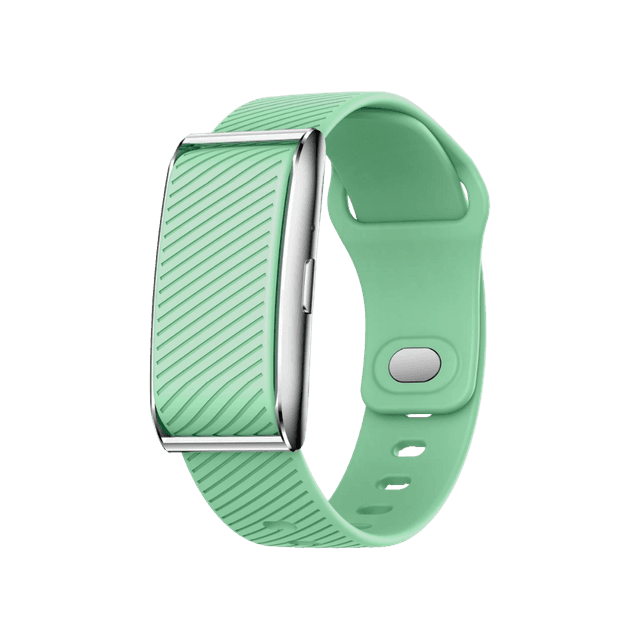
Passive, screenless wearable designed for uninterrupted vital signal collection without requiring user interaction.
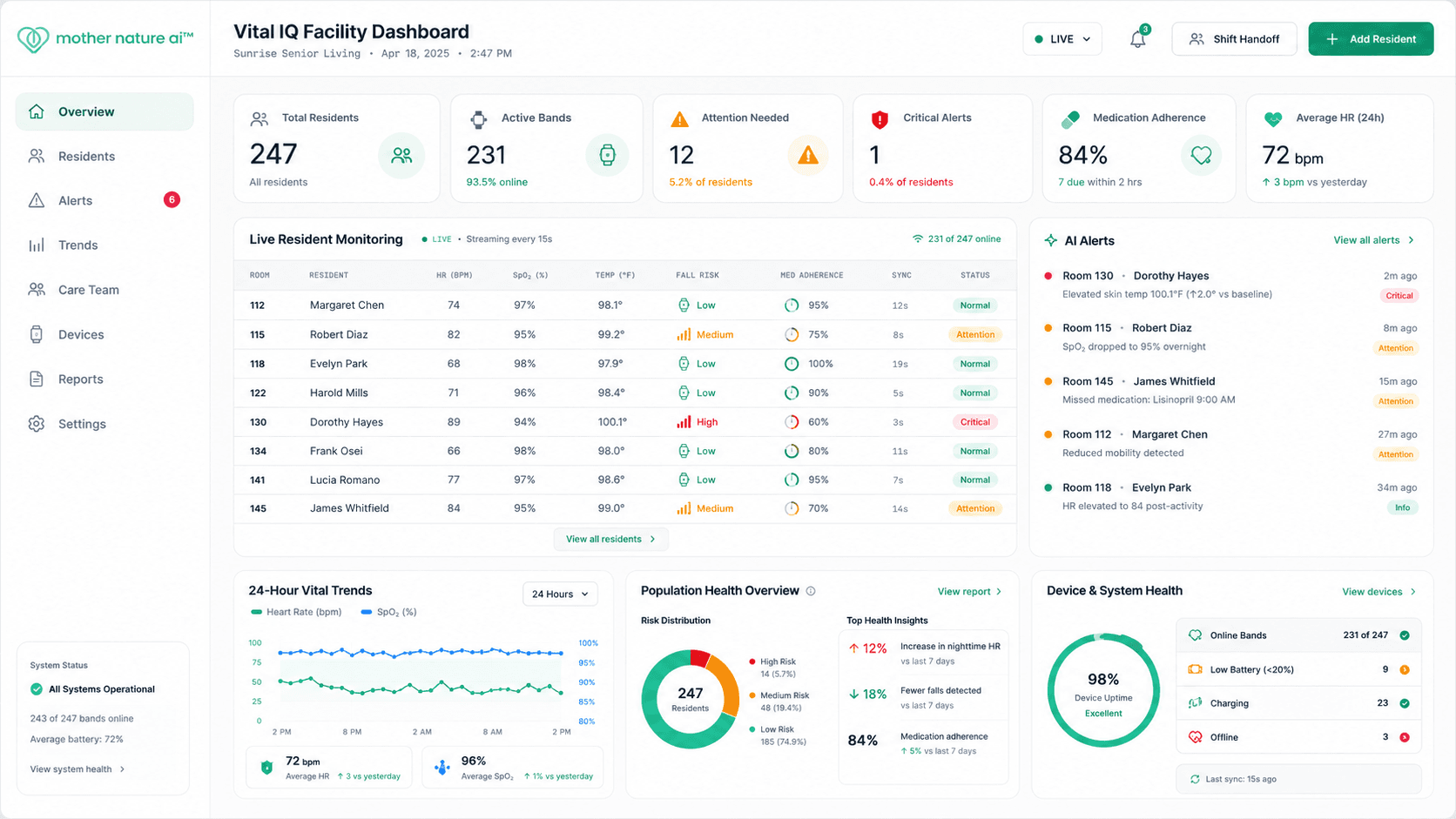
Centralized Facility Dashboard
Remote patient monitoring views for nursing homes, assisted living, memory care, and care teams managing large populations.
Remote Family Access
Families can view health trends through the mobile app for loved ones in care facilities or living at home.
AI Trend Summaries
AI-assisted analysis identifies data patterns and trend insights over time. Summaries designed for review by qualified personnel.
Scalable Infrastructure
Architecture built to support facilities of any size. From small practices to large care networks with centralized oversight.
Privacy-First Design
Encrypted at rest and in transit. HIPAA compliant. You can delete your account at any time. Deletion removes your data from all Mother Nature AI systems within 30 days.
Centralized facility dashboard
A single dashboard for remote patient monitoring across nursing homes, assisted living, memory care, and other care facilities. Care teams can review resident trends, device status, and AI-assisted summaries without replacing clinical judgment or existing workflows.
- Resident-level health trend visibility
- Device and signal status at a glance
- AI-assisted trend summaries for care staff
- Shift-based reporting and handoff summaries
- Configurable notifications and escalation workflows
Stay connected to loved ones
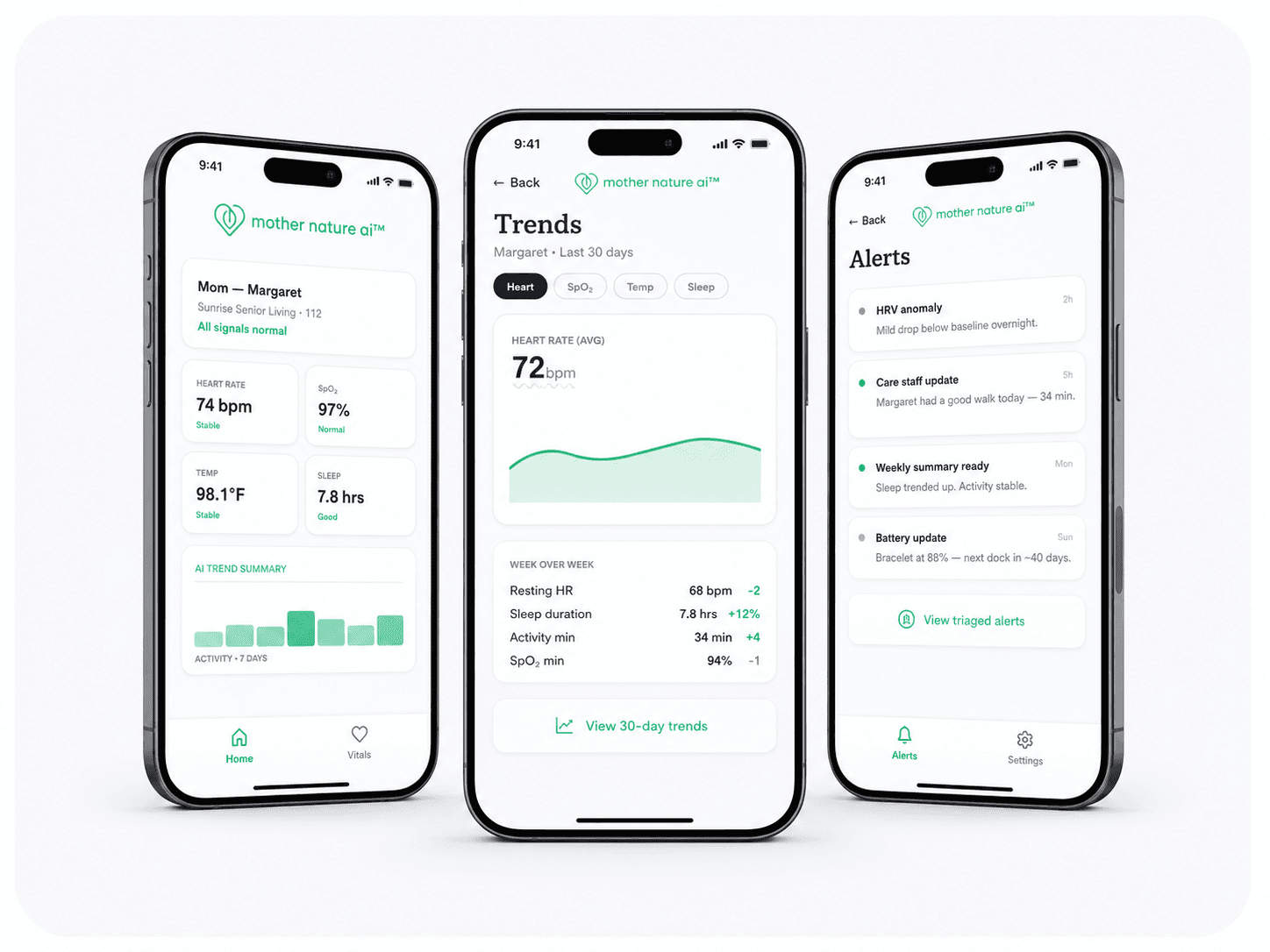
The family app gives relatives remote visibility into health trends for loved ones in care facilities or living at home. AI-assisted summaries, wearable signal trends, and status updates help families stay informed without turning every check-in into a worried phone call.
- Remote visibility for loved ones at home or in care
- AI-generated weekly trend summaries
- Historical data and pattern tracking
- Permission-based sharing and family access
- Status updates designed to reduce noise and anxiety
Data Visibility
What the system observes
Trend insights and health data visibility from passive signal collection.
Heart Rate Trends
Continuous heart rate data collection with trend visualization and pattern detection.
Activity & Movement
Passive activity monitoring for mobility patterns, rest periods, and daily movement trends.
Temperature Trends
Skin temperature data for trend analysis and baseline deviation monitoring.
SpO2 Visibility
Blood oxygen saturation data visibility for trend monitoring and pattern observation.
Sleep Patterns
Sleep duration and quality trend data for circadian rhythm visibility.
Environmental Context
Ambient data correlation for contextualizing health signal variations.
Use Cases
Who uses the monitoring system
Care Facilities
Remote patient monitoring dashboards for assisted living, memory care, and skilled nursing facilities that need clearer resident trend visibility.
Families
Remote health data visibility for loved ones in a facility or living independently at home. Mobile app access to trends and AI-assisted summaries.
Individuals
Personal health data visibility with trend tracking, pattern detection, and exportable reports for provider visits.
Integrations
Already wear something? We connect to it.
VitalIQ is built for users who don't already have a wearable — particularly older adults in care settings. For everyone else, the Mother Nature AI iOS app integrates directly with the wearables and clinical record systems you already use, so the same continuous data feeds your AI conversations, family dashboards, and provider-ready exports.
Apple Health
Heart rate, ECG, AFib history, blood oxygen, sleep stages, activity, walking steadiness, and fall events from your Apple Watch and iPhone.
Oura Ring
Sleep architecture, readiness score, body temperature deviation, and HRV trends.
Whoop
Strain, recovery, sleep performance, and journaled lifestyle inputs.
Garmin
Cardiovascular metrics, training load, body battery, and advanced sleep analysis.
Fitbit
Activity, heart rate, sleep stages, and SpO₂ spot-checks.
MyChart and FHIR EHRs
Bloodwork, imaging reports, medication list, immunizations, and visit summaries from Epic-based health systems and other FHIR-compatible providers.
Important Notice
The Mother Nature AI monitoring system collects and displays vital signal data for observational and informational purposes only. It is not a medical device, does not provide diagnoses, and is not intended to replace clinical assessment, professional medical judgment, or emergency response systems. Signal data and AI-generated trend summaries should be reviewed by qualified personnel. The system is not FDA-cleared for diagnostic use. Always consult healthcare professionals for medical decisions.
Interested in VitalIQ remote patient monitoring?
Contact us to learn about deployment options for care facilities, nursing homes, families, and loved ones living at home.
Frequently Asked Questions
What is VitalIQ AI?
VitalIQ AI is Mother Nature AI's remote patient monitoring and continuous health visibility system. It combines a screenless wearable, care facility dashboards, family app access, and AI-assisted trend summaries.
Is VitalIQ for nursing homes and care facilities?
Yes. VitalIQ is being built for nursing homes, assisted living communities, memory care, and other care facilities that need a dashboard view across residents, devices, trends, and care-team workflows.
Can families buy VitalIQ for a loved one at home?
Yes. VitalIQ is also intended for families who want remote visibility into a loved one's health trends when that person is not in a nursing home or care facility. Sharing should be permission-based and privacy-first.
What data does VitalIQ monitor?
VitalIQ focuses on trend visibility from wearable signals such as heart rate, HRV, SpO₂, skin temperature, sleep, movement, activity, and device status. It is designed for longitudinal context, not one-time snapshots.
Does VitalIQ replace doctors, nurses, or emergency systems?
No. VitalIQ is not a diagnostic medical device and is not an emergency response system. It is intended to organize health data, surface trends, and support better conversations among care teams, families, individuals, and healthcare professionals.
How is VitalIQ different from a traditional remote patient monitoring vendor?
Traditional RPM often focuses on episodic device readings and clinical billing workflows. VitalIQ is designed around continuous wearable signals, facility dashboards, family visibility, AI summaries, and integration with the broader Mother Nature AI health platform.