
What is red clover tea good for?
Trifolium pratense flowering tops (red clover), a legume in the same family as peas and beans
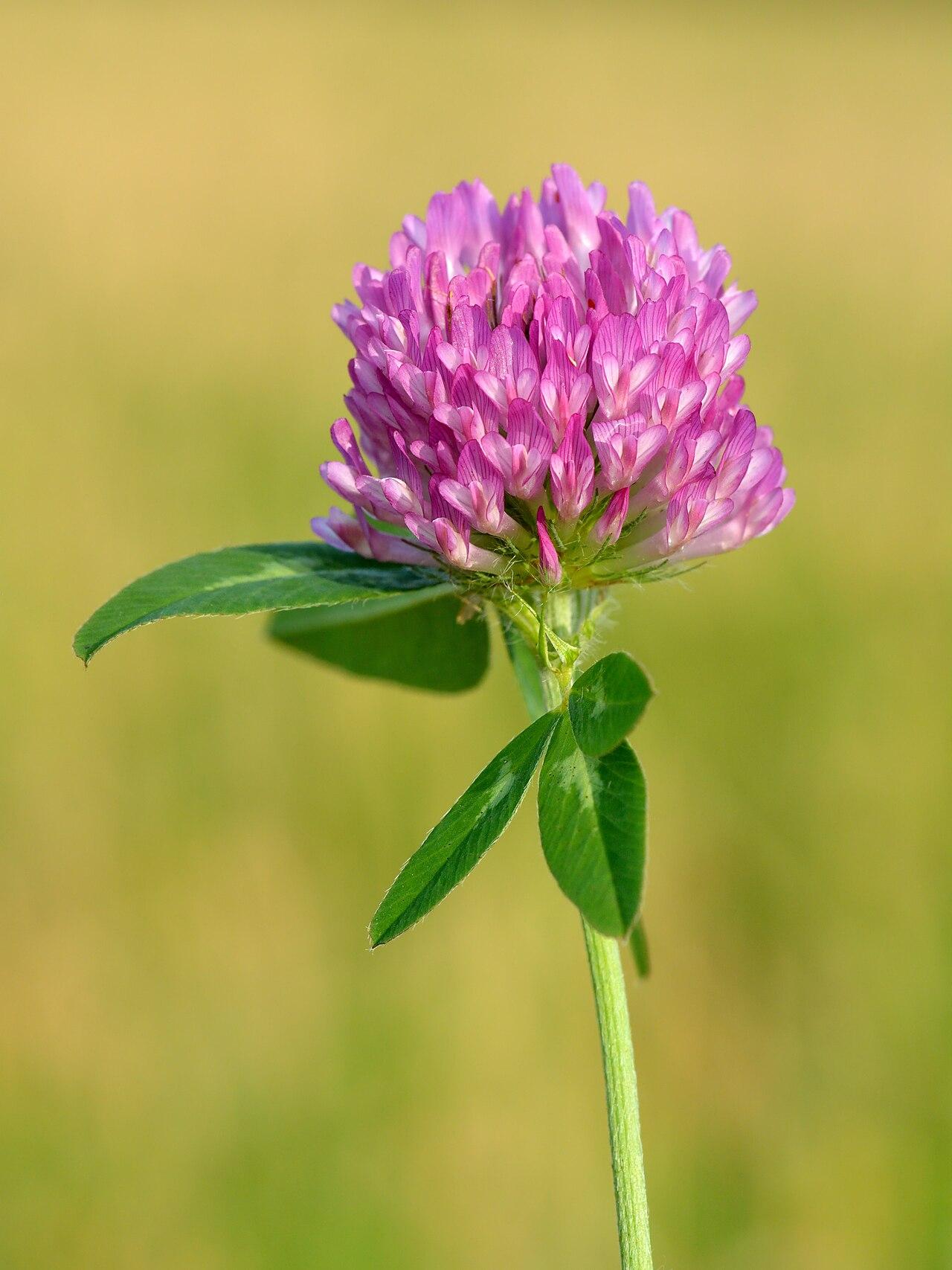
Red clover tea is a caffeine-free herbal tea made from the flowering tops of red clover (Trifolium pratense). It is mostly used to ease menopause symptoms such as hot flashes. The evidence for the tea itself is thin: we found no human trial of red clover tea. The trials used extracts, capsules or tablets, and their results are mixed. The National Center for Complementary and Integrative Health (NCCIH), part of the U.S. National Institutes of Health, says the research has not shown conclusive evidence of benefits for any health condition.
Red clover is a legume, like peas and beans. It contains isoflavones, plant substances that are structurally similar to estrogen. One lab study compared home preparations and found that red clover infusions (the tea method), decoctions and tinctures have different chemical profiles. Two isoflavones, biochanin A and formononetin, were found in the infusion. The abstract did not say how much ends up in a cup.
Safety comes first for some people. Memorial Sloan Kettering Cancer Center advises avoiding red clover during pregnancy or breastfeeding. It also says red clover may raise the risk of bleeding for people on blood thinners and may worsen hormone-sensitive cancers. Below is what each trial actually tested, how to brew the tea, and who should skip it.
What red clover tea is good for
- Menopause hot flashes: this is the main use. Trials of red clover extract disagree, and no trial tested the tea
- Overall menopause symptoms: in a 12-week trial of 72 women, capsules of dried red clover leaves lowered symptom scores more than placebo; capsules, not tea
- Cholesterol: a meta-analysis of extract trials found lower total cholesterol, but LDL, HDL and triglycerides did not clearly change
- Safety: avoid it if you are pregnant or breastfeeding, and talk with a clinician first if you take blood thinners or have a hormone-sensitive cancer
- Proof: the NCCIH says the research has not shown conclusive evidence of benefits for any health condition
Red clover tea benefits, graded by the evidence
Strong = multiple human trials or a meta-analysis. Moderate = a few small trials. Preliminary = early, traditional or animal data.
Hot flashes in menopause (results are mixed, and the research is on extracts)
Preliminary evidenceTrials of red clover extract for hot flashes disagree. A meta-analysis of eight trials found a reduction of 1.73 hot flushes per day compared with placebo (95% CI -3.28 to -0.18). A Cochrane review of five trials of one red clover extract found no significant difference from placebo (mean difference -0.93, 95% CI -1.95 to 0.10). In a 12-week trial of 62 women with 5 or more hot flushes a day, an extract plus probiotics changed daily hot flushes by -4.3 per 24 hours, against 0.79 on placebo. A trial of 40 mg a day for 12 months found no significant improvement over placebo. None of these trials used tea.
Key evidenceKanadys et al., Nutrients 2021: meta-analysis of eight trials; Lethaby et al., Cochrane Database Syst Rev 2013: five trials of one extract; Lambert et al., PLoS One 2017: 62 women
Lower overall menopause symptom scores (dried leaf capsules, one trial)
Preliminary evidenceIn a placebo-controlled trial of 72 healthy postmenopausal women, two capsules a day, each holding 40 mg of dried red clover leaves, were taken for 12 weeks. The total Menopause Rating Scale score fell from 20.41 to 10.08 with red clover and from 20.77 to 17.20 with starch placebo. The capsules held dried leaves, but they were still capsules, not a brewed tea. This is one trial, and other trials of red clover for menopause found no clear difference from placebo.
Key evidenceShakeri et al., Climacteric 2015: placebo-controlled trial, 72 women
Total cholesterol after menopause (extract; results vary)
Preliminary evidenceA meta-analysis of ten studies of a standardized red clover extract in 910 peri- and postmenopausal women found that total cholesterol fell by 0.29 mmol/L (95% CI -0.53 to -0.06) compared with placebo. Changes in HDL cholesterol, LDL cholesterol and triglycerides were not as pronounced, and results differed a lot between studies. The NCCIH says red clover may have a beneficial effect on cholesterol in postmenopausal women, but more research is needed. This was an extract, not tea.
Key evidenceKanadys et al., Maturitas 2020: meta-analysis of ten studies, 910 women
Fasting insulin and blood sugar (one small trial of an extract)
Preliminary evidenceIn a double-blind trial, 36 adults aged 25 to 64 took 1.91 g of red clover extract (8 mg formononetin and 1.8 mg biochanin A) or placebo every day for 8 weeks. Fasting insulin fell from 4.76 to 4.01 in the red clover group (P = 0.046). In the subgroup aged 50 or younger, hemoglobin A1c fell from 5.36% to 5.28%. The authors say red clover might help blood sugar control. This was a small, short trial of an extract, not tea.
Key evidenceMasuda et al., J Food Sci 2021: double-blind placebo-controlled trial, 36 people
Bone density after menopause (few studies, inconsistent)
Preliminary evidenceThe NCCIH reports that only a small number of studies have looked at red clover and bone density in postmenopausal women, and the results have been inconsistent. Memorial Sloan Kettering Cancer Center describes one trial in postmenopausal women with thinning bones, where an extract with probiotics slowed bone loss. That was an extract with probiotics, not tea.
Is red clover tea good for you?
- No trial has tested red clover tea itself. The human research used extracts, capsules or tablets, so any benefit of the tea is unproven.
- The best-studied use is menopause hot flashes, and the trials disagree. The NCCIH says the research has not shown conclusive evidence of benefits for any health condition.
- Avoid red clover if you are pregnant or breastfeeding. Talk with a clinician first if you take blood thinners or methotrexate, or if you have a hormone-sensitive cancer.
- The safety of using red clover over a long period of time is not known.
How to brew red clover tea
1 to 2 teaspoons of dried red clover per 8 oz cup. No trial has set an amount for the tea, so this is the ordinary kitchen method, not a studied dose.
Just-boiled water, poured over the herb
5 to 10 minutes, covered
- Keep the cup covered while it steeps.
- Strain before drinking.
- Skip it if you are pregnant or breastfeeding.
How much per day
We found no trial that set a safe or best amount of red clover tea. The studies used extracts and capsules, so their doses cannot be turned into cups. Memorial Sloan Kettering Cancer Center says the safety of using red clover over a long period of time is not known.
Caffeine-free. It is not made from the tea plant (Camellia sinensis), which is where the caffeine in green and black tea comes from. Does red clover tea have caffeine?
Side effects, interactions and who should limit it
Side effects
- Memorial Sloan Kettering Cancer Center says side effects have not been reported, and the NCCIH says red clover extracts were used in clinical studies for as long as 2 years with apparent safety and appeared well tolerated
- A review of reviews of herbal medicines listed red clover among 15 herbal medicines with moderately severe adverse effects; the abstract does not say what they were. This disagrees with the reports of no side effects
- Bleeding: in a case report, a 65-year-old woman with no other risk factors for bleeding had a subdural hematoma after long-term use of red clover supplements
- Bleeding: in another case report, a 53-year-old woman had a subarachnoid hemorrhage after a supplement that contained red clover, dong quai and Siberian ginseng; symptoms resolved after she stopped it
Interactions
- Blood thinners such as warfarin: red clover may increase your risk of bleeding. Lab studies suggest it may increase the effects of anticoagulants and antiplatelet drugs, and the clinical importance is not yet known
- Methotrexate: red clover was reported to cause toxicity, with severe vomiting and epigastric (upper stomach) pain, when used along with methotrexate injections
- Hormone-sensitive cancers, such as some breast cancers: avoid red clover because it has estrogenic activity and may worsen the condition
- Medicines processed by CYP450 enzymes: lab studies suggest red clover can inhibit several of these enzymes and may interact with substances they process. The clinical importance has yet to be determined
Pregnancy and breastfeeding
Avoid red clover if you are pregnant or breastfeeding, because it may not be safe. The the National Center for Complementary and Integrative Health (NCCIH), part of the U.S. National Institutes of Health, says red clover supplements may be unsafe in pregnancy or while breastfeeding. We found no data on red clover tea itself in pregnancy.
Frequently asked questions
What is red clover tea good for?
It is used for menopause symptoms such as hot flashes. Memorial Sloan Kettering Cancer Center lists menopause symptoms, osteoporosis and high cholesterol as its main uses. The National Center for Complementary and Integrative Health (NCCIH), part of the U.S. National Institutes of Health, says the research has not shown conclusive evidence of benefits for any health condition. We found no trial of the tea itself.
Does red clover tea help with menopause?
The evidence is mixed, and it is about extracts, not tea. One meta-analysis of eight trials found fewer hot flushes per day than with placebo. A Cochrane review of five trials of one red clover extract found no significant difference from placebo. A review of herbal products said the red clover studies suggest it may help more severe menopause symptoms. Talk with your clinician about hot flashes that bother you.
Is red clover tea safe?
No one knows for the tea. The National Center for Complementary and Integrative Health (NCCIH) says red clover extracts were used in clinical studies for as long as 2 years with apparent safety. Memorial Sloan Kettering Cancer Center says to avoid red clover if you are pregnant or breastfeeding, and that its safety over a long period of time is not known. Bleeding was reported in two case reports.
Does red clover tea interact with medicines?
It may. Memorial Sloan Kettering Cancer Center says to talk with your provider if you take blood thinners such as warfarin, because red clover may increase your risk of bleeding. It also reports toxicity when red clover was used with methotrexate injections. Lab studies suggest it may affect CYP450 enzymes. Do not stop a prescribed medicine on your own; ask your clinician or pharmacist.
Does red clover tea lower cholesterol?
Possibly a little, but this is not shown for the tea. A meta-analysis of extract trials found lower total cholesterol, while HDL, LDL and triglyceride changes were not as pronounced. The National Center for Complementary and Integrative Health (NCCIH) says red clover may have a beneficial effect on cholesterol in postmenopausal women, but more research is needed before definite conclusions can be reached.
Does red clover tea have caffeine?
No. Red clover tea is caffeine-free. It is not made from the tea plant (Camellia sinensis), which is where the caffeine in green and black tea comes from.
How do you make red clover tea?
The sources reviewed for this page gave no brewing amount or steeping time. The ordinary kitchen method is one to two teaspoons of dried red clover in a cup of just-boiled water, covered, for five to ten minutes. That is not a studied dose. Skip it if you are pregnant or breastfeeding.
References
- Memorial Sloan Kettering Cancer Center. Red CloverView source
- National Center for Complementary and Integrative Health. Red Clover: Usefulness and SafetyView source
- Kanadys W, Baranska A, Jedrych M, Religioni U, et al.. Effects of red clover (Trifolium pratense) isoflavones on the lipid profile of perimenopausal and postmenopausal women-A systematic review and meta-analysis. Maturitas (2020)View source
- Shakeri F, Taavoni S, Goushegir A, Haghani H. Effectiveness of red clover in alleviating menopausal symptoms: a 12-week randomized, controlled trial. Climacteric (2015)View source
- Masuda T, Ino Y, Hirai A, Okamura A, et al.. Effects of isoflavone-rich red clover extract on blood glucose level: A randomized, double-blind, placebo-controlled trial. J Food Sci (2021)View source
- Lethaby A, Marjoribanks J, Kronenberg F, Roberts H, et al.. Phytoestrogens for menopausal vasomotor symptoms. Cochrane Database Syst Rev (2013)View source
- Lambert MNT, Thorup AC, Hansen ESS, Jeppesen PB. Combined Red Clover isoflavones and probiotics potently reduce menopausal vasomotor symptoms. PLoS One (2017)View source
- Malca-Garcia GR, Zagal D, Graham J, Nikolić D, et al.. Dynamics of the isoflavone metabolome of traditional preparations of Trifolium pratense L. J Ethnopharmacol (2019)View source
- Kanadys W, Barańska A, Błaszczuk A, Polz-Dacewicz M, et al.. Evaluation of Clinical Meaningfulness of Red Clover (Trifolium pratense L.) Extract to Relieve Hot Flushes and Menopausal Symptoms in Peri- and Post-Menopausal Women: A Systematic Review and Meta-Analysis of Randomized Controlled Trials. Nutrients (2021)View source
- Posadzki P, Watson LK, Ernst E. Adverse effects of herbal medicines: an overview of systematic reviews. Clin Med (Lond) (2013)View source
- del Giorno C, Fonseca AM, Bagnoli VR, Assis JS, et al.. Effects of Trifolium pratense on the climacteric and sexual symptoms in postmenopause women. Rev Assoc Med Bras (1992) (2010)View source
- Huntley AL, Ernst E. A systematic review of herbal medicinal products for the treatment of menopausal symptoms. Menopause (2003)View source
Go deeper
Other teas
Is red clover tea right for you?
Ask AskMN. It knows these studies, checks interactions with the medications you tell it about, and it is free and unlimited, no account needed.
This page is educational and is not medical advice. Herbal teas can interact with prescription medicines. Talk with a clinician or pharmacist before relying on any of them, especially if you are pregnant, breastfeeding, have a chronic condition, or take medication.