
What is sage tea good for?
Salvia officinalis leaves (common sage), a shrub native to the Mediterranean region and Middle East
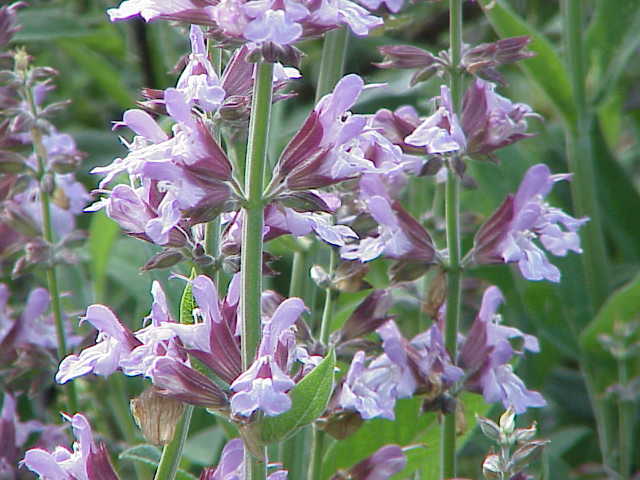
Sage tea is a caffeine-free herbal tea made from the leaves of common sage, the same plant used as a kitchen spice. People drink it for menopause hot flashes, memory, and mouth and throat care. The honest answer to what it is good for is: possibly hot flashes, but the research is small, and most trials tested extracts, capsules or mouth rinses, not tea that you drink.
The National Center for Complementary and Integrative Health (NCCIH), part of the U.S. National Institutes of Health, says only small amounts of research have been done on sage for health conditions, so firm conclusions cannot be reached. It also says common sage contains thujone, which can be toxic in large amounts, so sage may be unsafe in high doses or when used for long periods. It may also be unsafe during pregnancy.
Below is what each trial tested, how to brew a normal cup at home, and who should be careful. We found no trial of sage tea for sore throat.
What sage tea is good for
- Menopause hot flashes: a review of 4 studies with 310 people found sage reduced how often flashes happened compared with placebo, but not how severe they were; the abstract does not say whether it was tea
- Memory: extracts, not tea, improved memory scores in one trial of twenty adults over 65 and one of 94 adults aged 30 to 60
- Cholesterol and blood sugar: 500 mg leaf extract capsules three times a day for 3 months in 40 people with type 2 diabetes and high blood fats, against 40 on placebo; capsules, not tea
- Sore throat: sage is used traditionally for respiratory problems, but we found no trial of sage tea for sore throat
- Safety: common sage contains thujone, which can be toxic in large amounts, and it may be unsafe in pregnancy
Sage tea benefits, graded by the evidence
Strong = multiple human trials or a meta-analysis. Moderate = a few small trials. Preliminary = early, traditional or animal data.
May reduce how often menopause hot flashes happen
Moderate evidenceA review of clinical trials pooled 4 studies with 310 people. All 4 studies reported that sage reduced the frequency and severity of hot flashes in postmenopausal women. In the pooled analysis, the effect on frequency was significant compared with placebo, but the effect on severity was not. The abstract does not say whether the sage was drunk as tea or taken as an extract, and the studies were small. The National Center for Complementary and Integrative Health says a few small studies suggest sage might help.
Key evidenceMoradi et al., Int J Community Based Nurs Midwifery 2023: systematic review and meta-analysis of 4 studies, 310 people
May help memory and attention (as an extract, not tea)
Moderate evidenceIn a crossover trial, twenty healthy volunteers over 65 took four doses of a standardized sage extract (167, 333, 666 and 1332 mg) and a placebo. The 333-mg dose was linked with better secondary memory at all testing times and better accuracy of attention. In a second trial, 94 adults aged 30 to 60 took 600 mg a day of a sage combination (common sage polyphenols plus Spanish sage terpenoids) or placebo for 29 days, and did better on several working memory tasks. Both trials used extracts, and the second used two sage species together, so neither shows that sage tea works. NCCIH calls the amount of evidence small.
Key evidenceScholey et al., Psychopharmacology 2008: crossover trial, twenty older adults; Wightman et al., Nutrients 2021: randomized trial, 94 adults
May lower blood fats (as a leaf extract capsule)
Moderate evidenceIn a placebo-controlled trial, 40 people with type 2 diabetes and high blood fats took one 500 mg capsule of sage leaf extract three times a day for 3 months, and 40 took placebo. Compared with the start of the study, the extract lowered fasting glucose, HbA1c, total cholesterol, triglyceride and LDL cholesterol, and raised HDL cholesterol. No adverse effects were reported. This was a capsule, not tea. NCCIH says a few studies suggest benefits for blood fats, but there is not enough evidence on blood sugar.
Key evidenceKianbakht et al., Complement Ther Med 2013: randomized placebo-controlled trial, 40 people per group
Mouth rinse for dry mouth and mouth sores in cancer care (a rinse, not a drink)
Moderate evidenceIn a trial in a hospice unit, 88 adults with late-stage cancer used either a sage tea mouth rinse or a saline rinse for 4 days. Both rinses improved oral health scores, and the trial did not detect an overall significant difference. Dry mouth ratings improved more with sage than with saline. In a trial of 60 head and neck cancer patients, sage tea mouthwash and another tea mouthwash did not differ significantly in when grade 3 mouth sores began or how often they occurred. A third trial used a rinse of sage tea, thyme and peppermint hydrosol, not plain sage tea: on day 5, grade 1 mouth sores occurred in 10% of the rinse group and 53.3% of the control group. These were rinses used by people in cancer care, so they say little about drinking sage tea.
Key evidenceMonsen et al., Support Care Cancer 2021: randomized trial, 88 people; Ebert et al., Strahlenther Onkol 2021: 60 people; Mutluay Yayla et al., Complement Ther Med 2016: pilot trial
May ease premenstrual symptoms (as capsules)
Moderate evidenceIn a triple-blinded trial, 90 college students took 500-mg sage capsules or placebo once a day for 2 months. The average drop in symptom severity in the sage group was 19.84% in the first month and 23.42% in the second. Symptoms fell in both groups, with a bigger fall in the sage group. This was one trial of capsules in young women, not tea.
Key evidenceAbdnezhad et al., Complement Med Res 2019: triple-blinded randomized trial, 90 people
Is sage tea good for you?
- For most healthy adults, an occasional cup is likely a low-risk drink: the National Center for Complementary and Integrative Health (NCCIH), part of the U.S. National Institutes of Health, says sage is likely safe in the amounts commonly found in foods, and larger amounts were used safely for up to 8 weeks in research studies. It does not give a safe amount for tea.
- The research is mostly on extracts, capsules and mouth rinses. We found no trial of drinking sage tea for a health goal in people, and none of the results prove a treatment.
- Common sage contains thujone, which can be toxic in large amounts. Do not make the tea very strong or drink it for long periods.
- If you are pregnant, ask your health care provider first. NCCIH says sage may be unsafe in pregnancy.
- If you are allergic to mint, oregano or other plants in the Lamiaceae family, be careful: one boy had angioedema after drinking sage tea.
How to brew sage tea
1 to 2 teaspoons of dried sage leaf per 8 oz cup
Just-boiled water, poured over the leaves and covered
5 to 10 minutes
- Strain before drinking.
- This is an ordinary kitchen method. No source we reviewed gives a tested amount or brewing time for sage tea.
How much per day
No source we reviewed sets a safe daily amount of sage tea. NCCIH says sage is likely safe in the amounts commonly found in foods and that larger amounts were used safely for up to 8 weeks in research studies, but that it may be unsafe in high doses or for long periods because of thujone. Keep to an occasional cup, and ask your clinician before drinking it every day for a long time.
Caffeine-free. It is not made from the tea plant (Camellia sinensis), which is where the caffeine in green and black tea comes from. Does sage tea have caffeine?
Side effects, interactions and who should limit it
Side effects
- Allergic reactions, including angioedema (swelling), in people allergic to plants in the mint family; a 13-year-old boy had angioedema after drinking sage tea
- Cross-sensitivity among Lamiaceae herbs is common, so sage may trigger a reaction in people allergic to mint or oregano
- Large amounts: a case report lists vomiting, nausea, diarrhea, salivation, high blood pressure, fast heartbeat, dizziness, flushing, bluish skin and convulsions as symptoms linked to large sage intake
- Long-term use: because of thujone, NCCIH says sage may be unsafe if consumed for long periods
Interactions
- Any medicine: NCCIH advises talking with your health care provider before using any herbal product, because some herbs and medicines interact in harmful ways; we found no interaction study for sage tea
- Diabetes medicines: a sage leaf extract lowered fasting glucose in one trial of people with type 2 diabetes, and we found no interaction study, so ask your clinician or pharmacist before using sage regularly if you take them
Pregnancy and breastfeeding
The National Center for Complementary and Integrative Health (NCCIH), part of the U.S. National Institutes of Health, says it may be unsafe to use sage during pregnancy because its component thujone may have harmful effects, so ask your health care provider before drinking it. Little is known about whether sage is safe while breastfeeding, and we found no other data on that.
Frequently asked questions
What is sage tea good for?
Sage tea is used for menopause hot flashes, memory, and mouth and throat care. The National Center for Complementary and Integrative Health (NCCIH), part of the U.S. National Institutes of Health, says a few small studies suggest common sage might help reduce hot flashes, and that the evidence for memory is small. Most trials used extracts, capsules or mouth rinses, not tea you drink.
Does sage tea help with menopause hot flashes?
It may help. A review of 4 studies with 310 people found sage reduced how often hot flashes happened compared with placebo, but the effect on severity was not significant. The abstract does not say whether the studies used tea or an extract. The National Center for Complementary and Integrative Health (NCCIH), part of the U.S. National Institutes of Health, also describes the research as a few small studies.
Is sage tea good for a sore throat?
We found no trial of sage tea for sore throat. The National Center for Complementary and Integrative Health (NCCIH), part of the U.S. National Institutes of Health, says sage was traditionally used for digestive, respiratory, and skin problems. The European Medicines Agency (EMA), an agency of the European Union, lists sage leaf under mouth and throat disorders, but its page says the agency is still developing this information and has an ongoing call for scientific data. The sage tea trials we found were mouth rinses in cancer care, so they do not tell you whether it helps an ordinary sore throat.
Is sage tea safe?
In small amounts it is likely safe for most adults. The National Center for Complementary and Integrative Health (NCCIH), part of the U.S. National Institutes of Health, says sage is likely safe in the amounts commonly found in foods, and larger amounts were used safely for up to 8 weeks in research studies. Common sage also contains thujone, which can be toxic in large amounts, so it may be unsafe in high doses or for long periods. A case report links large intake to vomiting, diarrhea and convulsions.
Can you drink sage tea while pregnant or breastfeeding?
Ask your health care provider first. The National Center for Complementary and Integrative Health (NCCIH), part of the U.S. National Institutes of Health, says it may be unsafe to use sage during pregnancy because its component thujone may have harmful effects. Little is known about whether it is safe while breastfeeding.
Does sage tea help memory?
Maybe, but the evidence is for extracts, not tea. One trial of twenty adults over 65 found the 333-mg dose of a sage extract linked with better memory scores, and another of 94 adults aged 30 to 60 found better working memory after 29 days of a 600 mg sage combination. The National Center for Complementary and Integrative Health (NCCIH), part of the U.S. National Institutes of Health, calls the amount of evidence small.
Can sage tea lower cholesterol or blood sugar?
We found no trial of sage tea for this. In one trial, 40 people with type 2 diabetes and high blood fats took 500 mg leaf extract capsules three times a day for 3 months and had lower fasting glucose and cholesterol than at the start. The National Center for Complementary and Integrative Health (NCCIH), part of the U.S. National Institutes of Health, says there is not enough evidence on blood sugar. Do not use sage tea in place of diabetes care.
References
- National Center for Complementary and Integrative Health. Sage: Usefulness and SafetyView source
- Kianbakht S, Dabaghian FH. Improved glycemic control and lipid profile in hyperlipidemic type 2 diabetic patients consuming Salvia officinalis L. leaf extract: a randomized placebo. Controlled clinical trial. Complement Ther Med (2013)View source
- Moradi M, Ghavami V, Niazi A, Seraj Shirvan F, et al.. The Effect of Salvia Officinalis on Hot Flashes in Postmenopausal Women: A Systematic Review and Meta-Analysis. Int J Community Based Nurs Midwifery (2023)View source
- Wightman EL, Jackson PA, Spittlehouse B, Heffernan T, et al.. The Acute and Chronic Cognitive Effects of a Sage Extract: A Randomized, Placebo Controlled Study in Healthy Humans. Nutrients (2021)View source
- Scholey AB, Tildesley NT, Ballard CG, Wesnes KA, et al.. An extract of Salvia (sage) with anticholinesterase properties improves memory and attention in healthy older volunteers. Psychopharmacology (Berl) (2008)View source
- Monsen RE, Herlofson BB, Gay C, Fjeld KG, et al.. A mouth rinse based on a tea solution of Salvia officinalis for oral discomfort in palliative cancer care: a randomized controlled trial. Support Care Cancer (2021)View source
- Yazıcı S, Nacaroglu HT, Bahçeci Erdem S, Karaman S, et al.. Angioedema Due to Lamiaceae Allergy. Iran J Allergy Asthma Immunol (2018)View source
- Abdnezhad R, Simbar M, Sheikhan Z, Mojab F, et al.. [Salvia officinalis Reduces the Severity of the Premenstrual Syndrome]. Complement Med Res (2019)View source
- European Medicines Agency. Salviae officinalis folium - herbal medicinal productView source
- Ebert N, Kensche A, Löck S, Hadiwikarta WW, et al.. Results of a randomized controlled phase III trial: efficacy of polyphenol-containing cystus® tea mouthwash solution for the reduction of mucositis in head and neck cancer patients undergoing external beam radiotherapy. Strahlenther Onkol (2021)View source
- Mutluay Yayla E, Izgu N, Ozdemir L, Aslan Erdem S, et al.. Sage tea-thyme-peppermint hydrosol oral rinse reduces chemotherapy-induced oral mucositis: A randomized controlled pilot study. Complement Ther Med (2016)View source
- Rapino A, Ceccuzzi G, Perna B, DE Giorgio R, et al.. Acute Toxicity by Salvia Officinalis: A Rare Cause of Intestinal Sub-Occlusion. Curr Health Sci J (2023)View source
Guides that rank sage tea
Go deeper
Other teas
Is sage tea right for you?
Ask AskMN. It knows these studies, checks interactions with the medications you tell it about, and it is free and unlimited, no account needed.
This page is educational and is not medical advice. Herbal teas can interact with prescription medicines. Talk with a clinician or pharmacist before relying on any of them, especially if you are pregnant, breastfeeding, have a chronic condition, or take medication.