
What is thyme tea good for?
Thymus vulgaris L. or Thymus zygis L., the leaves and flowers
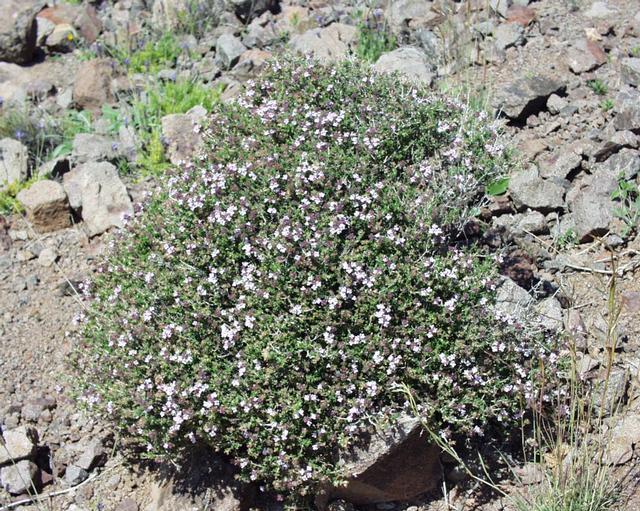
Thyme tea is used mostly for chesty coughs that come with a cold. The European Medicines Agency (EMA), an agency of the European Union, says thyme can be used this way based on long-standing use, not on strong clinical trials. We found no trial of plain thyme tea for cough, so how well it works in people is not known.
Thyme is the leaves and flowers of two plants, Thymus vulgaris and Thymus zygis. The human trials we found used a syrup, dried leaves or a sucked pearl, not a tea. The EMA's cough conclusion rests on use for at least 30 years (including at least 15 years within the EU), not on trial proof.
Below is what each human trial tested, how to brew thyme at home, and who should be careful. The EMA says thyme medicines must not be used by people who are allergic to thyme or to other plants of the Lamiaceae (Labiatae) family.
What thyme tea is good for
- Chesty cough with a cold: allowed by the European Medicines Agency based on long-standing use; no trial of thyme tea for cough was found
- Cough in children with asthma: a thyme syrup, added to routine care, lowered activity-induced cough in 60 children aged 5 to 12 (p = 0.042); syrup, not tea
- Memory, anxiety, depression and sleep: 500 mg of thyme leaves twice daily for one month changed scale scores in 106 students; leaves, not tea
- Dry mouth and hoarse voice after heavy talking: sucking thyme pearls helped how 18 voice professionals felt, not their measured voice; pearls, not tea
- Antioxidant capacity: one review line says thyme tea appears to improve it; no details were given
- Allergy: do not use thyme if you are allergic to thyme or to other plants of the Lamiaceae (Labiatae) family
Thyme tea benefits, graded by the evidence
Strong = multiple human trials or a meta-analysis. Moderate = a few small trials. Preliminary = early, traditional or animal data.
Eases activity-induced cough in children with asthma (as a syrup)
Moderate evidenceIn a triple-blind, placebo-controlled trial, 60 children aged 5 to 12 with an asthma flare were split into two groups of 30. One group got thyme powder made into a syrup for one week on top of routine medical treatment. The other got routine treatment and a placebo syrup. Activity-induced cough dropped more with thyme (p = 0.042). Wheezing and breathlessness did not differ between the groups. One lung-function measure, FEV1, differed (p = 0.048), but three others did not. This was a syrup used alongside medicine, not a tea.
Key evidenceEskandarpour et al., Allergol Immunopathol 2024: 60-child triple-blind placebo-controlled RCT
May affect memory, anxiety, depression and sleep scores (as dried leaves)
Moderate evidenceIn a randomized trial, 106 university students were split into two groups. One group took 500 mg of thyme leaves twice a day for one month. The other took a placebo. Scores fell on all the memory, anxiety, depression and sleep scales and subscales in the thyme group compared with the control group. The two exceptions were the sleep latency and sleep duration parts of the sleep questionnaire. This was one trial in students, using leaves, not tea.
Key evidenceAlqudah et al., Eur Rev Med Pharmacol Sci 2023: 106-student RCT
Chesty cough with a cold (traditional use)
Preliminary evidenceThe European Medicines Agency's committee on herbal medicines concluded that thyme can be used for productive (chesty) coughs with colds based on long-standing use. It said the clinical evidence was insufficient. It looked at one study of 60 adults with productive cough that compared thyme with bromhexine, an established cough treatment. There was no significant difference between them, but the study was small and the thyme preparation was not described, so firm conclusions could not be drawn. A meta-analysis found strong evidence for ivy/primrose/thyme preparations in treating cough, but those were combination products from 4 trials, so thyme cannot be credited alone, and none was a tea.
Key evidenceWagner et al., Forsch Komplementmed 2015: meta-analysis of herbal cough trials; EMA thyme summary
Eases dry mouth and hoarseness after heavy voice use (as sucked pearls)
Preliminary evidenceIn a small randomized, placebo-controlled, double-blind trial, 18 professional voice users were analyzed, 9 in each group. After heavy voice use, those who sucked thyme pearls felt less dry mouth and hoarseness than those who sucked a placebo. Measured voice tests showed no difference between the groups. The trial was tiny, and the pearls were not a tea.
Key evidenceFrechen and Latoszek, J Voice 2024: 18-person randomized placebo-controlled trial
May raise antioxidant capacity (as tea, in athletes)
Preliminary evidenceA review of supplements for wrestlers included one line saying that thyme tea appears to improve antioxidant capacity. The summary gave no numbers, no dose and no details of the study behind it. The same review said effect sizes across supplements were often small and results were often mixed. This is the only mention of thyme tea itself in the sources reviewed, and it is too thin to rely on.
Key evidenceCoutino Diaz et al., Curr Nutr Rep 2025: systematic review of supplements in wrestlers
Is thyme tea good for you?
- Thyme tea is a traditional choice for chesty coughs with a cold. That use rests on long-standing use, not on trials of the tea.
- The human trials we found tested a syrup, dried leaves and sucked pearls. None shows that brewed thyme tea works.
- Skip it if you are allergic to thyme or to other plants of the Lamiaceae (Labiatae) family. Stomach problems may occur.
- See a doctor if a cough lasts longer than one week or gets worse.
- We found no data on pregnancy, breastfeeding, drug interactions or a safe daily limit.
How to brew thyme tea
1 to 2 teaspoons of dried thyme per 8 oz cup
Just-boiled water, poured over the herb
5 to 10 minutes, covered
- Keep the cup covered while it steeps.
- Strain before drinking.
- The sources reviewed gave no tested tea recipe for thyme, so this is the ordinary kitchen method and not a dose.
How much per day
We found no study that sets a safe or useful daily amount of thyme tea. The student trial used 500 mg of thyme leaves twice a day for one month, but that was leaves, not tea. The European Medicines Agency says to see a doctor if symptoms last longer than one week or get worse.
Caffeine-free. It is not made from the tea plant (Camellia sinensis), which is where the caffeine in green and black tea comes from. Does thyme tea have caffeine?
Side effects, interactions and who should limit it
Side effects
- Allergic reactions in people who are allergic to thyme or to other plants of the Lamiaceae (Labiatae) family
- Stomach problems may occur, according to the European Medicines Agency
- Minor adverse effects were reported for thyme in an overview of systematic reviews, which did not list them
- Thyme herb was found to contain very high amounts of salicylate by weight in a food analysis; we found no data on how much a cup holds or whether it matters for people who are sensitive to salicylates
Interactions
- Many medicines: a review of 18 herbal supplements that included thyme warned that many of the compounds it identified have drug interactions and additive effects that could raise the risk of bleeding, low blood pressure and low blood sugar. It did not say which herbs, and we found no interaction study of thyme tea
- Blood pressure medicines: one review looked at thyme and possible interactions with these drugs, but its summary gives no findings, so no conclusion can be drawn
Pregnancy and breastfeeding
We found no data on thyme tea in pregnancy or breastfeeding in the sources reviewed. The European Medicines Agency's public summary says it is not meant to give practical advice on using thyme medicines. Ask your clinician before drinking it regularly.
Frequently asked questions
What is thyme tea?
Thyme tea is a caffeine-free herbal tea made from thyme, which the European Medicines Agency (EMA) defines as the leaves and flowers of Thymus vulgaris or Thymus zygis. The EMA notes that thyme medicines are usually available as herbal tea to be drunk or in liquid or solid forms to be taken by mouth.
What is thyme tea good for?
It is mostly used for chesty coughs that come with a cold. That use is based on tradition, and the European Medicines Agency (EMA) says clinical evidence is insufficient. Human trials we found used a syrup, dried leaves and sucked pearls, not tea.
Does thyme tea help a cough?
It is not proven. The European Medicines Agency (EMA) allows thyme for productive (chesty) coughs with colds based on long-standing use. The one study it reviewed, in 60 adults, found no significant difference between thyme and bromhexine, and the EMA said firm conclusions could not be drawn. A meta-analysis found strong evidence for ivy/primrose/thyme combinations, but those are not tea and thyme cannot be credited alone.
Is thyme tea safe?
For most people it is likely fine in small amounts, but we found no safe upper limit. The European Medicines Agency (EMA) says thyme medicines must not be used by people allergic to thyme or to other plants of the Lamiaceae (Labiatae) family, and that stomach problems may occur. An overview of systematic reviews reported minor adverse effects for thyme.
Can children drink thyme tea?
The European Medicines Agency (EMA) says most thyme preparations should only be used in adults and adolescents over the age of 12 years, but a few can also be used in children above 4 years. That summary covers thyme medicines, not home tea. Ask a pediatrician before giving a child thyme tea.
Is thyme tea safe in pregnancy?
We found no data on thyme tea in pregnancy or breastfeeding in the sources reviewed, so we cannot say it is safe. Ask your clinician before drinking it regularly.
Does thyme tea help memory, anxiety or sleep?
One randomized trial in 106 university students found lower scores on memory, anxiety, depression and sleep scales after one month of 500 mg of thyme leaves twice a day, compared with a placebo. The leaves were not a tea, and it was a single trial in students, so it is not proof that thyme tea does the same.
How long can I drink thyme tea for a cough?
The European Medicines Agency (EMA) says that if symptoms last longer than one week or worsen during use of a thyme medicine, a doctor or a qualified healthcare practitioner should be consulted. Do not rely on the tea past that point.
References
- European Medicines Agency. Thymi herba - herbal medicinal productView source
- Alqudah A, Qnais EY, Bseiso Y, Gammoh O, et al.. Effects of orally administered Thymus vulgaris leaves on memory, anxiety, depression, and sleep quality in university students: a randomized controlled trial. Eur Rev Med Pharmacol Sci (2023)View source
- Eskandarpour E, Ahadi A, Jazani AM, Azgomi RND, et al.. Thymus vulgaris ameliorates cough in children with asthma exacerbation: a randomized, triple-blind, placebo-controlled clinical trial. Allergol Immunopathol (Madr) (2024)View source
- Frechen S, V Latoszek E. Effectiveness of Thymepearls After Vocal Loading in Professional Voice Users: A Randomized Placebo-Controlled Double-Blind Clinical Trial. J Voice (2024)View source
- Coutiño Díaz M, Prieto Martínez A, Zare R, Ali Redha A, et al.. Evidence-Based Supplementation Strategies for Wrestlers: A Systematic Review. Curr Nutr Rep (2025)View source
- Wagner L, Cramer H, Klose P, Lauche R, et al.. Herbal Medicine for Cough: a Systematic Review and Meta-Analysis. Forsch Komplementmed (2015)View source
- Thompson A, Hynicka LM, Shere-Wolfe KD. A Comprehensive Review of Herbal Supplements Used for Persistent Symptoms Attributed to Lyme Disease. Integr Med (Encinitas) (2023)View source
- Posadzki P, Watson LK, Ernst E. Adverse effects of herbal medicines: an overview of systematic reviews. Clin Med (Lond) (2013)View source
- Swain AR, Dutton SP, Truswell AS. Salicylates in foods. J Am Diet Assoc (1985)View source
- Nyulas KI, Simon-Szabó Z, Pál S, Fodor MA, et al.. Cardiovascular Effects of Herbal Products and Their Interaction with Antihypertensive Drugs-Comprehensive Review. Int J Mol Sci (2024)View source
Guides that rank thyme tea
Go deeper
Other teas
Is thyme tea right for you?
Ask AskMN. It knows these studies, checks interactions with the medications you tell it about, and it is free and unlimited, no account needed.
This page is educational and is not medical advice. Herbal teas can interact with prescription medicines. Talk with a clinician or pharmacist before relying on any of them, especially if you are pregnant, breastfeeding, have a chronic condition, or take medication.