
Is arnica tea safe to drink?
Arnica montana flowers (the dried flower heads), a plant in the sunflower family
The sources reviewed for this page advise against drinking arnica tea.
This page explains why, what the research did and did not test, and what to do if someone has drunk it.
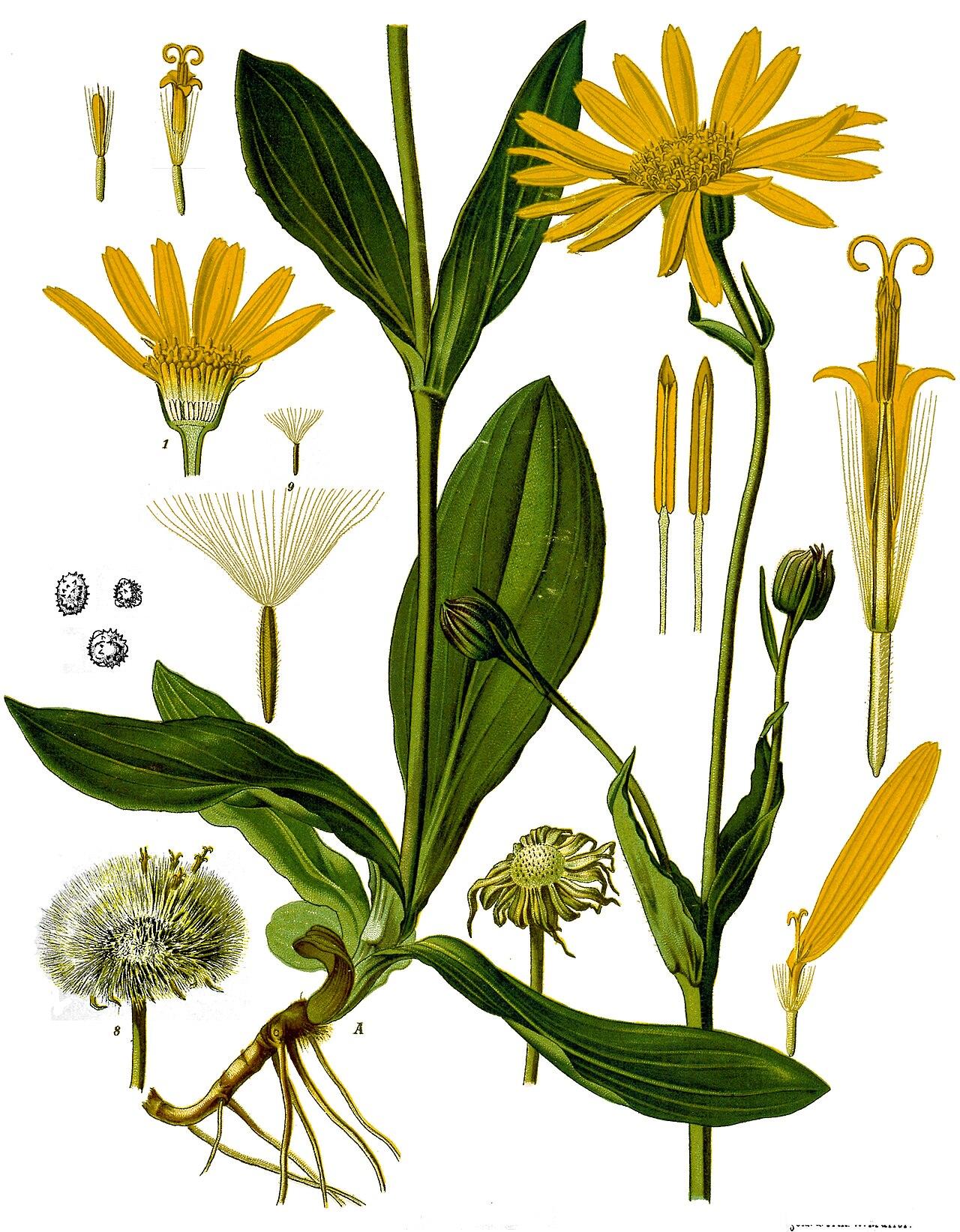
Arnica tea (te de arnica in Spanish) is not considered safe to drink. The National Capital Poison Center (Poison Control) says that eating the plant, or using the creams, ointments, extracts or oils, can result in serious poisoning. MedlinePlus, from the U.S. National Library of Medicine, says arnica is considered poisonous and that, taken by mouth, it can cause vomiting, heart damage, organ failure, increased bleeding, coma and death. Poison Control also says people who are pregnant or feeding an infant with breast milk should not use arnica.
Two case reports show why. In one, a 9-day-old breastfed baby was brought to an emergency room 48 hours after his mother began drinking arnica tea. He had jaundice and severe hemolysis, which is destruction of red blood cells, and was treated with 2 blood transfusions before he recovered fully. In the other, a 24-year-old woman drank a cup of tea made from arnica flowers and had heart palpitations, a fast heartbeat and diarrhea 2 hours later. She recovered fully after fluids in a hospital.
The sources do not give a safe amount of arnica to drink. The research on possible benefits is almost all on gels, ointments or very diluted homeopathic products, so it does not show that the tea works.
What to know about arnica tea
- Is it safe to drink? The sources advise against it. MedlinePlus says arnica can be unsafe by mouth unless it is used in homeopathic dilutions.
- Pregnant or breastfeeding: do not drink it. Poison Control says arnica teas or tinctures can result in miscarriage.
- Surgery and blood thinners: arnica might slow blood clotting, and MedlinePlus says to stop using it at least 2 weeks before a scheduled surgery.
- Allergy: do not take arnica if you are allergic to sunflowers, marigolds, ragweed or other sunflower-family plants.
- Benefits: the research is on gels and homeopathic products, not tea. A gel on the skin may help hand or knee osteoarthritis. Results for bruises after surgery are mixed.
- Children: Poison Control says no part of the arnica plant should be eaten.
Claimed arnica tea benefits, and what the research tested
Strong = multiple human trials or a meta-analysis. Moderate = a few small trials. Preliminary = early, traditional or animal data.
Osteoarthritis pain of the hand or knee (arnica gel on the skin, not tea)
Moderate evidenceA Cochrane review of skin treatments for osteoarthritis found moderate evidence from a single study of 174 people with hand osteoarthritis. Arnica extract gel probably gave similar benefits to ibuprofen gel. Side effects were higher in the arnica gel group (13%) than in the ibuprofen group (8%). The review said the quality and quantity of research are insufficient. This was a gel on the skin, so it says nothing about drinking arnica.
Key evidenceCameron et al., Cochrane Database Syst Rev 2013: systematic review, single study of 174 people
Bruises and swelling after nose surgery (rhinoplasty)
Preliminary evidenceA meta-analysis of care after rhinoplasty pooled 11 trials with a total of 627 patients. Eyelid swelling and bruises during the first 7 days were statistically decreased in the arnica groups compared with controls. The abstract does not say which arnica products were used, and the authors said more trials with thorough methods are needed. Other sources found no benefit after eyelid surgery, so the overall picture is mixed, and none of this was tea.
Key evidenceLee et al., Eur Arch Otorhinolaryngol 2017: meta-analysis, 11 trials, 627 patients
Bruises after eyelid surgery (no benefit found)
Preliminary evidenceAn American Academy of Ophthalmology report reviewed 11 studies of homeopathic agents or vitamins used to reduce bruises after surgery around the eyes. In 7 controlled studies, arnica around the time of surgery gave no or negligible benefit compared with placebo. The report concluded that the current literature does not support arnica for this use. It found no serious side effects from the homeopathic agents or vitamins. Memorial Sloan Kettering also says arnica was not helpful after eyelid surgery.
Key evidenceTao et al., Ophthalmology 2022: American Academy of Ophthalmology review of 11 studies
Recovery after surgery (very diluted homeopathic arnica, not tea)
Preliminary evidenceA meta-analysis of homeopathic arnica in surgery looked at 29 comparisons and used 28 of them. The placebo-controlled trials gave an overall effect size of Hedge's g = 0.18 (95% confidence interval -0.007/0.373; p = 0.059). The authors say the large effects came mainly from nonrandomized studies, and that this converges against zero in the randomized trials. Homeopathic products are extremely diluted, so this is not evidence for tea.
Key evidenceGaertner et al., Front Surg 2021: meta-analysis of 29 comparisons
Should you drink arnica tea?
- Arnica tea is not a safe everyday drink. The poison and medical sources here advise against taking arnica by mouth, apart from very diluted homeopathic products.
- Do not drink it if you are pregnant or breastfeeding, if you are allergic to sunflower-family plants, or if you take blood thinners. Do not give arnica to children.
- The research on benefits is on gels and ointments on unbroken skin, not tea, and the results are limited or mixed. Ask a healthcare provider before using any arnica product.
- If someone has swallowed arnica and feels unwell, call your poison center at 1-800-222-1222.
Why this page has no recipe
Do not brew arnica tea. No source reviewed for this page gives a safe recipe, and the safety sources advise against taking arnica by mouth.
- If you want to try arnica, ask a healthcare provider about creams or ointments for unbroken skin. Poison Control says to use them only for short periods of time.
No safe amount of arnica tea is given in the sources, and none is recommended. Poison Control calls arnica fairly safe only for short periods or in very diluted forms, and warns that eating the plant or using extracts or oils can result in serious poisoning. Cleveland Clinic notes there is no consistent dosage recommendation for arnica.
Side effects, interactions and who should limit it
Side effects
- Poisoning if eaten or taken by mouth in large amounts: vomiting, diarrhea, fast heartbeat, high blood pressure, damage to the heart and other organs, and increased bleeding. MedlinePlus adds coma and death
- Case reports after drinking arnica flower tea: heart palpitations, a fast heartbeat and diarrhea in a 24-year-old woman, and hemolytic anemia in a breastfed 9-day-old baby
- Skin irritation and swelling when arnica is used on the skin, and contact dermatitis in case reports
- A case report of severe vomiting and vision loss after someone swallowed a large quantity of the homeopathic medicine Arnica-30
Interactions
- Blood thinners such as aspirin, clopidogrel and warfarin: Poison Control says arnica should not be taken with medicines or herbs that thin the blood. MedlinePlus rates this a moderate interaction. Memorial Sloan Kettering says the clinical relevance of these interactions is not known
- Herbs and supplements that might slow clotting, such as garlic, ginger, ginkgo and Panax ginseng: taking them with arnica might increase the risk of bleeding
- Surgery: arnica might cause extra bleeding during and after surgery. MedlinePlus says to stop using it at least 2 weeks before a scheduled surgery
- Blood pressure medicine: Cleveland Clinic says arnica could make blood pressure medication less effective
Pregnancy and breastfeeding
Do not drink arnica tea or take arnica by mouth if you are pregnant or breastfeeding. The National Capital Poison Center (Poison Control) says drinking arnica teas or tinctures can result in miscarriage, and arnica tea was the likely cause of hemolytic anemia in an infant fed with breast milk when the mother drank the tea. A case report describes hemolytic anemia in a 9-day-old breastfed infant 48 hours after his mother began drinking arnica flower tea.
Frequently asked questions
Can you drink arnica tea?
The sources advise against it. MedlinePlus, from the U.S. National Library of Medicine, says arnica can be unsafe when taken by mouth unless it is used in homeopathic dilutions. Cleveland Clinic says not to take arnica by mouth. A University of Texas at El Paso fact sheet says arnica teas should not be taken internally because of their potential toxicity.
Is arnica tea safe?
No source reviewed for this page shows that it is. The National Capital Poison Center (Poison Control) says eating the plant or using the extracts or oils can result in serious poisoning, and describes a baby and a young woman who were harmed after drinking arnica tea. The sources disagree on the FDA: Poison Control says the FDA has classified arnica as generally recognized as safe, while Cleveland Clinic says the FDA has classified the herb as unsafe. Both say the Canadian government has banned it in food.
What are the benefits of arnica tea?
No source reviewed for this page tested arnica tea. The studies are on gels, ointments and very diluted homeopathic products. The best-supported use is a gel on the skin for osteoarthritis, with moderate evidence from a single study of 174 people. Results for bruises after surgery are mixed, and MedlinePlus, from the U.S. National Library of Medicine, says there is no good scientific evidence for several other uses.
Is arnica tea safe while pregnant or breastfeeding?
No. MedlinePlus, from the U.S. National Library of Medicine, says not to take arnica by mouth or apply it to the skin if you are pregnant or breastfeeding. The National Capital Poison Center (Poison Control) says arnica teas or tinctures can result in miscarriage and that arnica tea likely caused anemia in a breastfed infant.
Is homeopathic arnica safe to swallow?
MedlinePlus, from the U.S. National Library of Medicine, says homeopathic arnica is possibly safe because the products often contain no active ingredient. But a case report describes severe vomiting and vision loss after someone swallowed a large quantity of Arnica-30. Cleveland Clinic warns that if a product has detectable helenalin, the risks range from vomiting to organ damage and death.
What is te de arnica, and is Mexican arnica tea different?
Te de arnica is Spanish for arnica tea. Mexican arnica is a different plant, Heterotheca inuloides, also called false arnica. In Mexican traditional medicine its teas have been taken for nervous disorders, stomach ailments and fever, but the fact sheet says internal use of this plant is not recommended.
Can I use arnica on my skin instead?
Gels and ointments are the forms that have been studied. The National Capital Poison Center (Poison Control) says arnica is thought to have limited toxicity on unbroken skin for short periods and should not be used on broken skin. Memorial Sloan Kettering Cancer Center says it can cause irritation and swelling, and a fact sheet says to stop at the first sign of irritation. Ask a healthcare provider first.
What should I do if someone swallowed arnica?
Call your poison center at 1-800-222-1222. Cleveland Clinic says that if a child has gotten into an arnica product, you should contact poison control immediately.
References
- National Capital Poison Center. Caution when using Arnica productsView source
- MedlinePlus, U.S. National Library of Medicine. Arnica: MedlinePlus SupplementsView source
- Memorial Sloan Kettering Cancer Center. ArnicaView source
- Cleveland Clinic. Arnica: What It Is and How To Use ItView source
- Cameron M, Chrubasik S. Topical herbal therapies for treating osteoarthritis. Cochrane Database Syst Rev (2013)View source
- Tao JP, Aakalu VK, Freitag SK, Sobel RK, et al.. Homeopathic Agents or Vitamins in Reducing Ecchymosis after Oculofacial Surgery: A Report by the American Academy of Ophthalmology. Ophthalmology (2022)View source
- Gaertner K, Baumgartner S, Walach H. Is Homeopathic Arnica Effective for Postoperative Recovery? A Meta-analysis of Placebo-Controlled and Active Comparator Trials. Front Surg (2021)View source
- Lee HS, Yoon HY, Kim IH, Hwang SH. The effectiveness of postoperative intervention in patients after rhinoplasty: a meta-analysis. Eur Arch Otorhinolaryngol (2017)View source
- University of Texas at El Paso, Herbal Safety. Mexican ArnicaView source
- Venkatramani DV, Goel S, Ratra V, Gandhi RA. Toxic optic neuropathy following ingestion of homeopathic medication Arnica-30. Cutan Ocul Toxicol (2013)View source
- Final report on the safety assessment of Arnica montana extract and Arnica montana. Int J Toxicol (2001)View source
- Heck AM, DeWitt BA, Lukes AL. Potential interactions between alternative therapies and warfarin. Am J Health Syst Pharm (2000)View source
Go deeper
Other teas
Is arnica tea right for you?
Ask AskMN. It knows these studies, checks interactions with the medications you tell it about, and it is free and unlimited, no account needed.
This page is educational and is not medical advice. Herbal teas can interact with prescription medicines. Talk with a clinician or pharmacist before relying on any of them, especially if you are pregnant, breastfeeding, have a chronic condition, or take medication.