
What is cerasee tea good for?
Momordica charantia (bitter melon, bitter gourd) leaves and vine, a climbing plant in the Cucurbitaceae family
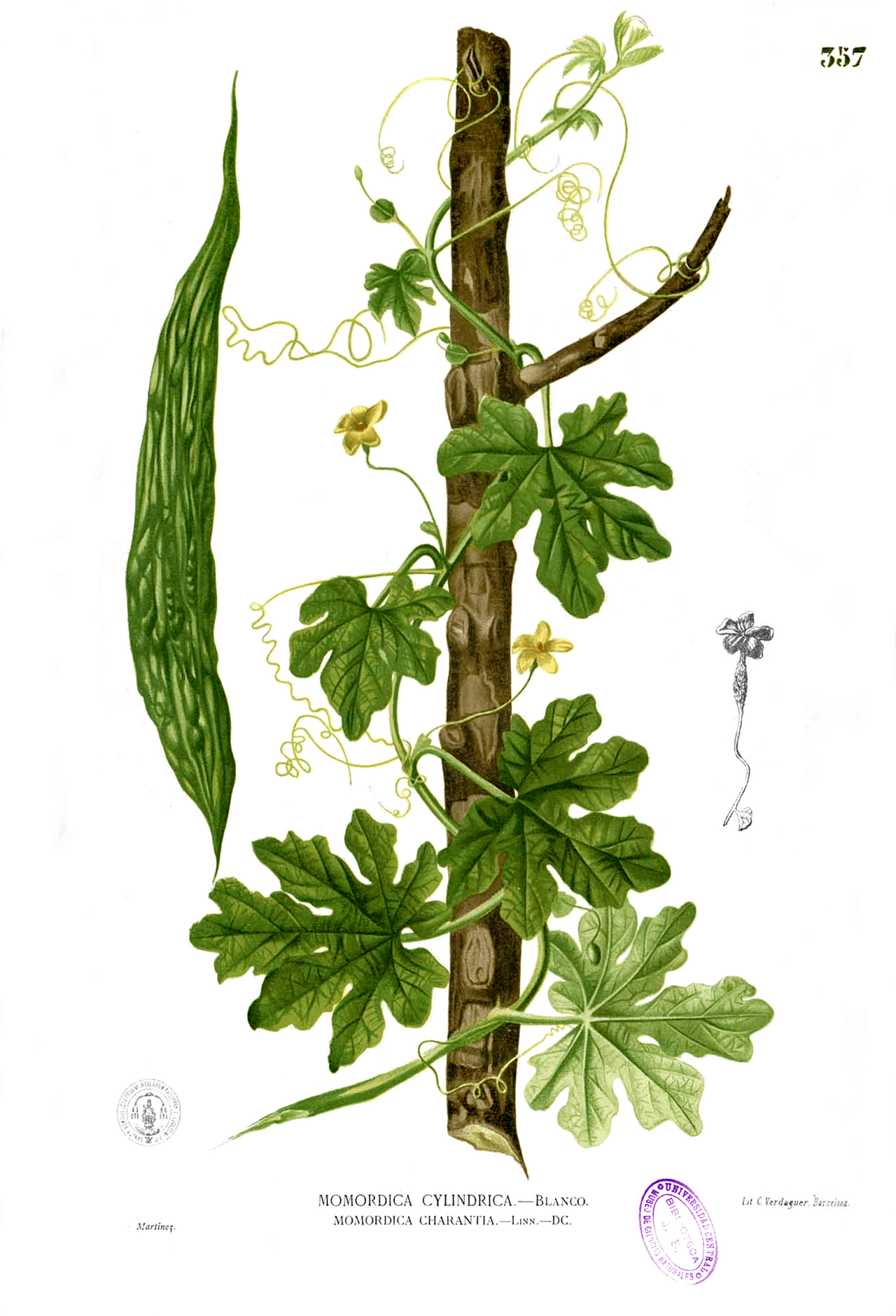
Cerasee tea is a bitter herbal tea, usually made from the leaves and vine of bitter melon (Momordica charantia), and it is mostly used for blood sugar. The evidence for the tea itself is thin. We found no human trial of cerasee tea or of bitter melon leaf tea. The human trials used the fruit, fruit powder, juice or extracts, and animal and lab work on leaves cannot show a benefit in people.
Safety comes first with this plant. Memorial Sloan Kettering Cancer Center says bitter melon should be avoided in pregnancy, and MedlinePlus, from the U.S. National Library of Medicine, says it is possibly unsafe by mouth during pregnancy. Bitter melon may also add to the effect of diabetes medicines and insulin, which could push blood sugar too low.
Cerasee is one of the many names for bitter melon, which is also called bitter gourd. This page keeps the evidence on leaves, on fruit and on extracts apart, so you can see what was actually tested.
What cerasee tea is good for
- Type 2 diabetes: a 12-week trial of bitter melon extract in 90 analyzed people lowered average fasting glucose (p = 0.014), but two reviews of trials disagree; extract, not tea
- Leaves: no human trial of leaf tea was found; a pooled review of 2 trials found 28 days of oral leaf extract raised a diabetic foot ulcer healing score; extract, not tea
- Pregnancy: avoid. MedlinePlus says bitter melon is possibly unsafe by mouth in pregnancy, and animal studies suggest developmental abnormalities
- Diabetes medicines and insulin: bitter melon may add to their effect and lower blood sugar too far
- Weight loss: a review of 9 trials (414 people) found no significant effect on body weight; fruit and extract trials, not tea
Cerasee tea benefits, graded by the evidence
Strong = multiple human trials or a meta-analysis. Moderate = a few small trials. Preliminary = early, traditional or animal data.
Blood sugar in type 2 diabetes (fruit and extract, not tea; results conflict)
Moderate evidenceA 12-week placebo-controlled trial of bitter melon extract analyzed 90 people with type 2 diabetes. Average fasting glucose fell in the bitter melon group (p = 0.014), while HbA1c stayed unchanged in both groups. Reviews of randomized trials disagree. One review of 10 studies (1045 people) found lower fasting glucose, after-meal glucose and HbA1c than placebo, and another review of 9 studies (414 people) found no significant effect. The second review said the trials were too short and low in power. None of the trials tested tea.
Key evidenceKim et al., Complement Ther Med 2020: placebo-controlled RCT of extract. Peter et al., J Ethnopharmacol 2019, and Laczkó-Zöld et al., Front Nutr 2023: reviews that disagree
May lower fasting glucose in prediabetes (fruit, not tea)
Moderate evidenceTwo randomized studies tested freeze-dried bitter gourd fruit in people with prediabetes. In the 4-week study (30 people, 2.4 g a day of freeze-dried fruit juice) there were no significant differences from placebo. In the 12-week study (38 people, 3.6 g a day of freeze-dried whole fruit) fasting glucose fell (p = 0.014) and fasting insulin fell (p = 0.007). The authors saw no signs of health risks or side effects. This was fruit, not leaf tea.
Key evidenceMes et al., J Ethnopharmacol 2025: two randomized studies, 30 and 38 people
Cholesterol and triglycerides (fruit and extract, not tea; results conflict)
Moderate evidenceA review of 8 randomized trials (423 people) found that bitter melon lowered total cholesterol by 9.71 mg/dL and triglycerides by 10.24 mg/dL, but did not significantly lower LDL cholesterol. The trials were short, under 3 months. A second review, of 9 trials, found no significant change in total cholesterol. Neither review tested tea.
Key evidenceAmini et al., Phytother Res 2024: meta-analysis of 8 RCTs, 423 people
May help diabetic foot ulcers heal (leaf extract taken by mouth)
Moderate evidenceThis is the one human finding in the sources reviewed that used leaves. A pooled analysis of 2 randomized trials found that bitter melon leaf extract taken by mouth daily for 28 days raised the total ulcer healing score (p = 0.001). The reviewers called the methods of most studies undesirable and asked for more robust trials. It was an extract, not tea.
Key evidenceZamanifard et al., Int Wound J 2024: meta-analysis of 28 RCTs of herbal products, 2 of them on bitter melon leaf extract
Raises insulin in diabetic pigs (stems and leaves, animal study)
Preliminary evidenceIn 20 obese pigs with chemically induced diabetes, dried powdered bitter gourd stems and leaves from one variety raised blood insulin by 28% (from 53 to 67 pmol/L, p<0.03). The other varieties showed rises that were not significant. The effect was seen in mildly diabetic pigs but not in severely diabetic ones. This is an animal study with powder, not tea, and it is not proof of a benefit in people.
Key evidenceKoopmans et al., PLoS One 2024: crossover study in 20 minipigs
Inflammation (leaf extract, in animals and cells)
Preliminary evidenceA lab study made an alcohol-and-water extract of bitter melon leaves. In rats, doses up to 400 mg/kg for 28 days caused no clinical or behavioral signs of toxicity. The extract also reduced white blood cell build-up in an animal model of peritonitis, and it reduced inflammatory signals in cells. This was an extract, not tea, and it was not tested in people.
Key evidenceOliveira et al., Molecules 2025: rat and cell study of leaf extract
Is cerasee tea good for you?
- Cerasee tea has not been tested in people. The human evidence comes from bitter melon fruit and extracts, and it is mixed.
- Do not drink it if you are pregnant. The sources say it is possibly unsafe in pregnancy, and animal studies suggest it can cause developmental abnormalities.
- If you take diabetes medicines or insulin, talk to your clinician before drinking it. Bitter melon may add to their effect and drop blood sugar too low. Do not use it in place of any medicine.
- Skip the seeds, extracts and large amounts of juice. Memorial Sloan Kettering Cancer Center says these can cause adverse effects, and case reports describe serious harm, including kidney injury.
How to brew cerasee tea
1 to 2 teaspoons of dried leaf per 8 oz cup. This is the ordinary kitchen method, not a studied dose, and it is not advice to drink it if you are pregnant or take diabetes medicines.
Just-boiled water, poured over the leaf
5 to 10 minutes, covered
- Expect a strongly bitter taste. Bitter melon gets its name from it.
- In a survey of traditional healers in Nigeria, the preferred method for plants used for diabetes, bitter melon among them, was a decoction of fresh leaves, stem bark and roots. No source reviewed gives a safe strength for a cup.
How much per day
No trial has set a safe amount of cerasee tea. MedlinePlus, from the U.S. National Library of Medicine, says bitter melon has most often been used by adults in doses of 0.5-12 grams by mouth daily for up to 16 weeks, but it does not say how much of that was tea. It calls bitter melon possibly safe for up to 4 months. Talk to your clinician before drinking it regularly.
Caffeine-free. It is not made from the tea plant (Camellia sinensis), which is where the caffeine in green and black tea comes from. Does cerasee tea have caffeine?
Side effects, interactions and who should limit it
Side effects
- Upset stomach in some people
- Case reports with juice or extracts: an irregular rapid heartbeat after a few days of juice, a stomach ulcer that needed a blood transfusion after homemade extract, and severe kidney injury. These were single cases, not trial results, and none involved leaf tea
- Headache, fever, abdominal pain and coma from vicine, a compound in the seeds
- A pharmacy review listed hypoglycemic coma and convulsions in children, and headaches, among reported adverse effects of bitter melon
- In trials of extract and fruit, no serious adverse events were reported, but the trials were short, with follow-up of 4 to 16 weeks in the reviews
Interactions
- Diabetes medicines and insulin: bitter melon might lower blood sugar, and the effects may add together so blood sugar drops too low. Monitor blood sugar closely and ask your clinician
- Other herbs and supplements that lower blood sugar, such as aloe, cassia cinnamon, chromium and prickly pear cactus: the effects might add together
- Medicines moved by cell pumps (P-glycoprotein substrates), and pazopanib: bitter melon might change how much medicine stays in the body. The clinical significance has not been determined
- Medicines processed by the CYP2C9 enzyme: bitter melon extract inhibits CYP2C9 and may affect how these medicines are handled. The clinical significance has not been determined
- G6PD deficiency: bitter melon seeds might cause severe anemia, so avoid the seeds
- Surgery: bitter melon might interfere with blood sugar control during and after surgery. MedlinePlus says to stop it at least 2 weeks before a scheduled surgery
Pregnancy and breastfeeding
Avoid cerasee tea in pregnancy. MedlinePlus, from the U.S. National Library of Medicine, says bitter melon is possibly unsafe by mouth during pregnancy because certain chemicals might harm the pregnancy. Memorial Sloan Kettering Cancer Center says animal studies suggest it can cause developmental abnormalities. For breastfeeding, MedlinePlus says there is not enough reliable information and advises staying on the safe side and avoiding use.
Frequently asked questions
What is cerasee tea?
Cerasee tea is a caffeine-free bitter herbal tea, usually made from the leaves and vine of bitter melon (Momordica charantia). MedlinePlus, from the U.S. National Library of Medicine, lists cerasee among the other names for bitter melon, which it describes as a vine. Most research used the fruit or extracts, not tea.
Does cerasee tea lower blood sugar?
No trial has tested cerasee tea. Trials of bitter melon fruit and extract gave mixed results. A 12-week trial of extract in 90 people with type 2 diabetes found lower average fasting glucose (p = 0.014), but a review of 9 trials found no significant effect on fasting blood glucose compared with placebo. Memorial Sloan Kettering Cancer Center says bitter melon cannot be recommended as a replacement therapy for insulin or hypoglycemic drugs.
Is cerasee tea safe?
It is not safe for everyone. MedlinePlus, from the U.S. National Library of Medicine, says bitter melon is possibly safe by mouth for up to 4 months and might cause upset stomach, but it is possibly unsafe in pregnancy. Memorial Sloan Kettering Cancer Center lists case reports of serious harm with juice and extracts, including a stomach ulcer and severe kidney injury. We found no safety study of cerasee tea itself.
Can you drink cerasee tea when pregnant?
The sources say no. MedlinePlus, from the U.S. National Library of Medicine, says bitter melon is possibly unsafe by mouth during pregnancy, and Memorial Sloan Kettering Cancer Center says animal studies suggest it may cause developmental abnormalities. For breastfeeding, MedlinePlus says to stay on the safe side and avoid use.
Does cerasee tea help you lose weight?
We found no evidence that it does. A review of 9 randomized trials with 414 people found no significant effect of bitter melon on body weight. Those trials used fruit or extracts, not tea.
Does cerasee tea interact with medicines?
It may. MedlinePlus, from the U.S. National Library of Medicine, says bitter melon taken with diabetes medicines might cause blood sugar to drop too low, so blood sugar should be monitored closely. Memorial Sloan Kettering Cancer Center also lists insulin, medicines moved by cell pumps and medicines processed by the CYP2C9 enzyme. Talk to your clinician or pharmacist before drinking it if you take any of these.
Does cerasee tea fight cancer?
There is no evidence that it does in people. Memorial Sloan Kettering Cancer Center says lab studies suggest bitter melon extracts may kill certain cancer cells, but this has not been studied in cancer patients, and human studies on cancer are lacking.
References
- Memorial Sloan Kettering Cancer Center. Bitter MelonView source
- MedlinePlus, U.S. National Library of Medicine. Bitter Melon: MedlinePlus SupplementsView source
- Laczkó-Zöld E, Csupor-Löffler B, Kolcsár EB, Ferenci T, et al.. The metabolic effect of Momordica charantia cannot be determined based on the available clinical evidence: a systematic review and meta-analysis of randomized clinical trials. Front Nutr (2023)View source
- Kim SK, Jung J, Jung JH, Yoon N, et al.. Hypoglycemic efficacy and safety of Momordica charantia (bitter melon) in patients with type 2 diabetes mellitus. Complement Ther Med (2020)View source
- Peter EL, Kasali FM, Deyno S, Mtewa A, et al.. Momordica charantia L. lowers elevated glycaemia in type 2 diabetes mellitus patients: Systematic review and meta-analysis. J Ethnopharmacol (2019)View source
- Mes JJ, van den Belt M, van der Haar S, Oosterink E, et al.. Bitter gourd (Momordica charantia L.) supplementation for twelve weeks improves biomarkers of glucose homeostasis in a prediabetic population. J Ethnopharmacol (2025)View source
- Koopmans SJ, Binnendijk G, Ledoux A, Choi YH, et al.. Momordica charantia fruit reduces plasma fructosamine whereas stems and leaves increase plasma insulin in adult mildly diabetic obese Göttingen Minipigs. PLoS One (2024)View source
- Zamanifard M, Nasiri M, Yarahmadi F, Zonoori S, et al.. Healing of diabetic foot ulcer with topical and oral administrations of herbal products: A systematic review and meta-analysis of randomized controlled trials. Int Wound J (2024)View source
- Amini MR, Rasaei N, Jalalzadeh M, Pourreza S, et al.. The Effects of Bitter Melon ( Mormordica charantia ) on Lipid Profile: A Systematic Review and Meta-Analysis of Randomized Controlled Trials. Phytother Res (2024)View source
- Oliveira MLA, Sousa RM, Barbosa EA, Galdino OA, et al.. Momordica charantia L. (Cucurbitaceae) Leaf Extract from Phytochemical Characterization and Toxicity Evaluation to Modulation of Pro-Inflammatory Cytokines and MAPK/NFκB Pathways. Molecules (2025)View source
- Akharaiyi FC, Akinyemi AJ, Isitua CC, Ogunmefun OT, et al.. Some antidiabetic medicinal plants used by traditional healers in Ado Ekiti, Nigeria. Bratisl Lek Listy (2017)View source
- Basch E, Gabardi S, Ulbricht C. Bitter melon (Momordica charantia): a review of efficacy and safety. Am J Health Syst Pharm (2003)View source
Go deeper
Other teas
Is cerasee tea right for you?
Ask AskMN. It knows these studies, checks interactions with the medications you tell it about, and it is free and unlimited, no account needed.
This page is educational and is not medical advice. Herbal teas can interact with prescription medicines. Talk with a clinician or pharmacist before relying on any of them, especially if you are pregnant, breastfeeding, have a chronic condition, or take medication.