
What is soursop tea good for? Benefits, evidence and the annonacin problem
Annona muricata (graviola) dried leaves
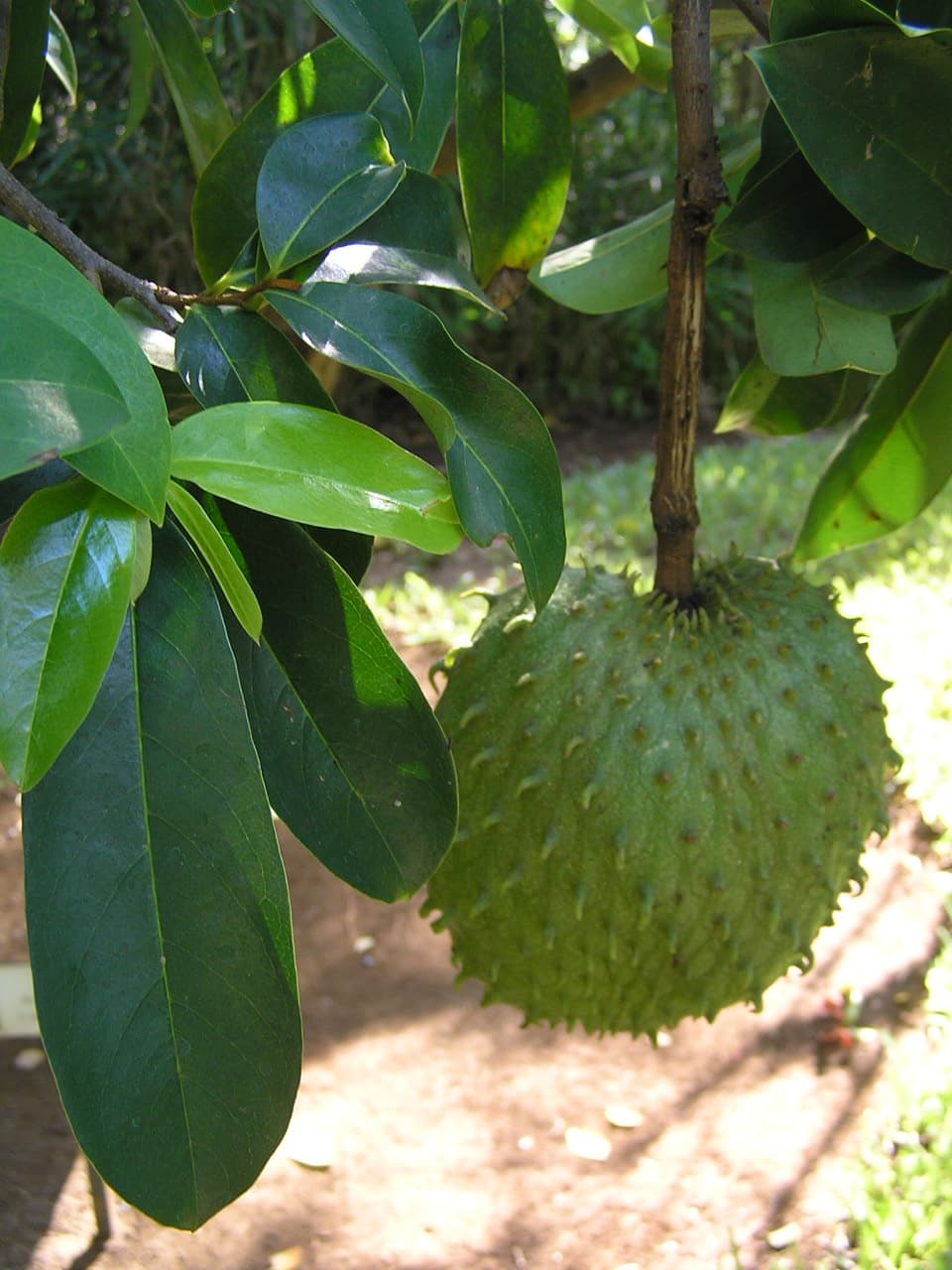
Soursop tea, brewed from the dried leaves of the graviola tree (Annona muricata), is used traditionally for blood pressure, blood sugar and sleep, and it is best known online for a cancer claim that human research does not support. The leaves are rich in acetogenins, alkaloids and flavonoids, and in animals and test tubes they lower glucose, relax blood vessels and kill cancer cells in a dish. None of that has been confirmed in a properly run human trial.
That gap matters more here than with most herbal teas, because soursop is not a harmless plant. Its acetogenins, especially annonacin, are potent inhibitors of mitochondrial complex I. In Guadeloupe, where soursop fruit and leaf tea are consumed routinely, neurologists found an unusual cluster of atypical parkinsonism, and annonacin reproduces the same pattern of brain damage in rats. An occasional cup is very unlikely to do this; a mug every day for years is a different proposition.
This page sets out what the evidence actually shows, tier by tier, how to brew the leaves if you want to try them, how much is sensible, and who should leave soursop tea alone.
What soursop tea is good for
- Blood pressure — leaf extract lowered blood pressure dose-dependently in rats by relaxing blood vessels; no human trial of the tea exists
- Blood sugar — 100 mg/kg of leaf extract a day brought glucose in diabetic rats from over 20 mmol/L to near normal in 2 weeks; human data are missing
- Cancer — acetogenins kill cancer cells in a dish; there is no human study showing soursop tea treats or prevents cancer
- Inflammation and pain — ethanol leaf extract at 200–400 mg/kg cut paw swelling and pain responses in rodents
- Sleep and relaxation — a long Caribbean tradition, with drowsiness as the most commonly reported effect and no controlled study
- Safety — annonacin in the leaves is linked to atypical parkinsonism with heavy, long-term use
Soursop tea benefits, graded by the evidence
Strong = multiple human trials or a meta-analysis. Moderate = a few small trials. Preliminary = early, traditional or animal data.
May lower blood pressure
Preliminary evidenceIn anaesthetised rats, soursop leaf extract at 9 to 48 mg/kg lowered blood pressure in a dose-dependent way without changing heart rate, and isolated artery rings relaxed through what looked like blockade of calcium entry into the vessel wall (Nwokocha et al., 2012). That is a plausible mechanism, but it comes from one animal model. No randomised trial has tested soursop tea in people with hypertension, so the size of any effect in humans, if there is one, is unknown.
Key evidenceNwokocha et al., Pharmaceutical Biology 2012 — hypotensive effect of Annona muricata leaf extract in normotensive rats
May help blood sugar
Preliminary evidenceIn rats made diabetic with streptozotocin, 100 mg/kg of a methanolic leaf extract daily for 2 weeks brought blood glucose from above 20 mmol/L down close to the non-diabetic control level (Adeyemi et al., 2009), and a later 28-day study with an aqueous extract at the same dose also improved lipids and antioxidant enzymes. The effect is consistent across rodent studies. It has not been tested in people, and a cup of tea delivers a far smaller and unstandardised dose than the extracts used.
Key evidenceAdeyemi et al., African Journal of Traditional, Complementary and Alternative Medicines 2009
Anti-inflammatory and pain-relieving activity
Preliminary evidenceAn ethanol extract of the leaves at 200 and 400 mg/kg reduced carrageenan-induced paw swelling and cut writhing and formalin pain responses in mice and rats, with effects comparable to standard reference drugs at the higher dose (de Sousa et al., 2010). The leaves are rich in quercetin, gallic acid and other phenolics that scavenge free radicals in vitro. These are animal and laboratory findings only; nobody has measured inflammatory markers in people drinking the tea.
Key evidencede Sousa et al., International Journal of Molecular Sciences 2010 — antinociceptive and anti-inflammatory activity in animal models
Protects the stomach lining (animal data)
Preliminary evidenceIn rats given ethanol to damage the stomach, pre-treatment with 200 or 400 mg/kg of ethanol leaf extract markedly reduced ulcer area, preserved mucus and raised protective enzyme levels compared with untreated animals (Moghadamtousi et al., 2014). This supports the traditional use of soursop leaf for stomach complaints, but it is a single rat study using a concentrated extract, not tea.
Key evidenceMoghadamtousi et al., Drug Design, Development and Therapy 2014
Kills cancer cells in a dish, not in people
Preliminary evidenceAnnonacin and dozens of related acetogenins block mitochondrial complex I and are cytotoxic to breast, colon, prostate, pancreatic and other cancer cell lines at low micromolar concentrations in vitro, and some slowed tumour growth in mice (reviewed by Moghadamtousi et al., 2015). That is where the evidence stops. There has never been a clinical trial of soursop in cancer patients, no trial shows it prevents cancer, and the same mitochondrial toxicity is what damages neurons. Do not use soursop tea in place of cancer treatment.
Key evidenceMoghadamtousi et al., International Journal of Molecular Sciences 2015 — review of over 200 isolated compounds and their biological activities
Antimicrobial and antiparasitic activity (laboratory)
Preliminary evidenceLeaf extracts inhibit a range of bacteria and show activity against Leishmania and Trypanosoma parasites in culture, which is consistent with traditional use for fevers, wounds and gut infections in the Caribbean and West Africa. The concentrations that work in a petri dish are not reached by drinking tea, and there are no human infection studies. Treat this as background, not a reason to drink it.
Sleep and relaxation
Preliminary evidenceA warm cup of soursop leaf tea before bed is a widespread Caribbean and Latin American tradition, and drowsiness and a lowered heart rate are the effects users most often describe. That fits the blood pressure lowering seen in rats, but there is no sleep study, no measurement of sleep quality and no dose comparison. It is caffeine-free and mild in taste, which is most of what can be said with confidence.
Is soursop tea good for you?
- In small amounts and short courses, soursop leaf tea is probably safe for most healthy adults, but no human trial shows it does anything the folklore promises.
- It does not treat or prevent cancer in people. Anyone drinking it instead of oncology treatment is taking a real risk for an unproven reward, and the FDA has warned sellers against making that claim.
- Keep it occasional. Daily use for years is linked with atypical parkinsonism in Caribbean populations, and the toxin responsible, annonacin, accumulates in the brain.
- Skip it entirely if you are pregnant or breastfeeding, have Parkinson's disease or another movement disorder, have low blood pressure, or take blood pressure or diabetes medication.
How to brew soursop tea
2 to 3 whole dried leaves (about 1 g), torn, or 1 teaspoon crushed leaf per 8 oz (240 ml)
212°F / 100°C, boiling
10 minutes steeped and covered, or simmer gently for 5 minutes, then strain
- Buy whole dried leaves from a supplier that states the species (Annona muricata) and the country of origin; powdered 'graviola' blends are harder to judge.
- Do not boil the leaves for 30 minutes as some recipes suggest. Longer, hotter extraction pulls more acetogenins into the cup, which is the opposite of what you want.
- A squeeze of lime or a little honey softens the grassy, slightly bitter taste.
How much per day
One cup (8 oz) a day at most, for no more than a few weeks at a time, with breaks at least as long in between. There is no established safe daily intake of annonacin, and the people who developed parkinsonism in Guadeloupe were consuming soursop products most days for years.
Caffeine-free. Soursop leaves contain no caffeine, which is one reason the tea is traditionally drunk in the evening.
Side effects, interactions and who should limit it
Side effects
- Drowsiness and light-headedness, especially with the first few cups or on an empty stomach
- Nausea or stomach upset from strong brews
- Dizziness on standing if combined with blood pressure medicines
- Possible drop in blood sugar in people on diabetes medication
- Stiffness, slowness, balance problems and other movement symptoms with heavy long-term use (annonacin-related atypical parkinsonism)
Interactions
- Antihypertensives (ACE inhibitors, calcium-channel blockers, beta-blockers, diuretics): additive blood pressure lowering
- Diabetes medicines (metformin, sulfonylureas, insulin): possible additive glucose lowering
- Levodopa and other Parkinson's drugs: soursop may worsen the condition they treat; avoid
- Sedatives, sleep aids and alcohol: additive drowsiness
- Chemotherapy: no human data; never substitute, and do not combine without your oncologist's knowledge
Pregnancy and breastfeeding
Avoid. Soursop leaf has traditional use as a uterine stimulant, the leaves contain annonacin, and there are no safety data in pregnancy or breastfeeding.
Frequently asked questions
Does soursop tea kill cancer cells?
In a laboratory dish, yes: acetogenins from the leaves are toxic to many cancer cell lines, which is where the claim comes from. In people, there is no evidence at all. No clinical trial has tested soursop in cancer patients, and the FDA has sent warning letters to companies selling graviola products with cancer claims. Nothing in a teapot replaces evaluated cancer treatment.
Is soursop tea safe to drink every day?
Not as a long-term habit. French researchers measured annonacin at roughly 15 mg in an average soursop fruit, 36 mg in a can of commercial nectar and about 140 micrograms in a cup of leaf tea, and estimated that one fruit or one can of nectar a day for a year matches the dose that caused brain lesions in rats. A cup of tea carries far less than the fruit, but the compound accumulates and there is no known safe threshold, so keep it occasional.
Does soursop tea lower blood pressure?
It does in rats, through relaxation of blood vessels, and users often report feeling calmer and a little drowsy. It has not been tested in people with hypertension. If you already take blood pressure medication, the combination can cause dizziness, so do not add soursop tea without telling your prescriber.
What does soursop tea taste like?
Mild, grassy and faintly bitter, with a slightly fruity note if the leaves are fresh. It is nothing like the sweet, custard-like fruit. Lime, honey or a slice of ginger improve it considerably.
Is soursop leaf tea safer than eating the fruit?
Per serving, yes, by a wide margin: a cup of leaf infusion contains about a hundredth of the annonacin in a whole fruit. The catch is that leaf tea is often drunk daily as a 'health' habit while fruit is eaten occasionally, and the Guadeloupe cases were linked to both fruit and herbal teas. Frequency matters as much as the form.
Can soursop tea help you sleep?
It is caffeine-free, warm and mildly sedating by reputation, and drowsiness is the effect people report most. There is no sleep study. If you want an evening herbal tea with actual trial data for sleep, chamomile and lemon balm are better choices; soursop is best kept as an occasional cup.
Who should not drink soursop tea?
Anyone who is pregnant or breastfeeding, anyone with Parkinson's disease or another movement disorder, people with low blood pressure, people on blood pressure or diabetes medicines, and anyone having cancer treatment unless their oncologist knows. Children should not drink it; there is no safety data and the developing brain is more vulnerable to mitochondrial toxins.
References
- Champy P, Melot A, Guérineau Eng V, et al.. Quantification of acetogenins in Annona muricata linked to atypical parkinsonism in Guadeloupe. Movement Disorders (2005)
- Caparros-Lefebvre D, Elbaz A; Caribbean Parkinsonism Study Group. Possible relation of atypical parkinsonism in the French West Indies with consumption of tropical plants: a case-control study. The Lancet (1999)
- Lannuzel A, Michel PP, Höglinger GU, et al.. The mitochondrial complex I inhibitor annonacin is toxic to mesencephalic dopaminergic neurons by impairment of energy metabolism. Neuroscience (2003)
- Höglinger GU, Michel PP, Champy P, et al.. Experimental evidence for a toxic etiology of tropical parkinsonism. Movement Disorders (2005)
- Moghadamtousi SZ, Fadaeinasab M, Nikzad S, et al.. Annona muricata (Annonaceae): a review of its traditional uses, isolated acetogenins and biological activities. International Journal of Molecular Sciences (2015)
- Nwokocha CR, Owu DU, Gordon A, et al.. Possible mechanisms of action of the hypotensive effect of Annona muricata (soursop) in normotensive Sprague-Dawley rats. Pharmaceutical Biology (2012)
- Adeyemi DO, Komolafe OA, Adewole OS, et al.. Anti hyperglycemic activities of Annona muricata (Linn). African Journal of Traditional, Complementary and Alternative Medicines (2009)
- de Sousa OV, Vieira GD, de Pinho JJ, et al.. Antinociceptive and anti-inflammatory activities of the ethanol extract of Annona muricata L. leaves in animal models. International Journal of Molecular Sciences (2010)
- Moghadamtousi SZ, Rouhollahi E, Karimian H, et al.. Gastroprotective activity of Annona muricata leaves against ethanol-induced gastric injury in rats via Hsp70/Bax involvement. Drug Design, Development and Therapy (2014)
- Memorial Sloan Kettering Cancer Center, Integrative Medicine Service. About Herbs: Graviola (2023)
Guides that rank soursop tea
Go deeper
Other teas
Is soursop tea right for you?
Ask AskMN. It knows these studies, checks interactions with the medications you tell it about, and it is free and unlimited, no account needed.
Ask about soursop teaThis page is educational and is not medical advice. Herbal teas can interact with prescription medicines. Talk with a clinician or pharmacist before relying on any of them, especially if you are pregnant, breastfeeding, have a chronic condition, or take medication.