
What is echinacea tea good for?
Echinacea purpurea, E. angustifolia and E. pallida (purple coneflower), perennials in the sunflower family; the root and the flowering parts above ground are used
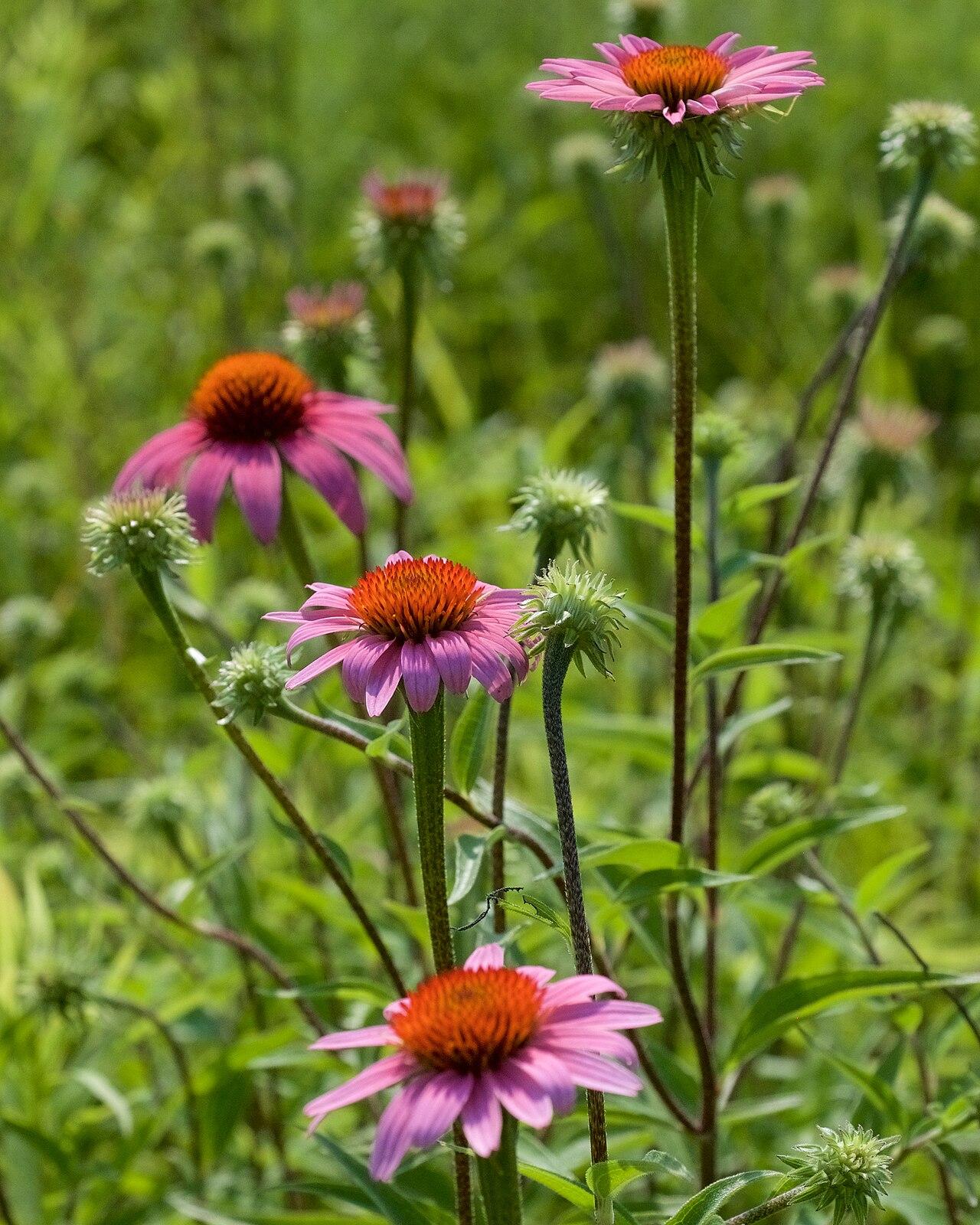
Echinacea tea is mostly drunk to try to head off or shorten a cold, but we found no trial of plain echinacea tea for colds. The research is on extracts, pressed juice, capsules and syrups, in many different forms. The National Center for Complementary and Integrative Health (NCCIH), part of the U.S. National Institutes of Health, says taking echinacea may slightly reduce your chances of catching a cold, and that it is still unclear whether it can shorten the length of a cold.
Echinacea, also called purple coneflower, is a perennial plant native to areas east of the Rocky Mountains in the United States. The European Medicines Agency (EMA) has a committee on herbal medicines. It concluded that medicines made from purple coneflower herb, taken by mouth, can be used short term to prevent and treat common colds. Those medicines are made by pressing the juice from the fresh herb. They are not tea.
Some people are allergic to echinacea, and the reaction can be severe. Echinacea may also interact with some medicines. Below is what the sources reviewed for this page say about each use, how to brew the tea, and who should skip it.
What echinacea tea is good for
- Preventing colds: a review of placebo-controlled trials found a risk ratio of 0.78 (95% CI 0.68 to 0.88) for catching an upper respiratory infection; the trials used many echinacea products, not plain tea
- Shortening a cold: the same review found no evidence of an effect on how long an infection lasts, and results elsewhere are mixed
- Cough: a review that included 8 echinacea trials rated the evidence for echinacea as limited
- Allergy: some people react to echinacea, sometimes severely; do not use it if you are allergic to purple coneflower or other plants in the Asteraceae family
- Medicines: if you take any medicine, talk to your health care provider before using echinacea, especially if you take immunosuppressants
- Tea itself: we found no trial of plain echinacea tea for colds or anything else
Echinacea tea benefits, graded by the evidence
Strong = multiple human trials or a meta-analysis. Moderate = a few small trials. Preliminary = early, traditional or animal data.
May lower the chance of catching a cold (studied as extracts and supplements, not tea)
Moderate evidenceA meta-analysis of randomized, double-blind, placebo-controlled trials found a risk ratio of 0.78 (95% CI 0.68 to 0.88) for catching an upper respiratory tract infection with echinacea products. The authors said it is debatable whether this effect is clinically meaningful, and that many different preparations were tested. Results are not all the same: in a trial that deliberately infected volunteers with a cold virus, infection occurred in 44 and 57% and illness in 36 and 43% of the echinacea and placebo groups, and the authors found no significant effect. None of these trials tested plain tea.
Key evidenceDavid and Cunningham, Complement Ther Med, 2019: meta-analysis of randomized, double-blind, placebo-controlled trials
Shortening a cold (unclear)
Preliminary evidenceResults disagree. The same meta-analysis found no evidence that echinacea changes how long an upper respiratory infection lasts, and NCCIH says it is still unclear. The European Medicines Agency says the most relevant trials in adults of medicines made from pressed juice indicated they can improve cold symptoms more rapidly than placebo when taken early. In one small trial of 32 people, an echinacea supplement taken for 4 weeks did not change the number of infections, but reported duration was 8.6 days with placebo and 3.4 days with echinacea. None of these was tea.
Key evidenceHall et al., Int J Sports Med, 2007: randomized trial, 32 people
Cough from colds (limited evidence)
Preliminary evidenceA systematic review of herbal medicines for cough included 8 echinacea trials. Its meta-analysis rated the evidence for echinacea as limited (SMD = -0.68; 95% CI = -1.32, -0.04; P = 0.04). It found stronger evidence for some other herbs. The abstract does not say which echinacea products were used, and none is described as tea.
Key evidenceWagner et al., Forsch Komplementmed, 2015: meta-analysis of herbal medicine for cough
Respiratory infections in children (extract and capsule products)
Moderate evidenceA meta-analysis of 9 randomized trials (1518 children given E. purpurea and 1651 given placebo) found it reduced how often upper respiratory infections occurred (RR = 0.81, 95 % CI [0.75; 0.87]) and antibiotic use (RR = 0.18, 95 % CI [0.13; 0.25], p < 0.01). Adverse events were more common with echinacea (RR = 1.38, 95 % CI [1.08; 1.78]), though generally mild. The products varied a lot, the authors said the safety profile remains unclear, and NCCIH says there is not enough evidence overall to support a clear connection. Talk to a child's health care provider before using echinacea.
Key evidencePham et al., Clin Nutr ESPEN, 2025: meta-analysis, 9 randomized trials
Flu prevention (limited evidence)
Preliminary evidenceAn overview of Cochrane reviews with a network meta-analysis called echinacea 'probably beneficial' for reducing the incidence of influenza compared with placebo, and said the effect of other interventions needs to be verified with high-quality evidence. Memorial Sloan Kettering Cancer Center says a large randomized trial found an echinacea formulation to be as effective as oseltamivir for influenza, with fewer adverse events in the echinacea group. We did not see that trial's details. These were not tea products.
Key evidenceYuan et al., J Integr Med, 2021: overview of Cochrane reviews and network meta-analysis
Changes some immune blood markers (a lab measure, not fewer colds)
Preliminary evidenceIn a randomized, double-blind, placebo-controlled trial, eighty volunteers took either 200 mg a day of a 60% ethanol extract of Echinacea purpurea or placebo. After 8 weeks, natural killer cell activity was significantly higher than with placebo. Scores on a respiratory symptom survey did not change significantly, so the blood changes did not show up as a change in symptoms. A systematic review of supplements in healthy people said gaps prevent firm statements about the evidence for echinacea. The extract used is not a tea.
Key evidenceLee et al., Phytother Res, 2024: randomized placebo-controlled trial, eighty adults
Is echinacea tea good for you?
- Echinacea tea has not been tested in trials for colds. The research is on extracts, juice, capsules and syrups, and products differ greatly in composition, so the results may not carry over to tea.
- The best human evidence is for a small drop in the chance of catching a cold, and whether that matters is debated. Evidence that it shortens a cold or eases cough is weak or mixed.
- NCCIH says it is likely safe for most adults for short periods. Some people have allergic reactions, which may be severe.
- Do not use it if you are allergic to purple coneflower or other plants in the Asteraceae family. Talk with a health care provider first if you take immunosuppressants or cancer medicines, or if you are pregnant or breastfeeding.
- The European Medicines Agency says medicines made from purple coneflower herb should only be used in adults and adolescents above the age of 12 years, and that a doctor or pharmacist should be consulted if cold symptoms last more than 10 days.
How to brew echinacea tea
1 to 2 teaspoons of dried echinacea per 8 oz cup. No source we reviewed gives a tea recipe or a tea dose, so this is an ordinary kitchen method, not a studied amount.
Just-boiled water, covered while it steeps
5 to 10 minutes
- Check the label for the part of the plant. Studies tested roots, leaves and flowers, and products differ.
- Do not drink it if you are allergic to echinacea or related plants.
- Stop and get care if you get a rash or other signs of an allergic reaction.
How much per day
No source we reviewed gives a safe or useful amount of echinacea tea. NCCIH says it is likely safe for most adults for short periods of time, and the European Medicines Agency says to see a doctor or pharmacist if cold symptoms last more than 10 days. A case report describes severe acute hepatitis in a 45-year-old man linked to daily high doses of echinacea; one report cannot show cause.
Caffeine-free. It is not made from the tea plant (Camellia sinensis), which is where the caffeine in green and black tea comes from. Does echinacea tea have caffeine?
Side effects, interactions and who should limit it
Side effects
- Digestive upset: NCCIH says the most common side effects are digestive tract symptoms, such as abdominal pain, nausea or stomach pain
- Headache, dizziness, constipation, nausea, stomach upset and rash are listed as common by Memorial Sloan Kettering Cancer Center
- Allergic reactions, which may be severe. The European Medicines Agency says serious reactions (Stevens-Johnson syndrome, asthma, anaphylactic shock) have been reported, especially in people with a tendency toward allergies, and their frequency is unknown
- Case reports of serious harm in people using echinacea, including liver injury (one in a young child), a sharp drop in blood platelets and a drop in white blood cells. Single reports cannot prove echinacea caused them
- A large population study linked echinacea use to a slight rise in diastolic blood pressure
Interactions
- Immunosuppressants such as tacrolimus or cyclosporine: echinacea may make them less effective, and NCCIH says there are theoretical reasons to suspect an interaction; clinical relevance is not known
- Chemotherapy: patients having chemotherapy should use caution, and echinacea can decrease blood platelet count. In one case report, a man taking etoposide developed a profound drop in platelets
- Tamoxifen: lab studies suggest echinacea may lower exposure to tamoxifen and reduce its effect; clinical relevance is not known
- Caffeine and midazolam: a review said echinacea might affect how fast the body clears them
- Medicines broken down by the liver: NCCIH says there is conflicting evidence about whether echinacea interacts with some of them
- Eyelid surgery (blepharoplasty): Memorial Sloan Kettering Cancer Center says to avoid echinacea because of an added risk of dry eye syndrome
Pregnancy and breastfeeding
Not enough is known. The National Center for Complementary and Integrative Health (NCCIH), part of the U.S. National Institutes of Health, says some studies of solid or liquid extracts suggest it is possibly safe for up to 7 days during the first trimester of pregnancy, and little is known about breastfeeding. Memorial Sloan Kettering Cancer Center says to talk to a provider before taking echinacea in any form if you are pregnant or breastfeeding, because it may not be safe, and notes there is insufficient evidence on safety in pregnancy. The sources differ, so ask your health care provider first.
Frequently asked questions
What is echinacea tea?
Echinacea tea is a caffeine-free herbal drink made from echinacea, also called purple coneflower, a perennial plant native to areas east of the Rocky Mountains in the United States. The national center for complementary and integrative health (nccih), part of the u.s. national institutes of health, says echinacea products are mostly promoted as dietary supplements for colds. The sources we reviewed did not test tea itself.
What is echinacea tea good for?
People use echinacea mainly for colds. The national center for complementary and integrative health (nccih), part of the u.s. national institutes of health, says taking echinacea may slightly reduce your chances of catching a cold, and that it is still unclear whether it can shorten a cold. These findings come from extracts and supplements, not tea.
Does echinacea tea help with colds?
We found no trial of plain echinacea tea for colds. A meta-analysis of randomized, double-blind, placebo-controlled trials of many different echinacea products found a risk ratio of 0.78 (95% CI 0.68 to 0.88) for catching an upper respiratory infection. The authors said it is debatable whether that effect is clinically meaningful, and they found no evidence that echinacea shortens an infection.
Is echinacea tea safe?
The national center for complementary and integrative health (nccih), part of the u.s. national institutes of health, says it is likely safe for most adults to consume products with extracts of E. purpurea for short periods of time, but some people have allergic reactions, which may be severe. The european medicines agency (ema) says medicines made from purple coneflower herb must not be used by people allergic to purple coneflower or other plants of the Asteraceae family. No source we reviewed tested the safety of echinacea tea itself.
Who should not drink echinacea tea?
The european medicines agency (ema) says people allergic to purple coneflower or other plants of the Asteraceae family must not use medicines made from it. Memorial Sloan Kettering Cancer Center says patients with allergies or asthma should be careful, and patients having chemotherapy should use caution. Talk to a health care provider first if you take immunosuppressants.
Can children drink echinacea tea?
No source we reviewed tested echinacea tea in children. The national center for complementary and integrative health (nccih), part of the u.s. national institutes of health, says E. purpurea extract is possibly safe for children for short periods, but some children in a clinical trial developed rashes, and there is concern that allergic reactions could be severe. The european medicines agency (ema) says medicines made from purple coneflower herb should only be used in adults and adolescents above the age of 12 years. Ask a child's health care provider first.
Can I drink echinacea tea with my medicine?
Ask your health care provider or pharmacist first. Memorial Sloan Kettering Cancer Center says to talk to your provider if you take immunosuppressants or etoposide, and the National Center for Complementary and Integrative Health (NCCIH), part of the U.S. National Institutes of Health says there is conflicting evidence about whether echinacea interacts with some drugs broken down by the liver. Do not stop a prescribed medicine on your own.
Does echinacea tea help the immune system?
Echinacea is used with the idea that it may stimulate the immune system, says the National Center for Complementary and Integrative Health (NCCIH), part of the U.S. National Institutes of Health. In one randomized trial, eighty volunteers took 200 mg a day of an echinacea extract or placebo, and after 8 weeks natural killer cell activity was significantly higher than with placebo. Scores on a respiratory symptom survey did not change significantly. That was an extract, not tea.
References
- National Center for Complementary and Integrative Health. Echinacea: Usefulness and SafetyView source
- Memorial Sloan Kettering Cancer Center. EchinaceaView source
- European Medicines Agency. Echinaceae purpureae herba - herbal medicinal productView source
- David S, Cunningham R. Echinacea for the prevention and treatment of upper respiratory tract infections: A systematic review and meta-analysis. Complement Ther Med (2019)View source
- Lee SK, Lee DR, Kim HL, Choi BK, et al.. A randomized, double-blind, placebo-controlled study on immune improvement effects of ethanolic extract of Echinacea purpurea (L.) Moench in Korean adults. Phytother Res (2024)View source
- Wagner L, Cramer H, Klose P, Lauche R, et al.. Herbal Medicine for Cough: a Systematic Review and Meta-Analysis. Forsch Komplementmed (2015)View source
- Pham TP, Vu TM, Doan PM, Nguyen TT, et al.. Efficacy and safety of Echinacea purpurea in treating upper respiratory infections and complications of otitis media in children: Systematic review and meta-analysis. Clin Nutr ESPEN (2025)View source
- Hall H, Fahlman MM, Engels HJ. Echinacea purpurea and mucosal immunity. Int J Sports Med (2007)View source
- Turner RB, Riker DK, Gangemi JD. Ineffectiveness of echinacea for prevention of experimental rhinovirus colds. Antimicrob Agents Chemother (2000)View source
- Yuan Y, Wang RT, Xia J, Cao HJ. Interventions for preventing influenza: An overview of Cochrane systematic reviews and a Bayesian network meta-analysis. J Integr Med (2021)View source
- Crawford C, Brown LL, Costello RB, Deuster PA. Select Dietary Supplement Ingredients for Preserving and Protecting the Immune System in Healthy Individuals: A Systematic Review. Nutrients (2022)View source
- Izzo AA, Ernst E. Interactions between herbal medicines and prescribed drugs: an updated systematic review. Drugs (2009)View source
Guides that rank echinacea tea
Go deeper
Other teas
Is echinacea tea right for you?
Ask AskMN. It knows these studies, checks interactions with the medications you tell it about, and it is free and unlimited, no account needed.
This page is educational and is not medical advice. Herbal teas can interact with prescription medicines. Talk with a clinician or pharmacist before relying on any of them, especially if you are pregnant, breastfeeding, have a chronic condition, or take medication.