
What is elderberry tea good for? Colds, flu, the trial evidence and how to make it safely
Sambucus nigra (European black elder) dried ripe berries, often with elderflower
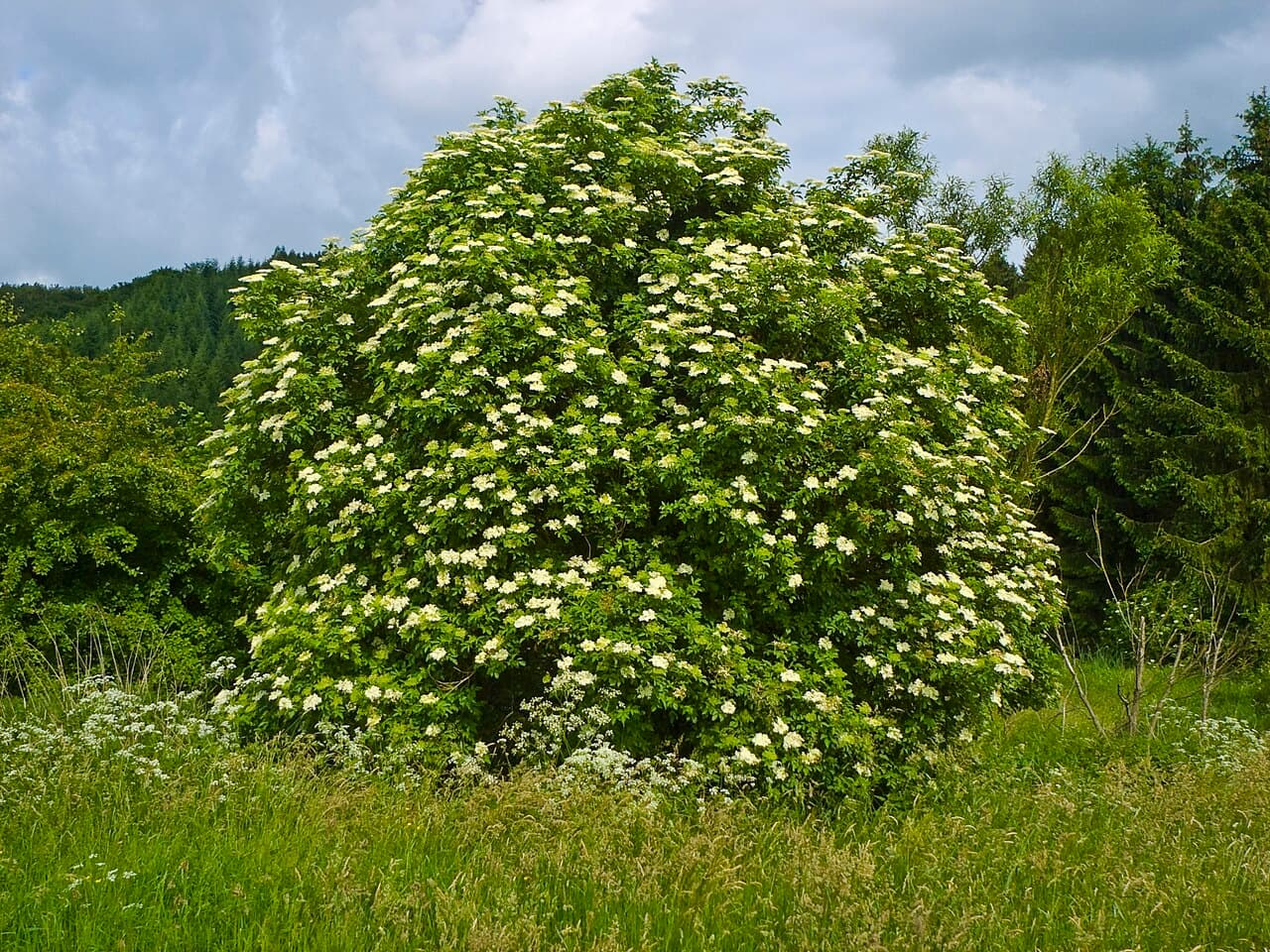
Elderberry tea is good for shortening colds and flu-like illness, soothing a sore throat and cough, and as a warm source of anthocyanin antioxidants. Those are the uses with human data behind them: four randomised trials of standardised elderberry extract, pooled in a 2019 meta-analysis of 180 people, found that starting elderberry early in an upper respiratory infection led to shorter, milder illness. Two caveats matter. The trials used concentrated syrup or capsules rather than tea, and the largest flu trial to date, in 2020, found no benefit at all.
The berries contain cyanidin-based anthocyanins at some of the highest levels of any common fruit, plus flavonols, vitamin C and lectins. Dried, cooked berries are safe. Raw or unripe berries, leaves, stems, bark and roots are not, because they contain cyanogenic glycosides (sambunigrin) that release cyanide; a 1984 outbreak in California put people in hospital after a batch of juice made from uncooked berries, leaves and branches. Every reliable elderberry tea recipe involves heat for a reason.
Below: what the trials actually measured, how to make a cup that is both safe and worth drinking, how much is sensible, and who should be careful with it.
What elderberry tea is good for
- Colds and flu-like illness — in 4 trials (180 people), standardised elderberry extract started within 48 hours cut symptom duration and severity
- Influenza specifically — a 2004 trial found symptoms resolved about 4 days earlier; a 2020 emergency-department trial of 87 patients found no benefit
- Air-travel colds — 312 travellers taking elderberry capsules had about 2 fewer days of cold symptoms each and milder episodes
- Sore throat and cough — warm, tart and mildly astringent; comfort is immediate, the effect on the infection is what the trials tested
- Antioxidants — very high anthocyanin content, absorbed into the blood, though 500 mg a day for 12 weeks did not change heart-risk markers
- Safety — only cooked, ripe berries; raw berries, leaves and stems can cause cyanide poisoning
Elderberry tea benefits, graded by the evidence
Strong = multiple human trials or a meta-analysis. Moderate = a few small trials. Preliminary = early, traditional or animal data.
Shortens colds and flu-like illness when started early
Moderate evidenceA 2019 meta-analysis of four randomised placebo-controlled trials (180 participants) found a large reduction in upper respiratory symptom duration and severity with standardised elderberry products started within the first 48 hours (Hawkins et al., 2019). In the best-known trial, 60 adults with lab-confirmed influenza took 15 ml of elderberry syrup four times a day for 5 days and reported symptom relief on average 4 days earlier than placebo (Zakay-Rones et al., 2004). Against that, an 87-patient emergency department trial of the same syrup in 2020 found no difference in duration or severity, and a 2021 systematic review rated the overall evidence low certainty. The honest reading is a modest benefit, mostly on symptoms, from extracts that are stronger than tea.
Key evidenceHawkins et al., Complementary Therapies in Medicine 2019 — meta-analysis of 4 RCTs, 180 participants
Fewer and milder colds in air travellers
Moderate evidenceIn a double-blind trial, 312 economy-class passengers on long-haul flights took 600 mg of elderberry extract a day for 10 days before travel and 900 mg a day for 5 days after (Tiralongo et al., 2016). The number of people who caught a cold was similar in both groups, but the elderberry group had far fewer total sick days (57 versus 117) and significantly lower symptom scores. This is a prevention-of-severity result, not prevention of infection, and it used capsules standardised to anthocyanins.
Key evidenceTiralongo et al., Nutrients 2016 — randomised, double-blind, placebo-controlled, n=312
Blocks flu virus in the laboratory
Preliminary evidenceElderberry flavonoids bind to influenza H1N1 particles and block their ability to infect cells in culture, and concentrated elderberry juice reduced viral replication and improved survival in infected mice. These mechanisms are plausible explanations for the trial results, but laboratory concentrations are not what reaches your throat after a cup of tea.
Stimulates immune signalling (cell studies)
Preliminary evidenceIn human monocytes, a standardised elderberry extract increased production of inflammatory cytokines including IL-6, IL-8 and TNF-alpha several-fold compared with untreated cells (Barak et al., 2001). This is often cited as 'boosting immunity', and it is also the source of the theoretical worry about autoimmune disease and so-called cytokine storm. Neither benefit nor harm has been shown clinically.
Key evidenceBarak et al., European Cytokine Network 2001 — in vitro cytokine production
Antioxidant anthocyanins, with a null heart trial
Preliminary evidenceFresh elderberries contain roughly 1,300 mg of anthocyanins per 100 g, among the highest of any berry, and they are absorbed and detectable in blood and urine after a dose. The one serious test of whether that matters, 52 postmenopausal women taking 500 mg of elderberry anthocyanins a day for 12 weeks, found no change in blood pressure, lipids, inflammation or liver and kidney markers compared with placebo (Curtis et al., 2009). High antioxidant content is real; a measurable health effect from it has not been shown.
Key evidenceCurtis et al., Journal of Nutrition 2009 — 12-week randomised trial, n=52
Soothes sore throat and cough
Preliminary evidenceA warm, slightly tart, lightly astringent liquid is one of the better-tolerated things to drink with a raw throat, and adding honey once the tea has cooled a little adds a cough-calming effect that has its own trial support in children. There is no study isolating elderberry's effect on throat pain; the comfort is real and immediate, the specific contribution of the berry is unknown.
Mild laxative effect
Preliminary evidenceElderberry and elderflower appear in traditional European laxative teas, and loose stools are a recognised effect of larger amounts. One small trial of a Brazilian herbal combination containing elder reported improved bowel movements in chronic constipation, but the product contained several other herbs, so the result cannot be attributed to elderberry alone.
Insulin-like activity (cell studies)
Preliminary evidenceAqueous elderberry extract stimulated glucose uptake and insulin secretion in cell models in a way that mimicked insulin (Gray et al., 2000), which is why elder was used traditionally for 'sugar sickness'. No human study has tested it, and the effect is weak enough that the practical relevance is mainly a reason for people on diabetes medication to watch their readings.
Is elderberry tea good for you?
- Yes for most people: a cup of properly prepared elderberry tea is safe, pleasant and modestly supported for colds, especially when started in the first two days of symptoms.
- Expect a modest effect at best. The trials used standardised extract; tea gives a lower, variable dose, so treat it as support alongside rest and fluids, not a substitute for antivirals in people at high risk from flu.
- Never use raw berries, leaves, stems, bark or green berries. Simmer dried ripe berries for at least 15 minutes and strain.
- Be careful if you take immunosuppressants, have an autoimmune condition, or take diabetes, diuretic or laxative medicines; and do not add honey for babies under 1.
How to brew elderberry tea
1 tablespoon (5–6 g) dried ripe elderberries per 8 oz (240 ml), plus 1 teaspoon dried elderflower if you like
212°F / 100°C; simmer, do not just steep
Simmer 15 minutes, covered, then strain through a fine sieve
- Crush the dried berries lightly first; they give up more colour and anthocyanin.
- Add fresh ginger or a cinnamon stick to the simmer, and honey or lemon after the tea has cooled below about 140°F / 60°C.
- Never use leaves, stems, green berries or bark, and do not eat the strained berries; their job is done.
How much per day
One to three cups a day while you have a cold, for up to a week or two; for everyday drinking, one cup is plenty. The trials used about 15 ml of concentrated syrup four times a day, which a tea does not quite match, so more cups are not obviously better and large amounts loosen the bowels.
Caffeine-free, so it suits an evening cup when you are run down.
Side effects, interactions and who should limit it
Side effects
- Nausea, vomiting, diarrhoea, dizziness and weakness from raw or undercooked berries, leaves, stems or bark (cyanide poisoning)
- Loose stools or stomach cramps with large amounts, even when properly cooked
- Rare allergic reactions, more likely in people with grass or birch pollen allergy
- Increased urination with heavy use (mild diuretic)
Interactions
- Immunosuppressants (ciclosporin, tacrolimus, corticosteroids, biologics): theoretical opposition, since elderberry increases cytokine release in cell studies
- Diabetes medicines: possible additive blood sugar lowering
- Diuretics: additive fluid loss
- Laxatives: additive effect and more diarrhoea
- Chemotherapy and other drugs with narrow safety margins: no human data, check with your prescriber first
Pregnancy and breastfeeding
There are no safety studies of elderberry tea in pregnancy or breastfeeding. Cooked ripe berries and commercial syrups are widely used without reported harm, but raw or green berries, leaves and bark are unsafe for anyone, so if you drink it, prepare it properly and keep to a cup or two a day.
Frequently asked questions
Does elderberry tea help with colds?
Probably a little, if you start early. Pooled trial data show standardised elderberry extracts shorten and soften colds and flu-like illness when begun within 48 hours of symptoms. Tea delivers a weaker, less consistent dose than the syrups and capsules in those trials, so think of it as a helpful comfort rather than a treatment.
Does elderberry help with the flu?
The evidence is mixed. A 2004 trial of 60 people with confirmed influenza found symptoms resolved about 4 days sooner with elderberry syrup, but a larger and better-run 2020 trial of 87 emergency department patients found no benefit. If you are at high risk from flu (older, pregnant, chronic illness), antiviral drugs within 48 hours are what matter; elderberry tea can sit alongside them.
Is it safe to make elderberry tea from fresh berries?
Only from fully ripe, black berries with every stem and leaf removed, and only after cooking. In 1984 eight people in California became ill, one of them hospitalised, after drinking juice pressed from uncooked berries with leaves and branches mixed in. Dried berries from a reputable supplier are the easier and safer route, and they still need to be simmered.
Elderberry tea or elderberry syrup: which is better?
Syrup and capsules are what the trials used, standardised to a known anthocyanin content, so they are the better bet if you want the trial result. Tea is cheaper, lower in sugar and perfectly good for comfort, but you cannot know the dose in your cup. Many people use both: syrup at the start of a cold, tea through the day.
Can I drink elderberry tea every day?
Properly made, yes, a cup a day is fine for most adults. Be aware that there is no good evidence it prevents infections; a 2021 systematic review found no support for prevention, only for shortening illness once it starts. People with autoimmune conditions or on immunosuppressants should ask first.
Does elderberry cause a cytokine storm?
There are no reported cases. The idea comes from cell studies in which elderberry extract raised inflammatory cytokine production in a dish. A 2021 systematic review specifically looked for evidence of harmful immune over-activation in the trials and found none. It remains a theoretical concern for people with autoimmune disease, which is why they are advised to be cautious.
What does elderberry tea taste like?
Deep, tart and berry-like with an earthy, slightly musky edge, closer to blackcurrant than to blueberry. It is quite sour on its own; most people add honey, a cinnamon stick or a slice of orange. Elderflower in the blend adds a floral, honeyed note.
References
- Hawkins J, Baker C, Cherry L, Dunne E. Black elderberry (Sambucus nigra) supplementation effectively treats upper respiratory symptoms: a meta-analysis of randomized, controlled clinical trials. Complementary Therapies in Medicine (2019)
- Zakay-Rones Z, Thom E, Wollan T, Wadstein J. Randomized study of the efficacy and safety of oral elderberry extract in the treatment of influenza A and B virus infections. Journal of International Medical Research (2004)
- Tiralongo E, Wee SS, Lea RA. Elderberry supplementation reduces cold duration and symptoms in air-travellers: a randomized, double-blind placebo-controlled clinical trial. Nutrients (2016)
- Macknin M, Wolski K, Negrey J, Mace S. Elderberry extract outpatient influenza treatment for emergency room patients ages 5 and above: a randomized, double-blind, placebo-controlled trial. Journal of General Internal Medicine (2020)
- Wieland LS, Piechotta V, Feinberg T, et al.. Elderberry for prevention and treatment of viral respiratory illnesses: a systematic review. BMC Complementary Medicine and Therapies (2021)
- Curtis PJ, Kroon PA, Hollands WJ, et al.. Cardiovascular disease risk biomarkers and liver and kidney function are not altered in postmenopausal women after ingesting an elderberry extract rich in anthocyanins for 12 weeks. Journal of Nutrition (2009)
- Centers for Disease Control and Prevention. Poisoning from elderberry juice — California. MMWR Morbidity and Mortality Weekly Report (1984)
- Barak V, Halperin T, Kalickman I. The effect of Sambucol, a black elderberry-based, natural product, on the production of human cytokines: I. Inflammatory cytokines. European Cytokine Network (2001)
- Gray AM, Abdel-Wahab YH, Flatt PR. The traditional plant treatment, Sambucus nigra (elder), exhibits insulin-like and insulin-releasing actions in vitro. Journal of Nutrition (2000)
- Ulbricht C, Basch E, Cheung L, et al.. An evidence-based systematic review of elderberry and elderflower (Sambucus nigra) by the Natural Standard Research Collaboration. Journal of Dietary Supplements (2014)
- National Center for Complementary and Integrative Health. Elderberry (2020)View source
Guides that rank elderberry tea
Go deeper
Other teas
Is elderberry tea right for you?
Ask AskMN. It knows these studies, checks interactions with the medications you tell it about, and it is free and unlimited, no account needed.
Ask about elderberry teaThis page is educational and is not medical advice. Herbal teas can interact with prescription medicines. Talk with a clinician or pharmacist before relying on any of them, especially if you are pregnant, breastfeeding, have a chronic condition, or take medication.