
What Is Licorice Tea Good For? Sore Throat, Digestion and the Blood Pressure Warning
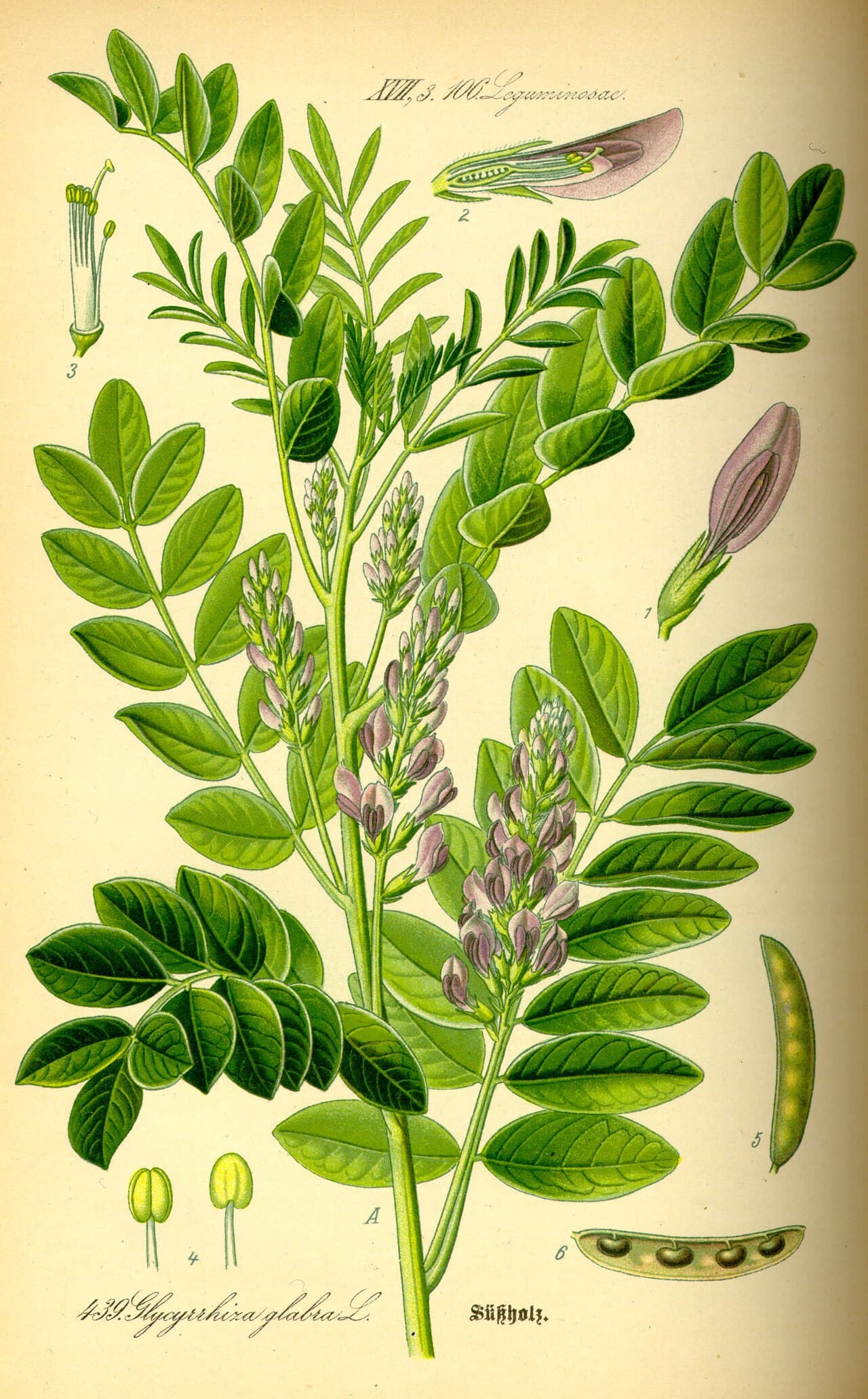
Glycyrrhiza glabra (or G. uralensis) dried root, which contains 2 to 15% glycyrrhizin
Licorice root tea is good for a sore throat, a dry irritating cough and the burning, bloated discomfort of indigestion, and those three uses have real human trial support. A licorice gargle before surgery cut postoperative sore throat and coughing in two randomised trials, and a standardised root extract improved functional dyspepsia symptoms against placebo. Its sweetness and throat-coating mucilage are why it anchors so many 'throat comfort' blends.
The reason this page carries more warnings than most is glycyrrhizin. That compound blocks the enzyme that normally keeps cortisol away from the kidney's mineralocorticoid receptor, so the body behaves as though it is flooded with aldosterone: it holds sodium and water, dumps potassium, and blood pressure rises. A meta-analysis of 18 studies found regular licorice raised systolic pressure by about 5.5 mmHg and lowered potassium by roughly 0.3 mmol/L on average, and case reports describe hospital admissions for dangerous potassium levels, muscle weakness and heart rhythm problems from nothing more than several cups of licorice tea a day for weeks. The US FDA warns that as little as 2 oz of black licorice a day for two weeks can trigger an arrhythmia in people over 40.
So the answer to 'is licorice tea good for you' is: in small amounts, for a short time, for a specific complaint, yes. Daily for months, or at all if you have high blood pressure, heart or kidney disease, low potassium, or are pregnant, no. The sections below give the evidence, the brewing, and a clear ceiling: about one cup a day, for no more than four weeks at a stretch.
What licorice tea is good for
- Sore throat — gargling 0.5 g of licorice in water before anaesthesia roughly halved postoperative sore throat in randomised trials of 40 and 236 patients
- Cough — the same gargle cut coughing after breathing-tube removal; licorice's saponins and mucilage soothe and loosen
- Indigestion — 75 mg of a low-glycyrrhizin root extract twice daily for 30 days improved functional dyspepsia symptoms vs placebo
- Stomach lining and H. pylori — flavonoid-rich extract reduced H. pylori load and protects the stomach lining in trials; the older ulcer evidence used deglycyrrhizinated licorice
- Hot flashes — 330 mg three times a day for 8 weeks reduced hot flash frequency in a placebo-controlled trial of 90 women
- Blood pressure — goes up, not down: around +5 mmHg systolic with regular use, plus potassium loss; this is the key risk
Licorice tea benefits, graded by the evidence
Strong = multiple human trials or a meta-analysis. Moderate = a few small trials. Preliminary = early, traditional or animal data.
Soothes a sore throat
Strong evidenceTwo randomised trials in surgical patients give the clearest human evidence for any herbal throat remedy. In the first, 40 patients gargled either 0.5 g of licorice in 30 mL of water or plain water five minutes before anaesthesia; postoperative sore throat fell from 80% to 40% at 4 hours, with lower severity scores through 24 hours. A larger double-blind trial of 236 patients having thoracic surgery compared licorice gargle (0.5 g) with sugar-water and found sore throat at rest fell from about 60% to 19% at 30 minutes after extubation, and lower rates persisted at 1.5 and 4 hours. The setting is artificial (a tube in the throat), but the mechanism, mucilage coating plus anti-inflammatory glycyrrhizin and flavonoids, applies to any raw throat.
Key evidenceRuetzler et al., Anesthesia & Analgesia 2013; 236 patients, double-blind
Calms a dry, irritating cough
Moderate evidenceIn the 236-patient gargle trial, licorice also reduced coughing after the breathing tube was removed (post-extubation cough was significantly less frequent than with sugar water). Licorice has been a standard cough ingredient in Chinese, Ayurvedic and European medicine for over two thousand years, and its saponins act as expectorants while glycyrrhizin and liquiritin reduce airway irritation in animal models of cough. There is no trial of licorice tea for the cough of a common cold, so the grade reflects one surgical trial plus mechanism and tradition.
Key evidenceRuetzler et al., Anesthesia & Analgesia 2013 (secondary outcome)
Relieves indigestion (functional dyspepsia)
Moderate evidenceA 30-day randomised, double-blind trial gave 50 adults with functional dyspepsia 75 mg of a flavonoid-rich, low-glycyrrhizin licorice root extract or placebo twice daily. Total symptom scores (upper abdominal fullness, bloating, early satiety, nausea, belching, heartburn) fell significantly more with licorice, and quality-of-life scores improved. A separate trial with the same extract at 150 mg a day for 60 days reduced Helicobacter pylori positivity on breath testing. These used a standardised extract, not tea, and the tea carries far more glycyrrhizin, so for digestive use a deglycyrrhizinated (DGL) product is the safer route.
Key evidenceRaveendra et al., Evidence-Based Complementary and Alternative Medicine 2012; 50 patients
Protects the stomach lining and may help ulcers
Moderate evidenceLicorice's reputation for ulcers comes from the 1960s and 70s, when carbenoxolone (a glycyrrhizin derivative) and deglycyrrhizinated licorice were tested in dozens of trials for gastric and duodenal ulcers with mixed but often positive results, before proton-pump inhibitors made them obsolete. Glycyrrhizin and the flavonoids glabridin and liquiritin increase mucus production, improve blood flow in the stomach lining and inhibit H. pylori in laboratory studies. For reflux and gastritis the practical pick is DGL, which keeps the stomach-protecting flavonoids and removes the compound that raises blood pressure.
Reduces menopausal hot flashes
Preliminary evidenceIn a randomised, placebo-controlled trial of 90 menopausal women, 330 mg of licorice root three times a day for 8 weeks reduced the frequency and severity of hot flashes compared with placebo, with the benefit fading after the herb was stopped. Licorice contains phytoestrogens such as glabridin and liquiritigenin that bind oestrogen receptors weakly. One trial at a capsule dose is not enough to recommend licorice tea for menopause, particularly since blood pressure tends to rise with age and the herb worsens that.
Key evidenceNahidi et al., Iranian Journal of Pharmaceutical Research 2012; 90 women, 8 weeks
Lowers testosterone in women with PCOS
Preliminary evidenceIn a small study, 3.5 g of licorice root daily for two menstrual cycles lowered total testosterone in nine healthy women, and a follow-up found licorice added to spironolactone in PCOS blunted the drug's fluid-shifting side effects. Licorice inhibits 17-hydroxysteroid dehydrogenase and 17,20-lyase, enzymes in androgen synthesis. These are tiny, short studies, and spironolactone itself is a potassium-sparing drug, so pairing it with a potassium-wasting herb needs medical supervision; it is not a home remedy.
Key evidenceArmanini et al., Steroids 2004; 9 women
Antiviral and anti-inflammatory activity
Preliminary evidenceGlycyrrhizin inhibits replication of several viruses in cell culture, including hepatitis C, herpes and coronaviruses, and intravenous glycyrrhizin has been used in Japan for chronic hepatitis for decades. Licorice flavonoids reduce inflammatory signalling and oxidative stress in laboratory and animal models. None of this translates into evidence that licorice tea prevents or treats infections in people, and the intravenous doses studied are nothing like a cup of tea, so it stays preliminary.
Is licorice tea good for you?
- Yes, in moderation: a cup of licorice tea is a well-supported comfort for a sore throat or cough and a reasonable short-term aid for indigestion.
- No, as a daily habit: glycyrrhizin raises blood pressure (about +5 mmHg systolic on average), lowers potassium and causes fluid retention, with effects building over weeks. Keep to about one cup a day and no more than four weeks in a row.
- Do not drink it at all if you have high blood pressure, heart failure, kidney disease, liver cirrhosis, low potassium or a history of arrhythmia, or if you take diuretics, digoxin, corticosteroids or blood pressure medicines.
- Avoid it in pregnancy: heavy licorice intake was linked to earlier birth and to effects on children's cortisol regulation and cognition in Finnish cohort studies.
- For reflux, gastritis or ulcers, choose deglycyrrhizinated licorice (DGL) rather than tea; it keeps the stomach-protecting flavonoids and removes the risk.
How to brew licorice tea
1 teaspoon (2 to 3 g) chopped dried licorice root per 8 oz, or one tea bag; licorice is sweet enough that more is rarely wanted.
212°F / 100°C, boiling.
Simmer 5 to 10 minutes as a decoction, or steep 10 minutes covered, then strain.
- Blend a small amount of licorice with ginger, peppermint or marshmallow root: you get the sweetness and throat coating with a fraction of the glycyrrhizin.
- For a sore throat, sip slowly or use the cooled tea as a gargle; the benefit comes from contact with the throat, not absorption.
- Check blends: 'throat', 'cleanse' and 'digestive' teas often list licorice first, which means every cup counts toward your daily total.
How much per day
One cup a day, for no more than four weeks at a stretch, keeps most adults under the 100 mg of glycyrrhizin per day that European food safety advisers consider a sensible ceiling; a 2 to 3 g root infusion can deliver anywhere from 30 to over 100 mg depending on the root and brewing time. People over 40, and anyone with blood pressure, heart or kidney concerns, should treat it as an occasional drink or avoid it.
Caffeine-free. Naturally about 50 times sweeter than sugar, with an aniseed-like, woody finish.
Side effects, interactions and who should limit it
Side effects
- Raised blood pressure, typically 5 mmHg systolic with regular use, more in sensitive people
- Low potassium (hypokalaemia), which can cause muscle weakness, cramps, fatigue and palpitations
- Fluid retention, swollen ankles, headache and weight gain from sodium and water retention
- Irregular heart rhythm, rhabdomyolysis and hypertensive emergencies in case reports of heavy or prolonged use
- Reduced testosterone and libido in men with daily use in small studies
- Lowered milk supply with heavy use while breastfeeding, from the antiprolactin effect reported in older studies
Interactions
- Diuretics (furosemide, hydrochlorothiazide, chlorthalidone): additive potassium loss, the most dangerous combination
- Digoxin: licorice-induced low potassium increases the risk of digoxin toxicity and arrhythmia
- Blood pressure medicines (ACE inhibitors, ARBs, beta-blockers, calcium-channel blockers): licorice works against them and can undo their effect
- Corticosteroids (prednisone, hydrocortisone, inhaled steroids at high dose): licorice slows cortisol breakdown and amplifies steroid effects and side effects
- Warfarin and drugs cleared by CYP3A4 or CYP2C9: licorice alters enzyme activity and may change drug levels; also oral contraceptives, where cases of hypertension and low potassium have been reported
- Insulin and diabetes medicines: low potassium worsens glucose control, and glycyrrhizin can raise blood sugar in some people
Pregnancy and breastfeeding
Avoid licorice tea in pregnancy. A Finnish cohort found women consuming the equivalent of 500 mg or more of glycyrrhizin a week (roughly 250 g of licorice sweets, or a few cups of strong tea) had shorter pregnancies and a higher risk of preterm birth, and their children later showed altered cortisol regulation and poorer attention and memory scores. While breastfeeding, occasional small amounts are probably fine, but heavy use may lower milk supply.
Frequently asked questions
Does licorice tea raise blood pressure?
Yes. Glycyrrhizin makes the kidney behave as though it is flooded with aldosterone, so it retains sodium and water and excretes potassium. A meta-analysis of 18 studies found systolic pressure rose by about 5.5 mmHg on average with regular licorice, and case reports describe severe hypertension from several cups of tea a day over a few weeks. If you already have high blood pressure, avoid it entirely.
Is licorice tea good for a sore throat?
It is one of the best-supported herbal options. In two randomised surgical trials, gargling 0.5 g of licorice in water before anaesthesia cut postoperative sore throat by roughly half, and the mucilage coats and soothes a raw throat on contact. Sip it slowly or gargle with the cooled tea, and keep to a cup a day for a few days.
How much licorice tea is too much?
More than about one cup a day, or more than four weeks of daily use, pushes many people past the 100 mg of glycyrrhizin a day that European food safety advisers suggest as a ceiling. The US FDA warns that 2 oz of black licorice a day for two weeks can cause heart rhythm problems in people over 40. Blends with licorice as a minor ingredient contain far less, but it still adds up.
Is licorice tea good for acid reflux?
Licorice does protect the stomach lining and improved indigestion symptoms in a trial of a standardised extract, but the tea's glycyrrhizin makes it a poor choice for daily reflux management. Deglycyrrhizinated licorice (DGL) chewable tablets keep the stomach-soothing flavonoids without the blood pressure and potassium effects, which is why clinicians who use licorice for reflux use DGL.
What is the difference between licorice tea and DGL?
DGL is licorice root extract with the glycyrrhizin removed, usually to under 1%. It is used for reflux, gastritis and ulcers because it retains glabridin and other protective flavonoids but cannot raise blood pressure or drop potassium. Tea made from whole root contains the full glycyrrhizin load, which is what makes it sweet and what makes it risky.
Who should not drink licorice tea?
People with high blood pressure, heart failure, kidney disease, liver cirrhosis, low potassium or heart rhythm problems; anyone taking diuretics, digoxin, corticosteroids or antihypertensives; pregnant women; and men concerned about testosterone. Adults over 40 should be especially cautious because the FDA's arrhythmia warning is aimed at that group.
Can licorice tea help with cortisol or adrenal fatigue?
Licorice raises the amount of active cortisol in tissues by blocking the enzyme that breaks it down, which is sometimes marketed as 'adrenal support'. Adrenal fatigue is not a recognised diagnosis, and raising cortisol activity brings exactly the side effects listed here: high blood pressure, low potassium and fluid retention. There is no trial showing benefit for tiredness.
References
- Ruetzler K, Fleck M, Nabecker S, et al.. A randomized, double-blind comparison of licorice versus sugar-water gargle for prevention of postoperative sore throat and postextubation coughing. Anesthesia & Analgesia (2013)
- Agarwal A, Gupta D, Yadav G, Goyal P, Singh PK, Singh U. An evaluation of the efficacy of licorice gargle for attenuating postoperative sore throat: a prospective, randomized, single-blind study. Anesthesia & Analgesia (2009)
- Raveendra KR, Jayachandra, Srinivasa V, et al.. An Extract of Glycyrrhiza glabra (GutGard) Alleviates Symptoms of Functional Dyspepsia: A Randomized, Double-Blind, Placebo-Controlled Study. Evidence-Based Complementary and Alternative Medicine (2012)
- Penninkilampi R, Eslick EM, Eslick GD. The association between consistent licorice ingestion, hypertension and hypokalaemia: a systematic review and meta-analysis. Journal of Human Hypertension (2017)
- Strandberg TE, Järvenpää AL, Vanhanen H, McKeigue PM. Birth outcome in relation to licorice consumption during pregnancy. American Journal of Epidemiology (2001)
- Räikkönen K, Martikainen S, Pesonen AK, et al.. Maternal Licorice Consumption During Pregnancy and Pubertal, Cognitive, and Psychiatric Outcomes in Children. American Journal of Epidemiology (2017)
- Nahidi F, Zare E, Mojab F, Alavi-Majd H. Effects of licorice on relief and recurrence of menopausal hot flashes. Iranian Journal of Pharmaceutical Research (2012)
- Armanini D, Mattarello MJ, Fiore C, et al.. Licorice reduces serum testosterone in healthy women. Steroids (2004)
- Black Licorice: Trick or Treat?. U.S. Food and Drug Administration, Consumer UpdatesView source
- Licorice Root: Usefulness and Safety. National Center for Complementary and Integrative HealthView source
- Opinion of the Scientific Committee on Food on glycyrrhizinic acid and its ammonium salt. European Commission, Scientific Committee on Food (2003)
Guides that rank licorice tea
Go deeper
Other teas
Is licorice tea right for you?
Ask AskMN. It knows these studies, checks interactions with the medications you tell it about, and it is free and unlimited, no account needed.
Ask about licorice teaThis page is educational and is not medical advice. Herbal teas can interact with prescription medicines. Talk with a clinician or pharmacist before relying on any of them, especially if you are pregnant, breastfeeding, have a chronic condition, or take medication.