
What is anise tea good for?
Pimpinella anisum seeds (dried fruits), a member of the carrot family
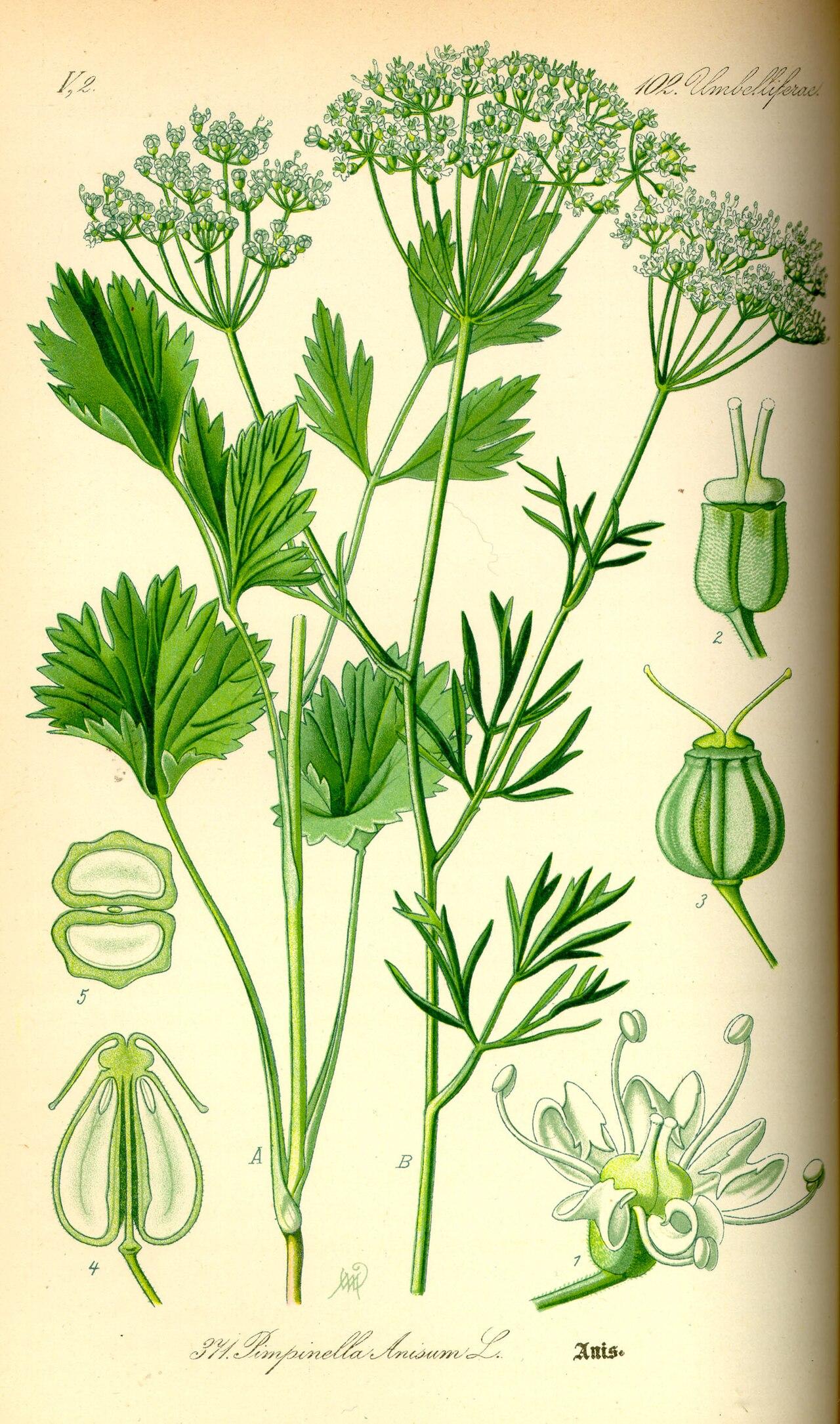
Anise tea is mostly drunk to settle the stomach after meals, to ease gas and bloating. The evidence for the tea itself is thin: no human trial has tested plain anise tea for digestion. The trials that exist used anise seed powder, oil, extracts or capsules, or in one case a tea with black tea added. The sweet, licorice-like flavor comes mainly from anethole, an oil in the seed.
Anise seed and star anise are different plants, so they are not interchangeable. Anise seed is the dried fruit of Pimpinella anisum, a herb in the carrot family. Star anise is the star-shaped fruit of Illicium verum, a tree. The two share anethole, which is why they taste alike. Star anise tea has a serious safety problem, covered below, and it is the main reason anise tea should never be given to a baby.
Here is what each trial actually tested, how to brew anise seed at home, and who should not drink it.
What anise tea is good for
- Digestion after meals: 3 g anise seed powder after each meal for 4 weeks lowered dyspepsia scores in 47 people vs placebo in 60; powder, not tea
- Constipation: a laxative herbal tea containing anise, fennel, elderflower and senna cut colon transit from 42.3 to 15.7 hours in 20 people; senna is a laxative, so anise cannot be credited alone
- Menopause hot flashes: 330 mg anise capsules three times daily reduced flash severity in 72 women over 4 weeks; capsules, not tea
- Breast milk: mothers of preterm babies who drank anise tea with black tea for 7 days pumped more milk; one small trial
- Gas and bloating: traditional use; no trial of plain anise tea
- Babies: do not give anise or star anise tea to infants; star anise tea has caused neurologic symptoms, including seizures
Anise tea benefits, graded by the evidence
Strong = multiple human trials or a meta-analysis. Moderate = a few small trials. Preliminary = early, traditional or animal data.
Eases digestive upset after meals (functional dyspepsia)
Preliminary evidenceIn a double-blind trial, 107 adults with functional dyspepsia took 3 g of anise seed powder after each meal, three times a day, for four weeks. Forty-seven took anise and 60 took cornstarch placebo. Symptom scores in the anise group fell from 10.6 to 2.44 at week 4 and to 1.08 at week 12, while the placebo group stayed near 13. The powder was not a tea, so this is a reason to try anise, not proof that the tea works.
Key evidenceGhoshegir et al., J Res Med Sci 2015: 107-patient double-blind RCT
Eases gas and bloating
Preliminary evidenceAnise has a long history as a remedy for trapped wind, and anethole relaxes gut muscle in laboratory studies, which fits that use. No trial has tested anise tea for bloating. The digestion trial above is the closest human evidence, and it used seed powder.
Helps with constipation (as part of a herbal blend)
Preliminary evidenceIn a crossover trial of 20 people with chronic constipation, a laxative herbal tea containing anise fruit, fennel fruit, elderflower and senna was drunk at 150 mL three times a day for five days, then compared with a placebo tea. Colon transit time was 15.7 hours on the herbal tea and 42.3 hours on placebo. Senna is a proven laxative, so the trial cannot show what anise did on its own.
Key evidencePicon et al., BMC Complement Altern Med 2010: 20-patient crossover RCT
Eases menopause hot flashes (as capsules)
Preliminary evidenceIn a placebo-controlled trial of 72 postmenopausal women, 330 mg anise extract capsules were taken three times a day for four weeks. Hot flash severity in the anise group fell from 56.21 to 14.44 by week four, while the placebo group showed no change. The result is encouraging but comes from one small, short trial of capsules, not tea.
Key evidenceNahidi et al., Iran J Pharm Res 2012: 72-woman placebo-controlled trial
Supports breast milk supply (as a tea with black tea)
Preliminary evidenceThis is the only trial of a drunk anise tea that was found. Mothers of preterm infants drank a tea made from 2 g dried anise and 1 g black tea, three times a day for seven days, and were compared with a black tea placebo and with a no-treatment group. Pumped milk volume rose on day 1 and on days 3 to 7 compared with both other groups. Infant weight did not change, and the authors reported no side effects. It was one trial, lasted a week, and the tea was not anise alone.
Key evidenceKhalili et al., BMC Complement Med Ther 2023: preterm-mother RCT
Lifts low mood in irritable bowel syndrome (as oil capsules)
Preliminary evidenceIn a trial of 120 people with irritable bowel syndrome and mild to moderate depression, anise oil oleogel capsules (200 mg each, three times a day before meals) for four weeks improved depression scores more than peppermint oil or placebo capsules. The benefit was still present at a week-six follow-up. The authors say the mechanism is unknown. This is a single trial of an oil, not a tea.
Key evidenceMosaffa-Jahromi et al., J Evid Based Complement Altern Med 2017: 120-patient RCT
Is anise tea good for you?
- For most healthy adults, a cup now and then is a pleasant, low-risk way to settle an after-meal stomach.
- The strongest human data are for measured anise preparations such as powder, oil and capsules, not for home-brewed tea. None of it is a proven treatment.
- Never give anise tea or star anise tea to a baby or young child.
- Be careful if you are pregnant, if you have a hormone-sensitive condition, or if you react to celery, birch or mugwort pollen.
How to brew anise tea
2 g (about 1 teaspoon) dried anise seed, lightly crushed, per 250 ml (8 oz) cup
Freshly boiled water, poured straight on the seed
15 minutes, covered
- Crush the seeds just before brewing; whole seeds release less of their oil.
- Keep the cup covered while it steeps so the aromatic oil stays in the tea.
- Strain before drinking. Anise seed is a spice, so buy small amounts and keep them sealed.
How much per day
One or two cups a day is a reasonable limit for a healthy adult. No trial has set a safe upper limit for home-brewed anise tea, and the anise doses studied were measured preparations, not tea. The European Medicines Agency's guidance on anise limits self-treatment to 2 weeks: if bloating, cramps or a cough last longer than that, stop relying on the tea and see a doctor or pharmacist.
Caffeine-free. Sweet, licorice-like flavor from anethole.
Side effects, interactions and who should limit it
Side effects
- Allergic reactions, including skin rash and breathing trouble, in people sensitive to aniseed
- Cross-reactions in people allergic to celery, birch or mugwort pollen, because anise shares proteins with these
- Breast tenderness, possibly from anethole's weak estrogen-like activity in lab tests
- Neurologic symptoms, including seizures, in infants given star anise tea (see FAQ)
Interactions
- Hormone therapy, tamoxifen and other estrogen-related medicines: anise compounds show weak estrogen-like activity in lab tests, and no interaction study exists
- Blood thinners and diabetes medicines: no studies of anise tea; ask your clinician if you use anise regularly in medicinal amounts
Pregnancy and breastfeeding
There is no reliable safety data for anise tea in pregnancy, so ask your clinician before drinking it regularly. One small trial in mothers of preterm babies used anise tea for a week and reported no side effects, which is not enough to establish safety while breastfeeding, so ask your clinician first. Never give the tea to a baby, since star anise tea has caused seizures in infants.
Frequently asked questions
What is anise tea?
Anise tea is a caffeine-free herbal tea made from the dried seeds of Pimpinella anisum, a plant in the carrot family. It has a sweet, licorice-like taste from anethole, the main oil in the seed. It is not star anise, which is the fruit of a different tree, although the two share anethole.
What is the difference between anise seed and star anise?
They are different plants. Anise seed is the small seed of Pimpinella anisum. Star anise is the star-shaped fruit of Illicium verum, a tree. Both contain anethole and taste alike. The safety problem is with star anise: Japanese star anise, Illicium anisatum, is toxic and can contaminate the Chinese star anise sold as food.
Is star anise tea safe?
Not for babies, and the FDA advised consumers in 2003 not to drink brewed star anise teas. The agency linked the teas to illness in about 40 people, including about 15 infants, with effects ranging from seizures to vomiting. The concern is contamination with the toxic Japanese species, which is hard to tell apart.
Can babies drink anise tea?
No. In a Miami case series, seven infants aged 2 to 12 weeks developed irritability, jerky movements and neurologic symptoms after home star anise tea given for colic, with seizures in some cases. All recovered within 48 hours of stopping. The authors advised that star anise tea should not be given to infants, and the same applies to anise tea.
Does anise tea help with bloating?
It is a traditional remedy for gas and bloating, and anethole relaxes gut muscle in lab studies. No trial has tested the tea for bloating. The human digestion trial used anise seed powder, not tea, and showed lower symptom scores over four weeks.
Is anise good for menopause symptoms?
A trial of 72 women found that 330 mg anise capsules three times a day reduced hot flash severity over four weeks. That was a capsule, not a tea, and it was one small trial. Do not treat anise tea as a substitute for a clinician's advice on hot flashes.
Who should avoid anise tea?
Avoid it for babies and young children, and talk to your clinician first if you are pregnant or breastfeeding, have a hormone-sensitive condition, or react to celery, birch or mugwort pollen. Stop and seek care if you get a rash, wheezing or swelling after drinking it.
References
- Ize-Ludlow D, Ragone S, Bruck I. Neurotoxicities in infants seen with the consumption of star anise tea. Pediatrics (2004)View source
- U.S. Food and Drug Administration. FDA Issues Advisory on Star Anise 'Teas' (FDA News P03-67, September 10, 2003). FDA consumer advisory (2003)
- Ghoshegir SA, Mazaheri M, Ghannadi A. Pimpinella anisum in the treatment of functional dyspepsia: a double-blind, randomized clinical trial. Journal of Research in Medical Sciences (2015)View source
- Picon PD, Picon RV, Costa AF. Randomized clinical trial of a phytotherapic compound containing Pimpinella anisum, Foeniculum vulgare, Sambucus nigra, and Cassia augustifolia for chronic constipation. BMC Complementary and Alternative Medicine (2010)View source
- Nahidi F, Kariman N, Simbar M. The study on the effects of Pimpinella anisum on relief and recurrence of menopausal hot flashes. Iranian Journal of Pharmaceutical Research (2012)View source
- Mosaffa-Jahromi M, et al.. Effectiveness of anise oil for treatment of mild to moderate depression in patients with irritable bowel syndrome: a randomized active and placebo-controlled clinical trial. Journal of Evidence-Based Complementary and Alternative Medicine (2017)View source
- Khalili S, et al.. The effect of Pimpinella Anisum herbal tea on human milk volume and weight gain in the preterm infant: a randomized controlled clinical trial. BMC Complementary Medicine and Therapies (2023)View source
- Slowianek et al.. New allergens from spices in the Apiaceae family: anise (Pimpinella anisum L.) and caraway (Carum carvi L.). Central European Journal of Immunology (2020)View source
- European Medicines Agency, Committee on Herbal Medicinal Products. Pimpinella anisum L., fructus: final community herbal monograph (EMA/HMPC/321184/2012). European Medicines Agency (2013)View source
- Tabanca N, Khan SI, Bedir E, et al.. Estrogenic activity of isolated compounds and essential oils of Pimpinella species from Turkey, evaluated using a recombinant yeast screen. Planta Medica (2004)View source
Guides that rank anise tea
Go deeper
Other teas
Is anise tea right for you?
Ask AskMN. It knows these studies, checks interactions with the medications you tell it about, and it is free and unlimited, no account needed.
This page is educational and is not medical advice. Herbal teas can interact with prescription medicines. Talk with a clinician or pharmacist before relying on any of them, especially if you are pregnant, breastfeeding, have a chronic condition, or take medication.