
VitalIQ vs Traditional Remote Patient Monitoring: Wearables, Dashboards, and Family Access
Traditional remote patient monitoring is built around episodic device readings. VitalIQ is designed around continuous wearable trends, facility dashboards, family access, and AI summaries.
Remote patient monitoring is not new. The category has existed for years, especially around chronic disease programs, cardiac monitoring, blood pressure management, post-discharge follow-up, and home health. A patient uses a device, the data goes somewhere, and a clinical team reviews it according to a program.
That model has helped a lot of people. It also leaves a gap.
Traditional RPM was mostly built around episodic readings: step on a scale, use a blood pressure cuff, take a pulse oximeter reading, complete a survey, transmit the result. The workflow is structured, billable in some settings, and familiar to clinicians. But it is not always the right shape for older adults, families, nursing homes, assisted living, memory care, or people who need health visibility without turning every day into a mini appointment.
VitalIQ is our attempt to build for that gap.
It is not a claim that traditional remote patient monitoring is obsolete. It is not a claim that a wearable bracelet replaces a cardiology-grade monitor, a nurse, or a physician. It is a different design center: continuous wearable trends, facility dashboards, family access, and AI-assisted summaries that help people understand what is changing between formal care moments.
That distinction is important enough to unpack.
Traditional RPM was designed for clinical programs
The classic remote patient monitoring workflow usually starts with a diagnosis, a care plan, and a specific device.
A person with hypertension may use a connected blood pressure cuff. A heart failure patient may use a scale and symptom survey. A person with COPD may use pulse oximetry. A post-surgical patient may answer daily recovery questions. In many programs, readings are reviewed by a clinical team and documented according to a reimbursement or care-management workflow.
There is real value there. A blood pressure cuff measures blood pressure better than a wrist wearable can infer it. A continuous glucose monitor measures glucose in a way a general wellness band cannot. A cardiac patch may capture ECG data for a specific diagnostic purpose. These tools exist for good reasons.
But clinical RPM also has tradeoffs.
It often depends on patient participation. The person has to remember the reading, use the device properly, and transmit the result.
It is usually disease-specific. The program is built around a condition, not the whole pattern of daily life.
It can be episodic. You get a point-in-time reading, not a continuous sense of baseline and drift.
It may not include the family. Adult children, spouses, and caregivers often remain outside the loop unless someone manually relays information.
It may not be built for facilities. A nursing home needs a population view, device status, shift handoff support, and resident-level workflows. A single-patient RPM portal may not fit.
Traditional RPM is clinical infrastructure. VitalIQ is being built as health visibility infrastructure.
VitalIQ starts with continuous trends
The key difference is cadence.
If a system asks for a reading once a day, it can miss what happens between readings. If it depends on a person opening an app, it can miss what happens when the person forgets, feels tired, or does not want to bother anyone.
Continuous wearable data is not perfect, but it changes the conversation. Instead of asking, "What was the number when we checked?" you can ask, "What is normal for this person, and what changed?"
That is the question families and care facilities often need answered.
An older adult may not need a clinical RPM program for a single diagnosis. They may need a way for family and care teams to see sleep trends, activity changes, resting heart rate patterns, temperature shifts, and whether the device is online. They may need a dashboard that makes the day-to-day pattern legible.
VitalIQ is designed around that pattern layer.
It gathers wearable signals passively. It organizes them into dashboards. It produces AI-assisted summaries. It gives families a calmer way to stay connected. It helps care teams review trends without pretending that the software is the clinician.
Why a screenless wearable matters
Consumer wearables are powerful, but they were not designed for every older adult.
An Apple Watch is wonderful for many people. So are Oura, Garmin, Fitbit, and Whoop in the right context. The Mother Nature AI platform is being built to integrate with major wearable ecosystems because people who already wear something should be able to bring that data with them.
But a lot of older adults do not want a smartwatch. They do not want another screen. They do not want notifications, app updates, charging complexity, tiny menus, or a device that feels like a phone on the wrist. In care settings, staff also need something operationally manageable.
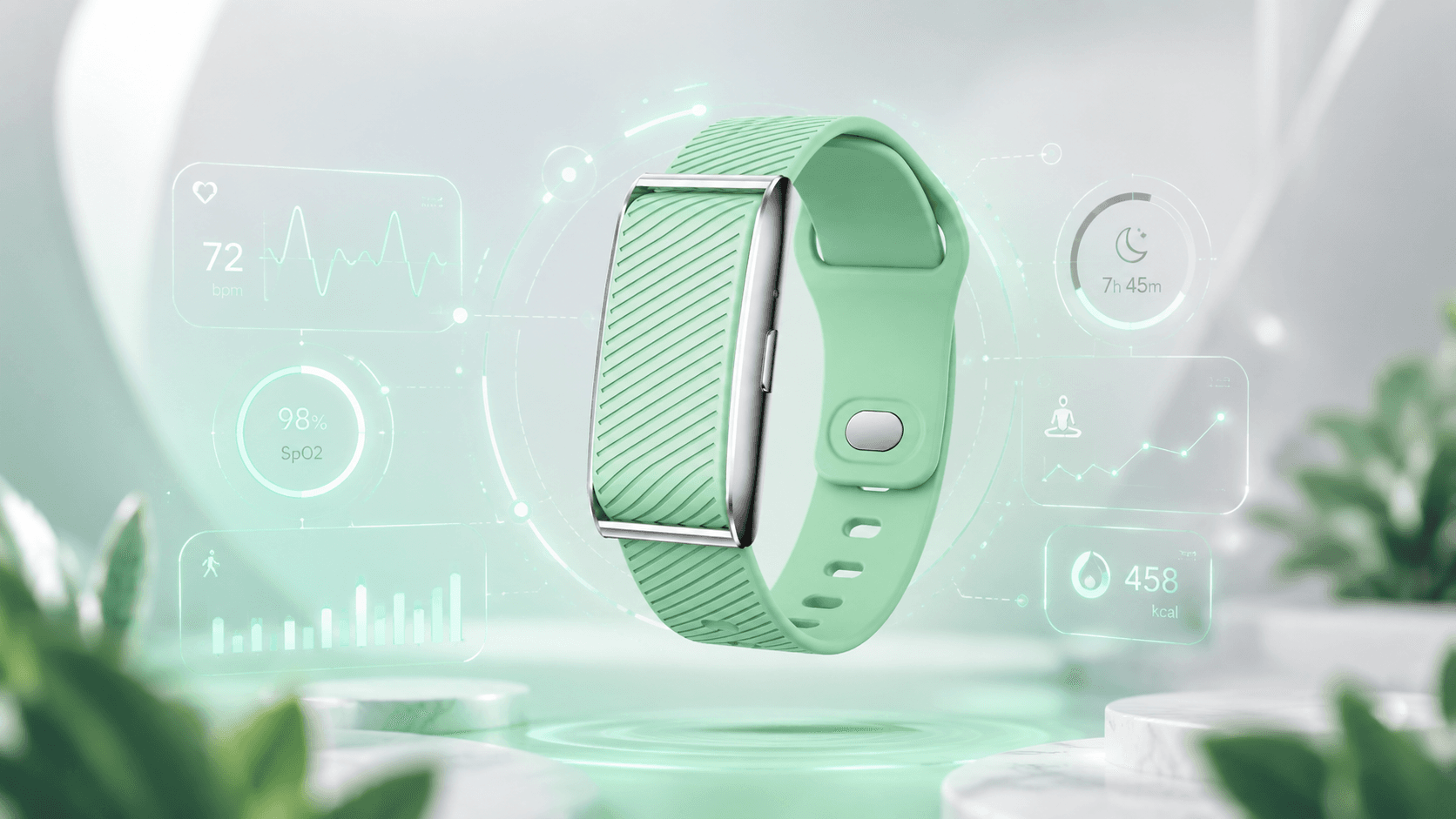
That is why VitalIQ is centered on a screenless wearable concept. The device should be simple to wear and easy to support. The intelligence should live in the system around it: the dashboard, the family app, the summaries, the trend logic, and the integrations.
The less the resident has to do, the more realistic the monitoring becomes.
Dashboards are not just prettier portals
Many health products have dashboards. That word can mean almost anything. A useful dashboard for remote patient monitoring has to do actual work.
For a care facility, the dashboard should show who is online, who needs a device checked, which residents have notable trend changes, and what a shift handoff should include. It should help a care team triage attention without drowning them in low-value notifications.
For a family, the dashboard should be calmer. It should answer: does anything look meaningfully different? It should not turn a daughter or son into a nervous amateur clinician.
For an individual, the dashboard should help connect patterns. Sleep, movement, medication context, labs, symptoms, and wearable data often live in separate places. Mother Nature AI's broader health platform is designed to bring those threads closer together.
This is where VitalIQ differs from a simple device feed. The device is only the beginning. The dashboard is where the data becomes usable.
AI summaries are useful only if they stay humble
AI is everywhere in healthcare marketing right now, and some of it deserves skepticism. A vague promise that AI will "detect everything early" is not enough. In remote patient monitoring, the useful role for AI is often more practical.
Summarize what changed.
Compare the current week to baseline.
Point out that sleep dropped, activity dipped, and resting heart rate is higher than usual.
Write that in plain language for the person who needs to review it.
That is already valuable. A nurse does not need a black-box diagnosis. A family member does not need a scary alert. A provider does not need a pile of raw graphs. They need a summary that makes review faster and conversation better.
VitalIQ's AI summaries are designed for that lane: organize, contextualize, and communicate trends. They should not replace clinical judgment. They should make the human review easier.
The family-access gap
Traditional RPM often treats the patient and clinical team as the main relationship. That makes sense for medical programs. But aging, chronic care, and senior living are usually family systems.
An adult child may be helping with appointments. A spouse may notice mood changes. A sibling may coordinate transportation. A parent in assisted living may want a daughter to know the broad picture but not every detail. A family app has to handle those realities with care.
VitalIQ includes family visibility as a first-class surface because families are already part of care. The only question is whether they get information through anxious phone calls and fragments, or through a permission-based view that is calmer and clearer.
Good family access should reduce noise. It should not create a new stream of panic. It should give loved ones enough context to ask better questions and enough restraint to avoid hovering.
Where traditional RPM is still the right tool
It is worth being clear about where VitalIQ is not trying to compete.
If a physician needs diagnostic cardiac monitoring, a dedicated cardiac monitor or patch may be appropriate. If a person needs blood glucose measurement, a CGM or fingerstick is the right tool. If someone needs validated blood pressure readings, use a properly fitted cuff. If a hospital or clinic has a regulated RPM pathway for a specific diagnosis, that pathway matters.
VitalIQ is not trying to pretend a general wearable can replace those tools.
Instead, VitalIQ is designed to complement the broader care picture by capturing the day-to-day trend layer: sleep, activity, movement, heart rate patterns, HRV, temperature trend, oxygen trend visibility, device status, family context, and summaries.
The clinical device tells you a specific thing with higher precision. The continuous trend layer tells you what life looked like between those measurements.
Both can matter.
Why this matters for nursing homes and assisted living
Senior care facilities live in the gap between consumer wellness and clinical medicine.
Residents are not hospital inpatients, but they often have complex health needs. Families want more visibility, but staff cannot manually report every detail. Nurses and aides know residents well, but they are stretched. Administrators need documentation, consistency, and systems that do not collapse under real staffing pressures.
Traditional RPM tools were not always built for that environment. A facility does not just need data. It needs population views, resident drill-downs, device management, handoff support, family communication, and careful escalation.
That is why VitalIQ's care facility dashboard matters. It is not simply a prettier patient portal. It is a different workflow: one screen for the population, then the ability to focus on a resident when trends deserve review.
The strongest use cases are not dramatic. They are practical.
A resident's sleep has been shorter for a week.
Activity is lower than usual.
A device has been offline since yesterday.
A family asks how Mom has been doing, and the care team has a trend summary instead of a vague answer.
The overnight shift saw a pattern that the morning shift should know about.
Those are the moments where a dashboard can earn its place.
Why this matters for families at home
The same philosophy applies outside facilities. Many families are not looking for a medical monitoring program. They are looking for peace of mind.
They want to know whether Dad is moving around normally. They want to know if Mom's sleep has been rough. They want to know whether something changed after a medication adjustment. They want enough visibility to support independence, not enough data to micromanage.
This is why the family version of VitalIQ matters. A parent at home should not have to become a power user. The app should be simple, permission-based, and built around the idea that dignity comes first.
Remote monitoring is only helpful if people keep using it. People keep using it when it feels respectful.
VitalIQ inside the Mother Nature AI platform
VitalIQ also matters because it is not a standalone gadget in our long-term vision. Mother Nature AI is building a broader health AI platform: chat, health records, wearable trends, medication context, natural health research, provider-ready summaries, and privacy-first tools.
That matters because wearable data is more useful when it has context.
Sleep changed after a medication change.
Activity dropped after a procedure.
Resting heart rate shifted during a stressful week.
A lab result explains why fatigue has been worse.
A supplement question should be answered in the context of medications and conditions.
No single device can understand that whole picture. The platform around the device can.
That is why VitalIQ is not only a bracelet. It is a data layer for the rest of the Mother Nature AI ecosystem.
A practical comparison
Here is the plain version:
| Category | Traditional RPM | VitalIQ |
|---|---|---|
| Main cadence | Scheduled or episodic readings | Continuous wearable trends |
| Typical user action | Take a reading, answer a survey, transmit data | Wear the device passively |
| Primary surface | Clinical portal or device app | Facility dashboard, family app, individual view |
| Best fit | Disease-specific programs and clinical monitoring | Senior care, family visibility, trend summaries, day-to-day context |
| Family role | Often limited or manual | Built in with permission-based access |
| AI role | Varies by vendor | Plain-language trend summaries and context |
| Medical claims | Depends on device and program | Health visibility, not diagnosis or emergency response |
That last row matters. VitalIQ is intentionally careful about claims. We want the product to be trusted by families and care teams, which means being honest about boundaries.
A buyer checklist for modern RPM
If you are evaluating remote patient monitoring options, do not start with the shiniest screen. Start with the workflow.
Who is the primary user: a clinician, a facility care team, a family member, the older adult, or all of them? A product built for one group may frustrate another.
What happens when data is missing? A mature system should make offline devices obvious. Silence should not be mistaken for stability.
How noisy are the alerts? Ask to see the default settings. Ask what staff can configure. Ask how the system avoids alarm fatigue.
What does the family see? If the answer is either "nothing" or "everything," keep asking. Families need context and boundaries.
What claims does the vendor make? Be careful with promises about predicting emergencies, diagnosing disease, measuring blood pressure without validation, or replacing clinical review.
How does the product handle summaries? The difference between a dashboard people use and a dashboard people abandon is often the quality of the plain-language explanation.
These questions are not glamorous, but they reveal whether an RPM platform understands real care environments.
The future of RPM is not one category
Remote patient monitoring is going to split into several layers.
There will be regulated diagnostic devices for specific conditions. There will be hospital-at-home programs. There will be chronic disease management workflows. There will be consumer wearables. There will be senior care dashboards. There will be family monitoring tools. There will be AI summarization layers that sit across all of them.
The winners will not all look the same.
Some companies will be excellent at cardiac monitoring. Some will be excellent at post-discharge programs. Some will be excellent at chronic disease billing workflows. VitalIQ is aiming at a different but overlapping need: continuous, practical, human-centered health visibility for older adults, care facilities, families, and the broader Mother Nature AI platform.
That is a big enough problem on its own.
The bottom line
Traditional remote patient monitoring asks, "Did the patient send the reading?"
VitalIQ asks, "What is changing in this person's day-to-day health pattern, who needs to know, and how can we explain it clearly?"
Those are different questions. Both can matter. But for nursing homes, assisted living, memory care, families, and older adults at home, the second question is often the one that has been missing.
If you are comparing remote patient monitoring options, look beyond the device list. Ask how the data becomes useful. Ask who can see it. Ask how noisy the alerts are. Ask whether the older adult will actually wear it. Ask whether the family experience is respectful. Ask whether the vendor is honest about what the product does not do.
That is the standard we are building toward with VitalIQ.
Learn more about VitalIQ remote patient monitoring, read our guide to remote patient monitoring for nursing homes, or explore how families can monitor an aging parent's health remotely with dignity and consent.