
What is saffron tea good for?
Crocus sativus stigmas, the dried red threads of the saffron crocus flower
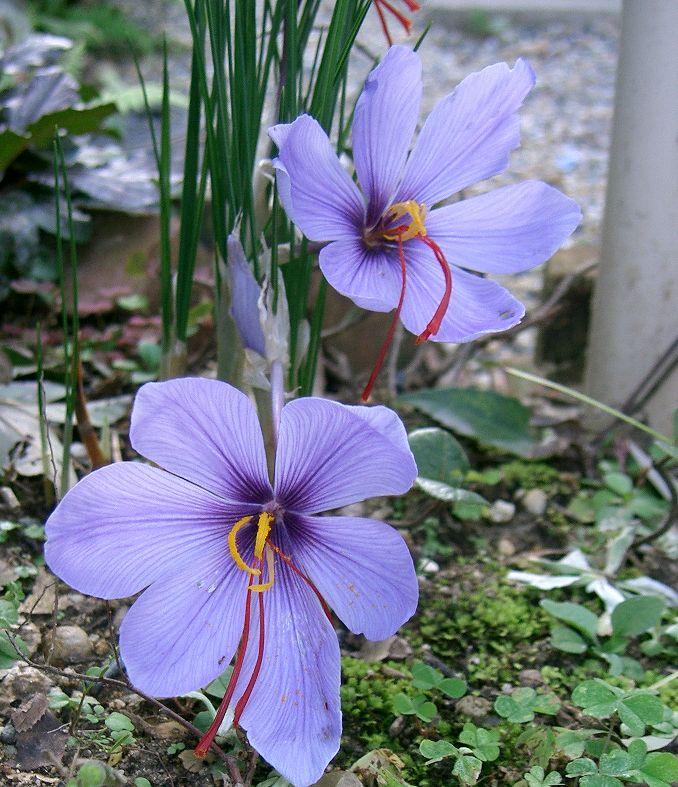
Saffron tea is mostly drunk for mood. The research is on low mood and mild to moderate depression, with some on sleep and anxiety. But we found no trial of saffron tea itself. The trials used measured extracts, capsules, tablets or powdered stigma, so they show what saffron products may do, not what a cup of tea does.
Saffron is the dried stigma, the red thread, of the Crocus sativus flower. It is a spice and a traditional medicinal plant. One review said saffron is safe in terms of its culinary value, but that higher therapeutic doses need careful monitoring for drug interactions and side effects. Another review said recent studies support saffron for depression, but that its toxicological profile raises safety concerns. Neither abstract says what those concerns are.
Below is what each trial tested, how to brew saffron at home, and who should ask a clinician first. The sources reviewed for this page had no data on pregnancy, breastfeeding or drug interactions with saffron tea, and we say so where it matters.
What saffron tea is good for
- Depression: a review of 34 randomized trials with 1769 adults found saffron supplements lowered self-reported depression scores, but clinician-rated effects were lacking; extracts and capsules, not tea
- Low mood without a diagnosis: a 12-week trial found a daily saffron extract beat placebo on depression scores; an extract, not tea
- Sleep: two trials of a daily saffron extract in adults with poor sleep found better sleep ratings than placebo; a blend that included saffron did not beat placebo
- Anxiety: results are mixed; self-reported scores fell in a review of 6 trials with 339 adults, but the HARS scale showed no significant effect
- Blood sugar in type 2 diabetes: one review found saffron improved fasting glucose; details were not given in its abstract
- Safety: no serious adverse reactions in one extract trial; no data found for saffron tea, pregnancy or drug interactions
Saffron tea benefits, graded by the evidence
Strong = multiple human trials or a meta-analysis. Moderate = a few small trials. Preliminary = early, traditional or animal data.
May help with mild to moderate depression (as supplements, not tea)
Moderate evidenceA review of 34 randomized trials with 1769 adults found that saffron supplements lowered self-reported depression scores on the BDI scale (14 trials, 817 people, weighted mean difference -4.39). Results varied widely between trials (I2 = 92.3%), and the review said the lack of clinician-rated effects shows the need for better trials. A guideline task force from the World Federation of Societies of Biological Psychiatry (WFSBP) and the Canadian Network for Mood and Anxiety Treatments (CANMAT) rated saffron as provisionally recommended for unipolar depression, advised that such products be used mainly alongside standard medical care, and said product quality and standardization limit confidence. None of this tested tea.
Key evidenceMahmoudi et al., Nutr Neurosci 2026: meta-analysis of 34 randomized trials, 1769 adults; Sarris et al., World J Biol Psychiatry 2022: guideline
May lift low mood in adults without a depression diagnosis (as an extract)
Moderate evidenceIn a 12-week placebo-controlled trial of two hundred and two adults with depressive symptoms, 28 mg of saffron extract a day was linked to a larger drop in depression scores than placebo. 72.3% of the saffron group reached a clinically significant change, against 54.3% on placebo. On the other secondary measures there was no difference between groups. An earlier trial gave 128 adults who reported low mood a saffron extract or placebo for 4 weeks. Mood improved at 28 mg a day but not at 22 mg a day. Both used a standardized extract, not tea.
Key evidenceLopresti et al., J Nutr 2025: randomized placebo-controlled trial, two hundred and two adults; Kell et al., Complement Ther Med 2017: 128 adults
May improve sleep (as an extract; results are mixed)
Moderate evidenceIn a 28-day trial, 120 adults with unsatisfactory sleep took a placebo, 14 mg or 28 mg of a saffron extract one hour before bed. Sleep quality ratings improved more with saffron than placebo, and the two doses worked about the same. In a 6-week trial of sixty-six people with mild to moderate sleep problems linked to anxiety, 15.5 mg of extract a day improved sleep scores on questionnaires. A trial of a blend of L-theanine plus lemon balm, valerian and saffron extracts in 64 adults found no better sleep than placebo, so the blend result differs. No trial used tea.
Key evidenceLopresti et al., Sleep Med 2021: randomized placebo-controlled trial, 120 adults; Pachikian et al., Nutrients 2021: randomized trial, sixty-six adults
Anxiety symptoms (results are mixed)
Preliminary evidenceIn the same 34-trial review, self-reported anxiety scores on the BAI scale fell with saffron (6 trials, 339 people, weighted mean difference -5.06), but the HARS scale showed no significant effect. A network analysis of trials in adults with anxiety found that saffron did not reduce HAMA scores significantly (mean difference -2.71), though it called saffron worthy of further study. The review of this field called its own results preliminary. No trial used tea.
Key evidenceMahmoudi et al., Nutr Neurosci 2026: 34-trial meta-analysis; Zhang et al., Pharmacol Res 2022: network meta-analysis
Fasting blood sugar in type 2 diabetes
Preliminary evidenceA review of interventional studies in people with type 2 diabetes found that cinnamon, turmeric, ginger, black cumin and saffron significantly improved fasting glucose levels. The biggest drops were with black cumin, then cinnamon and ginger. The abstract does not say how many saffron studies there were, how large the saffron effect was, or what form of saffron was used, so this cannot be read as a result for tea.
Key evidenceGarza et al., Nutrients 2024: systematic review and meta-analysis of herbs and spices
Is saffron tea good for you?
- Saffron has been studied for mood, and the better trials point to a modest benefit for low mood and mild to moderate depression. All of it used extracts, capsules or powder, and no trial tested saffron tea.
- In the trials we reviewed, saffron extract was well tolerated, and one trial reported no serious adverse reactions. One review still said saffron's toxicological profile raises safety concerns and did not say why.
- A cup of tea is not a measured dose. No trial set an amount of saffron tea, so we cannot say how much would match a trial.
- Do not use saffron tea in place of care for depression, anxiety or poor sleep. A guideline said such products should mainly be used alongside standard medical care, especially in more severe mental illness.
- We found no data on pregnancy, breastfeeding or drug interactions with saffron tea. Ask a clinician first if you are pregnant, nursing or take prescribed medicines.
How to brew saffron tea
A small pinch of saffron threads per 8 oz cup. No amount has been tested for tea; the trials used measured extracts and powder.
Just-boiled water, poured over the threads
5 to 10 minutes, covered
- Keep the cup covered while it steeps so the aroma stays in the tea.
- Saffron stains. It changed the color of clear dental aligners and orthodontic wires in lab tests, so take aligners out before you drink it.
How much per day
No trial has tested how much saffron tea is safe or useful. The trials used measured extracts, for example 28 mg a day in two mood trials, and one trial gave healthy male university students 300 mg a day of dried stigma for 10 days. Those amounts cannot be turned into cups of tea. A review said saffron is safe in culinary amounts but that higher therapeutic doses need careful monitoring.
Caffeine-free. It is not made from the tea plant (Camellia sinensis), which is where the caffeine in green and black tea comes from. Does saffron tea have caffeine?
Side effects, interactions and who should limit it
Side effects
- Few side effects in trials of saffron extract: one trial reported no serious adverse reactions, and an overview of reviews listed saffron among herbs with only minor adverse effects
- Possible problems at higher doses: one review said saffron's toxicological profile raises safety concerns and another said higher therapeutic doses need careful monitoring; the abstracts do not list the specific effects
- Staining: saffron changed the color of clear dental aligners and esthetic orthodontic wires in lab tests
Interactions
- Blood thinners and antiplatelet medicines: a review listed saffron among plants with antiplatelet activity, which reduces platelet aggregation; we found no study of saffron tea with blood thinners, so ask a clinician if you take one
- Antidepressants and other mental health medicines: trials compared saffron with SSRIs and gave it alongside risperidone, but the abstracts reviewed give no interaction data for tea; do not stop or change a prescribed medicine because of saffron tea, and talk to your prescriber
- Diabetes medicines: a review found saffron improved fasting glucose in people with type 2 diabetes; no study looked at saffron tea together with diabetes medicines, so ask a clinician
Pregnancy and breastfeeding
We found no data on saffron tea or saffron supplements in pregnancy or breastfeeding in the sources reviewed for this page. Ask your clinician before drinking it regularly.
Frequently asked questions
What is saffron tea good for?
Saffron tea is mainly used for mood. Trials of saffron extracts and capsules found lower depression scores than placebo in adults with low mood or depression. Results for anxiety are mixed, and the sleep results come from small trials. No trial tested saffron tea itself.
Does saffron tea help depression?
Possibly, but the trials did not use tea. A review of 34 randomized trials found saffron supplements lowered self-reported depression scores, though the review noted a lack of clinician-rated effects. A guideline task force from the World Federation of Societies of Biological Psychiatry (WFSBP) and the Canadian Network for Mood and Anxiety Treatments (CANMAT) gave saffron a provisional recommendation for unipolar depression and advised using such products mainly alongside standard care. Saffron tea is not a replacement for treatment.
Is saffron tea good for sleep?
Two trials of a daily saffron extract in adults with poor sleep found better sleep ratings than placebo. One trial of a blend that included saffron found no benefit over placebo. None of the trials used tea, so a cup before bed has not been tested.
Is saffron as good as an antidepressant?
A meta-analysis of 8 studies found no significant difference between saffron and selective serotonin reuptake inhibitors (SSRIs), a common type of antidepressant, in reducing depressive symptoms. Participants on saffron had fewer adverse events. The authors called for larger studies, and these were extract and capsule trials, not tea. Do not stop a prescribed antidepressant to try saffron tea.
Is saffron tea safe?
One review said saffron is safe in terms of its culinary value but that higher therapeutic doses need careful monitoring for drug interactions and side effects. Another said saffron's toxicological profile raises safety concerns. In one trial of an extract, no serious adverse reactions were reported. We found no safety data for saffron tea, pregnancy or breastfeeding.
Does saffron tea stain clear aligners or braces?
Lab studies, not tests in people's mouths, found that saffron changed the color of clear aligners and of esthetic orthodontic wires. In the wire study, saffron caused the most pronounced color change of the solutions tested, which included coffee, tea and cola. Take aligners out before drinking it.
How much saffron tea should I drink?
No trial has set an amount for saffron tea. The mood trials used measured extracts, such as 28 mg a day, which a cup of tea cannot be matched to. A review said higher therapeutic doses need careful monitoring, so ask a clinician before drinking it regularly.
References
- Mahmoudi R, Mohammadi-Sartang M, Servatyari K, Rafieipour N. Effect of saffron on depression, anxiety and mood disorder: a GRADE assessed systematic review and meta-analysis of 34 randomized controlled trials. Nutr Neurosci (2026)View source
- Lopresti AL, Smith SJ, Marx W, Díez-Municio M, et al.. An Examination into the Effects of a Saffron Extract (Affron) on Mood and General Wellbeing in Adults Experiencing Low Mood: A Randomized, Double-Blind, Placebo-Controlled Trial. J Nutr (2025)View source
- Sarris J, Ravindran A, Yatham LN, Marx W, et al.. Clinician guidelines for the treatment of psychiatric disorders with nutraceuticals and phytoceuticals: The World Federation of Societies of Biological Psychiatry (WFSBP) and Canadian Network for Mood and Anxiety Treatments (CANMAT) Taskforce. World J Biol Psychiatry (2022)View source
- Chauhan S, Tiwari A, Verma A, Padhan PK, et al.. Exploring the Potential of Saffron as a Therapeutic Agent in Depression Treatment: A Comparative Review. Yale J Biol Med (2024)View source
- Lopresti AL, Smith SJ, Drummond PD. An investigation into an evening intake of a saffron extract (affron®) on sleep quality, cortisol, and melatonin concentrations in adults with poor sleep: a randomised, double-blind, placebo-controlled, multi-dose study. Sleep Med (2021)View source
- Gutiérrez-Romero SA, Torres-Narváez ES, Zamora-Gómez AC, Castillo-Castillo S, et al.. Effect of a nutraceutical combination on sleep quality among people with impaired sleep: a randomised, placebo-controlled trial. Sci Rep (2024)View source
- Kenda M, Kočevar Glavač N, Nagy M, Sollner Dolenc M. Medicinal Plants Used for Anxiety, Depression, or Stress Treatment: An Update. Molecules (2022)View source
- Pachikian BD, Copine S, Suchareau M, Deldicque L. Effects of Saffron Extract on Sleep Quality: A Randomized Double-Blind Controlled Clinical Trial. Nutrients (2021)View source
- Garza MC, Pérez-Calahorra S, Rodrigo-Carbó C, Sánchez-Calavera MA, et al.. Effect of Aromatic Herbs and Spices Present in the Mediterranean Diet on the Glycemic Profile in Type 2 Diabetes Subjects: A Systematic Review and Meta-Analysis. Nutrients (2024)View source
- Zhang W, Yan Y, Wu Y, Yang H, et al.. Medicinal herbs for the treatment of anxiety: A systematic review and network meta-analysis. Pharmacol Res (2022)View source
- Sawan N, Ben Gassem A. Assessing color stability of orthodontic esthetic wires in different staining solutions. Technol Health Care (2024)View source
- Shafiee A, Jafarabady K, Seighali N, Mohammadi I, et al.. Effect of Saffron Versus Selective Serotonin Reuptake Inhibitors (SSRIs) in Treatment of Depression and Anxiety: A Meta-analysis of Randomized Controlled Trials. Nutr Rev (2025)View source
Go deeper
Other teas
Is saffron tea right for you?
Ask AskMN. It knows these studies, checks interactions with the medications you tell it about, and it is free and unlimited, no account needed.
This page is educational and is not medical advice. Herbal teas can interact with prescription medicines. Talk with a clinician or pharmacist before relying on any of them, especially if you are pregnant, breastfeeding, have a chronic condition, or take medication.