
What is tulsi tea good for?
Holy basil (Ocimum tenuiflorum, also called Ocimum sanctum), dried leaves
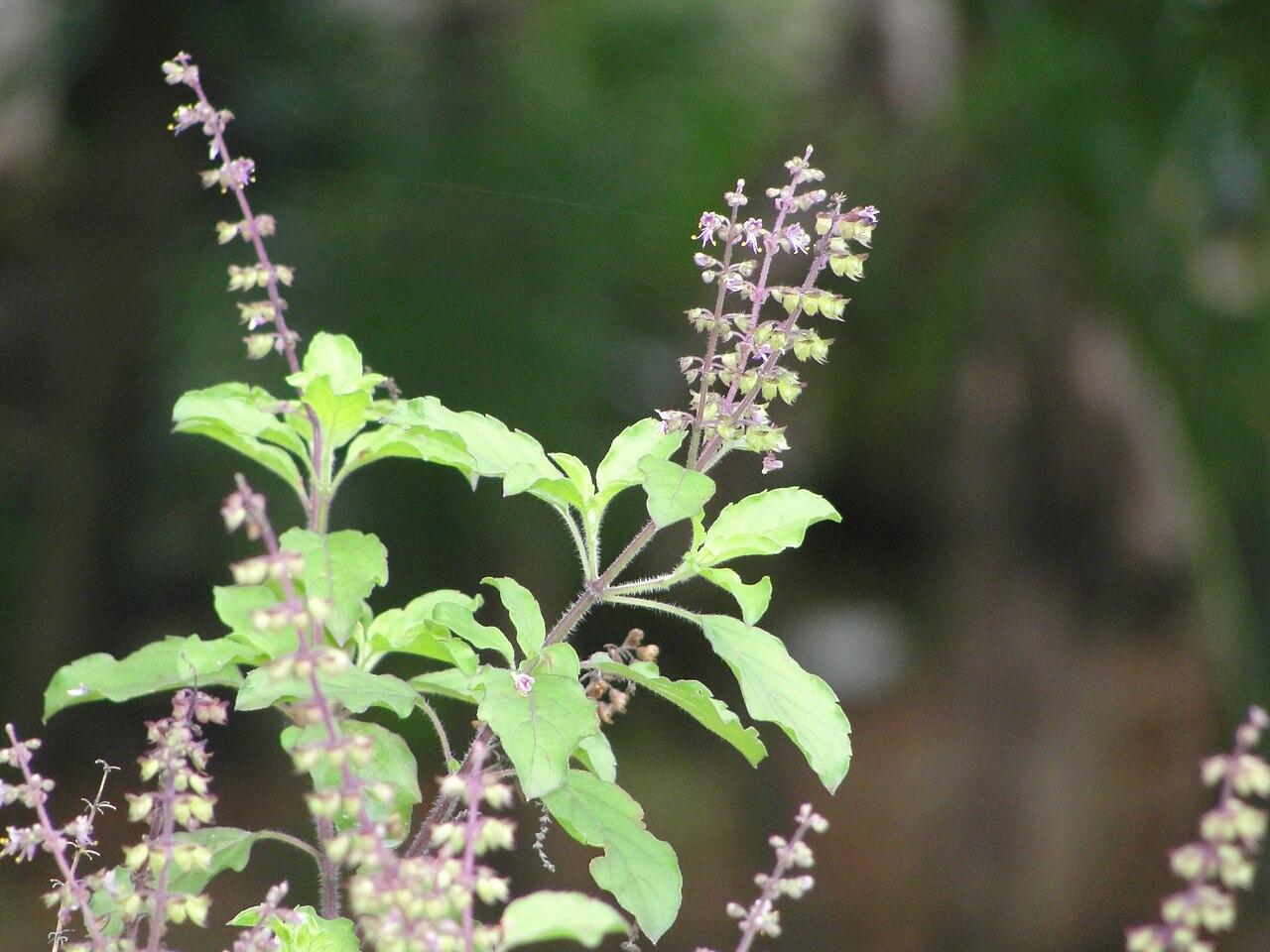
Tulsi tea, also called holy basil tea, is a traditional drink that is used for stress and general wellbeing. In Ayurveda, the traditional medicine of India, holy basil is believed to promote longevity and general wellbeing. The evidence for the tea itself is thin: we found no human trial of plain tulsi tea. The human trials used holy basil leaves, capsules of leaf extract, or a tea blended with other herbs.
The best-designed trial gave 100 adults who felt stressed 125 mg of a holy basil extract twice a day for 8 weeks. Their stress scores improved more than with placebo. That was an extract in capsules, not a cup of tea, so it is a reason to study the tea, not proof that the tea works.
Tulsi and holy basil are two names for the same plant in the sources reviewed, and Ocimum tenuiflorum and Ocimum sanctum are its Latin names. Below is what each trial tested, how to brew the leaves at home, and what we could not find.
What tulsi tea is good for
- Stress: 125 mg of holy basil extract twice a day for 8 weeks improved stress scores more than placebo in 100 adults; an extract, not tea
- Blood sugar: in a crossover trial of holy basil leaves, fasting blood glucose fell by 21.0 mg/dl compared with placebo leaves; one older single-blind trial
- Thinking: 300 mg capsules of leaf extract a day for 30 days improved some reaction-time tests more than placebo; an extract, not tea
- Immunity: a tea blended with five herbs, holy basil among them, raised natural killer cell activity in studies of 32 and 110 volunteers; a blend, not tulsi alone
- Safety: a review of 24 human studies reported no significant adverse events, but we found no data on pregnancy, medicine interactions or a safe daily amount
Tulsi tea benefits, graded by the evidence
Strong = multiple human trials or a meta-analysis. Moderate = a few small trials. Preliminary = early, traditional or animal data.
May help with everyday stress and perceived stress (as an extract)
Moderate evidenceIn an 8-week, double-blind, placebo-controlled trial, 100 adults aged 18 to 65 took 125 mg of a standardized holy basil extract twice a day or a placebo. Compared with placebo, the extract group had greater improvements on the Perceived Stress Scale (p = 0.003) and the Athens Insomnia Scale (p = 0.025), and lower hair cortisol at week 8 (p = 0.025). The authors say the sleep findings need confirming with objective sleep measures. This was one trial of an extract in capsules, not tea. A systematic review of randomized trials that included holy basil among many plants called the effect of plants on stress hormones in humans unclear overall.
Key evidenceLopresti et al., Front Nutr 2022: 100-adult double-blind placebo-controlled RCT of an extract
May sharpen some thinking and reaction-time tests (as an extract)
Moderate evidenceIn a placebo-controlled trial in healthy adults, people took 300 mg capsules of an ethanol leaf extract per day for 30 days. Compared with placebo, the extract group improved more on reaction time and error rate in a memory task (the Sternberg test) and on Stroop tests. Salivary cortisol and an anxiety questionnaire improved over time in the extract group only, but the difference between groups was significant for just one measure, a brain-response timing test called P300 latency. The abstract does not give the number of people. It was an extract, not tea.
Key evidenceSampath et al., Indian J Physiol Pharmacol 2015: placebo-controlled trial of a leaf extract in healthy adults
May lower blood sugar (as holy basil leaves)
Moderate evidenceIn a randomized, placebo-controlled, crossover, single-blind trial in people with mild to moderate noninsulin-dependent diabetes, holy basil leaves lowered fasting blood glucose by 21.0 mg/dl and postprandial blood glucose by 15.8 mg/dl compared with placebo leaves. The abstract does not say how many people took part or how the leaves were prepared. A systematic review of Chinese herbal medicines for type 2 diabetes reported that holy basil leaves gave a significantly lower blood sugar response than placebo, but it rated the methodological quality of the trials as generally low. This is a reason for more study, not a reason to change diabetes care.
Key evidenceAgrawal et al., Int J Clin Pharmacol Ther 1996: randomized placebo-controlled crossover single-blind trial of holy basil leaves
Immune activity (as part of a five-herb tea)
Preliminary evidenceTwo double-blind studies in India tested a tea fortified with five Ayurvedic herbs, holy basil among them, against regular tea in healthy volunteers aged 55 or older who had low natural killer cell activity and a history of recurrent coughs and colds. Natural killer cell activity improved with the fortified tea in a pilot study of 32 volunteers and in a crossover study of 110 volunteers. Holy basil was one of five herbs, so the studies cannot show what holy basil did on its own, and the abstract does not report whether the volunteers had fewer infections.
Key evidenceBhat et al., Phytother Res 2010: two double-blind studies (32 and 110 volunteers) of a five-herb tea
Is tulsi tea good for you?
- Tulsi tea is a traditional drink with a short list of human trials, and we found none that tested plain tulsi tea.
- The best human results come from leaf extract capsules and holy basil leaves, so they may not carry over to a cup of tea. None of it is a proven treatment.
- A review of 24 human studies of tulsi reported no significant adverse events. We found no data in the sources reviewed on pregnancy, breastfeeding, medicine interactions or a safe daily amount.
- If you use diabetes medicine, ask your clinician before drinking tulsi regularly, because holy basil leaves lowered blood glucose in a trial.
How to brew tulsi tea
1 to 2 teaspoons dried tulsi (holy basil) leaf per 8 oz cup
Just-boiled water, poured over the leaves and covered
5 to 10 minutes
- No trial in the sources reviewed used a home-brewed tulsi tea, so this is an ordinary kitchen method, not a studied dose.
- Strain the leaves before drinking.
How much per day
We found no trial that tested a daily amount of tulsi tea, and no safe upper limit. The authors of a review of human tulsi studies say more research is needed to clarify the dosage and dose form.
Caffeine-free. It is not made from the tea plant (Camellia sinensis), which is where the caffeine in green and black tea comes from. Does tulsi tea have caffeine?
Side effects, interactions and who should limit it
Side effects
- No significant adverse events were reported in 24 human studies of tulsi in one review, though the abstract does not say what doses and forms were used
- In the 8-week stress trial of an extract at 125 mg twice a day, no major adverse effects were reported
- Safety is not well established: a review of trials in cancer care that included holy basil found that adverse-event monitoring was inconsistent and no trial was adequately powered to establish safety
- Lower blood sugar: fasting blood glucose fell by 21.0 mg/dl in a trial of holy basil leaves, so people with diabetes should be aware of this
Interactions
- Diabetes medicines: holy basil leaves lowered blood glucose in a trial, and no interaction study was found. Ask your clinician before drinking tulsi regularly if you use diabetes medicine
- Other medicines: we found no data on interactions between tulsi tea and any medicine in the sources reviewed, and a review of cancer-care trials called for interaction assessment
Pregnancy and breastfeeding
We found no data on tulsi tea in pregnancy or breastfeeding in the sources reviewed, so ask your clinician before drinking it regularly.
Frequently asked questions
What is tulsi tea?
Tulsi tea is a caffeine-free herbal tea made from the leaves of holy basil, a plant native to the Indian continent and used in Ayurveda. It is not made from the tea plant (Camellia sinensis). We found no trial of plain tulsi tea.
Is tulsi the same as holy basil?
Yes. The sources reviewed use tulsi and holy basil for the same plant, Ocimum tenuiflorum, which is also called Ocimum sanctum.
What are the benefits of tulsi tea?
The human trials we found tested extracts, leaves or a five-herb blend, not plain tea. A trial of 125 mg of extract twice a day for 8 weeks in 100 stressed adults found better stress scores than placebo. A trial of holy basil leaves found lower blood glucose. These are reasons for more study, not proof that the tea works.
Does tulsi tea reduce stress?
It has not been tested. One trial of 100 adults found that a holy basil extract, 125 mg twice a day for 8 weeks, improved Perceived Stress Scale scores more than placebo (p = 0.003). That was a capsule extract, not tea.
Does tulsi tea lower blood sugar?
Tulsi tea has not been tested for blood sugar. In one single-blind crossover trial, holy basil leaves lowered fasting blood glucose by 21.0 mg/dl compared with placebo leaves. The abstract does not say how the leaves were prepared. If you use diabetes medicine, ask your clinician before drinking it regularly.
Is tulsi tea safe?
A review of 24 human studies of tulsi reported no significant adverse events, but the abstract does not say what forms were used. We found no data on pregnancy, breastfeeding, medicine interactions or a safe daily amount, so ask your clinician if you are unsure.
Is tulsi tea caffeine-free?
Yes. Caffeine-free. It is not made from the tea plant (Camellia sinensis), which is where the caffeine in green and black tea comes from.
Can tulsi tea help with cancer?
No trial shows that tulsi tea treats cancer. A review of randomized trials of herbal preparations in supportive cancer care included one holy basil trial, rated all outcomes as very-low-certainty evidence, and concluded the evidence is insufficient to establish efficacy or safety.
References
- Lopresti AL, Smith SJ, Metse AP, Drummond PD. A randomized, double-blind, placebo-controlled trial investigating the effects of an Ocimum tenuiflorum (Holy Basil) extract (HolixerTM) on stress, mood, and sleep in adults experiencing stress. Front Nutr (2022)View source
- Agrawal P, Rai V, Singh RB. Randomized placebo-controlled, single blind trial of holy basil leaves in patients with noninsulin-dependent diabetes mellitus. Int J Clin Pharmacol Ther (1996)View source
- Jamshidi N, Cohen MM. The Clinical Efficacy and Safety of Tulsi in Humans: A Systematic Review of the Literature. Evid Based Complement Alternat Med (2017)View source
- Bhat J, Damle A, Vaishnav PP, Albers R, et al.. In vivo enhancement of natural killer cell activity through tea fortified with Ayurvedic herbs. Phytother Res (2010)View source
- Sampath S, Mahapatra SC, Padhi MM, Sharma R, et al.. Holy basil (Ocimum sanctum Linn.) leaf extract enhances specific cognitive parameters in healthy adult volunteers: A placebo controlled study. Indian J Physiol Pharmacol (2015)View source
- Moreno-Ponce R, Díaz-Llerenas U, Hernández-Fuentes GA, Garza-Veloz I, et al.. Clinical Evidence of Orally Administered Herbal Preparations for Supportive Cancer Care: A PRISMA Systematic Review of Randomized Clinical Trials (1990-2026). Med Sci (Basel) (2026)View source
- Liu JP, Zhang M, Wang WY, Grimsgaard S. Chinese herbal medicines for type 2 diabetes mellitus. Cochrane Database Syst Rev (2004)View source
- Lopresti AL, Smith SJ, Drummond PD. Modulation of the hypothalamic-pituitary-adrenal (HPA) axis by plants and phytonutrients: a systematic review of human trials. Nutr Neurosci (2022)View source
Guides that rank tulsi tea
Go deeper
Other teas
Is tulsi tea right for you?
Ask AskMN. It knows these studies, checks interactions with the medications you tell it about, and it is free and unlimited, no account needed.
This page is educational and is not medical advice. Herbal teas can interact with prescription medicines. Talk with a clinician or pharmacist before relying on any of them, especially if you are pregnant, breastfeeding, have a chronic condition, or take medication.